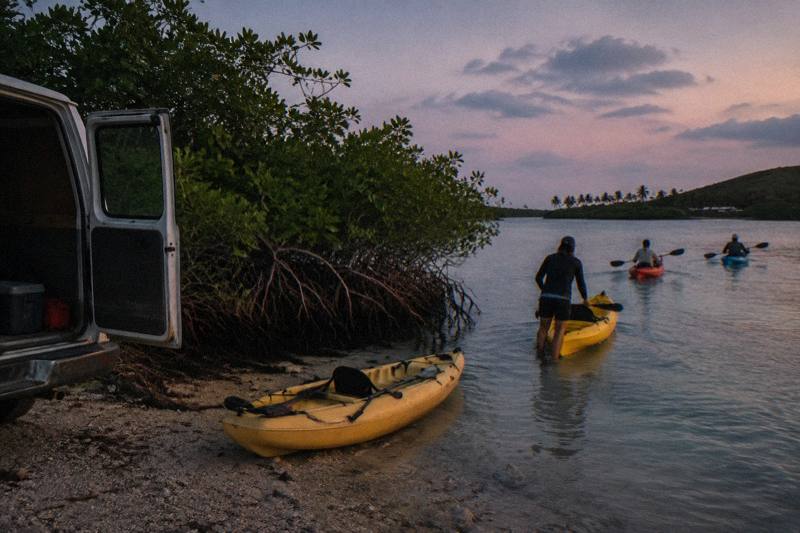
How Rare Is It To See Bioluminescence In Puerto Rico?
Bioluminescent bays are among the rarest natural phenomena on earth, and Puerto Rico holds three of the best-known examples. Here is what that means for your odds of seeing the glow.
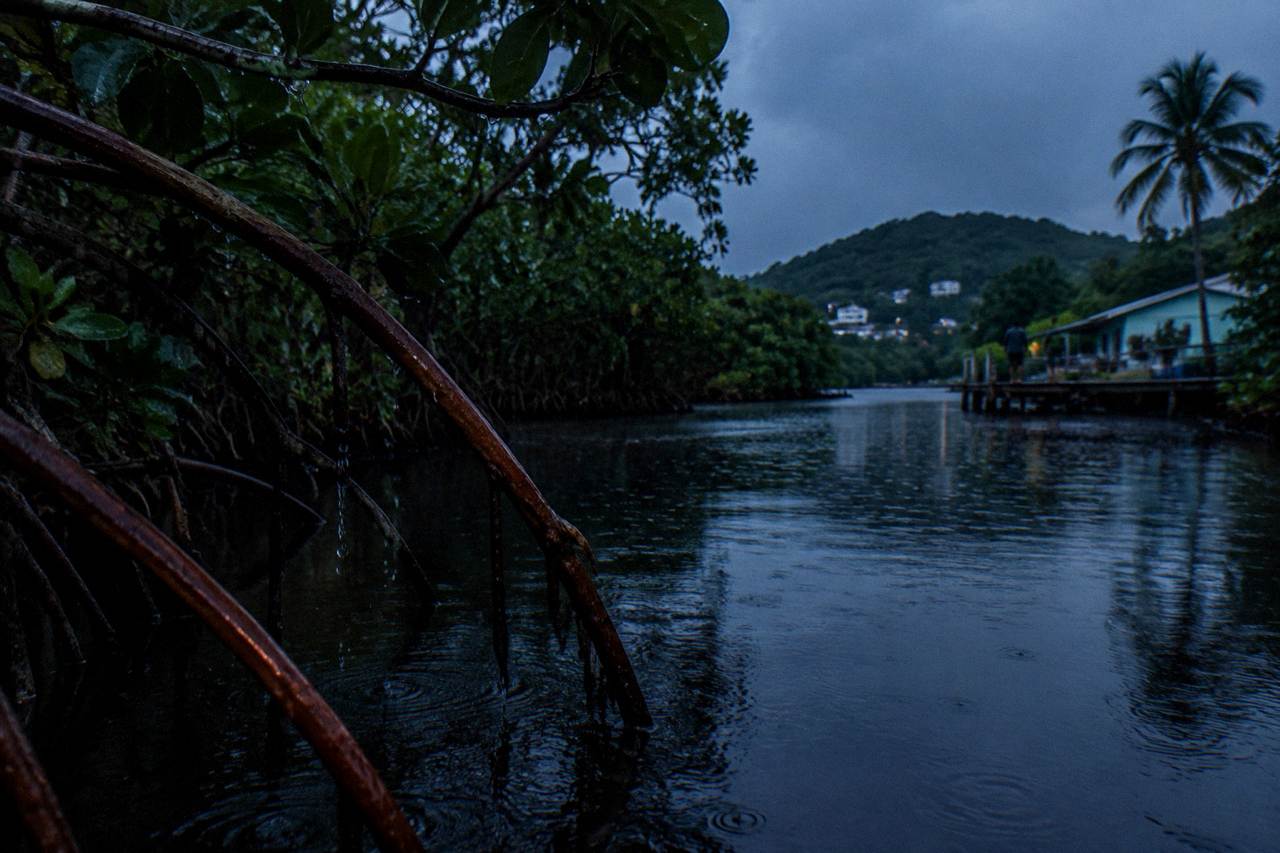
How Rare Is It To See Bioluminescence In Puerto Rico?
Seeing bioluminescence is genuinely rare almost everywhere on earth, but in Puerto Rico it is close to routine. Biologists count roughly eleven permanent bioluminescent bays in the world, seven of them in the Caribbean, and three of those are Puerto Rican: Laguna Grande in Fajardo, Mosquito Bay in Vieques and La Parguera in Lajas. On a dark, calm night with a licensed tour, the odds are strongly in your favour. Since Mosquito Bay sits on Vieques, our Vieques versus Culebra comparison can help you pick the right island for your trip.
That framing matters, because the two questions hide inside each other. Bioluminescence itself, the chemical light produced by living organisms, is common in the ocean: dinoflagellates, jellyfish, deep sea fish and fungi all produce it. What is rare is a bay where the glowing organisms concentrate densely enough, and stay put long enough, that a paddle stroke lights up the whole water. Those permanent, high density systems are the anomaly, and the reason Puerto Rico punches so far above its size. Plenty of visitors assume that glow must also live in the beach itself, a mix-up our article on bioluminescent sand in Puerto Rico sorts out by explaining exactly where the light comes from.
The Vieques Conservation and Historical Trust, which co-manages Mosquito Bay with the Department of Natural and Environmental Resources, keeps a monitoring program running on exactly this question. Its plankton counts and water quality work exist because the bay's concentration is not a given; it is a balance of hydrology, mangroves and weather that can be disturbed. A June 2026 site visit measured 304,000 organisms per gallon in Mosquito Bay, against a Guinness-recognised peak of up to 700,000 per gallon, so the population is real, measurable and currently substantial. If those fluctuations leave you wondering about the bays' overall condition, our guide to whether Puerto Rico's bioluminescent bays still glow walks through the latest monitoring updates and recovery efforts.
For travellers the practical translation is simple. Pick the right bay, book a licensed operator, aim for a night with little moonlight, and the phenomenon is reliably there, even though the visible intensity on any single night is not something anyone can promise. The Vieques Kayaks Bio Bay kayak trip, from $65 per person with a 4.5 rating from 1,242 reviews, is one of the longest running ways into Mosquito Bay, and the Mareaito Charters sunset and bio bay cruise at La Parguera, from $65 per person, pairs a Caracoles sandbar swim with the glowing bay on the same boat.
Why Permanent Bioluminescent Bays Are So Uncommon
A bay needs a near perfect coincidence of geography and biology to hold a permanent glow. The organisms must bloom densely, the water must stay in the bay long enough to accumulate rather than flush out to sea, and a narrow entrance or mangrove fringe must keep the population trapped. Most coastal waters fail at least one of these, which is why the world has only about eleven permanent systems.
The organism doing the work in all three Puerto Rican bays is the dinoflagellate Pyrodinium bahamense. It glows blue when the water around it is agitated, which is why a paddle, a hull or a hand trailing through the water sets off the light. Each cell flashes on mechanical stimulation, so the brightness you perceive is a product of how many cells are present per gallon and how much water you are disturbing.
The bottleneck is retention. Water in Mosquito Bay stays in the bay roughly 13.5 to 14.5 days before exchanging, a residence time long enough for the population to reproduce and concentrate. A faster flushing bay, one where tides sweep the water out in a day or two, cannot hold the same density no matter how many nutrients arrive. This is the single most underappreciated reason bioluminescent bays are rare: the shape of the basin matters as much as the biology.
Mangroves do the rest. At Mosquito Bay the mangrove fringe at the entrance shelters the bay from wave energy and helps hold the meandering shape that retains the bloom. When Hurricane Maria's storm surge caused almost total mangrove mortality at the bay's mouth, the bloom itself went dark for about seven months, a blackout the trust's reforestation project has been working to prevent from recurring by replanting red, black, white and button mangrove along the entrance. The Vieques Conservation and Historical Trust's own bay page documents that recovery effort in detail.
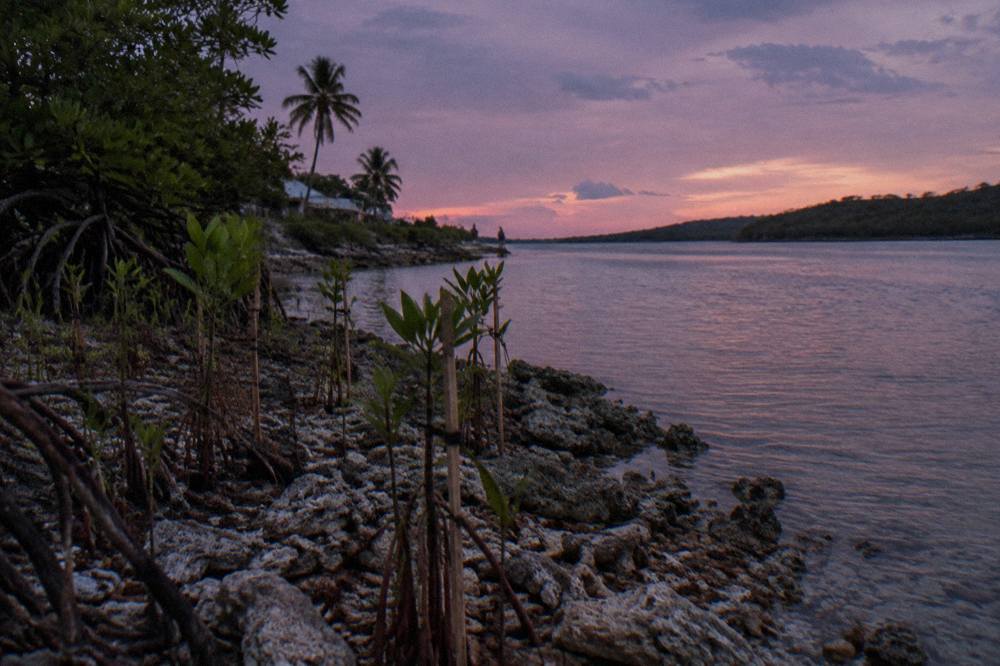
That fragility is the other half of the rarity story. These are not geological features that persist regardless; they are living systems that have gone dark before. Mosquito Bay had an earlier blackout in 2014, and the response then included the ban on swimming that still stands. A NOAA funded restoration of about $2.96 million, begun in December 2024 with the trust and the Department of Natural and Environmental Resources, has since planted close to 4,000 mangrove propagules with an 84 percent success rate, per NOAA's own project page. Rarity, in other words, is not just about how few bays exist; it is about how easily the existing ones can lose what makes them glow.
Why Puerto Rico Has Three Of Them
Puerto Rico's three bays all share the same recipe: a shallow, sheltered lagoon, a narrow or restricted entrance, warm tropical water and surrounding mangroves feeding the system. Laguna Grande is a lagoon reached through a narrow mangrove channel inside the Cabezas de San Juan reserve, Mosquito Bay is a near-closed basin with a tiny outlet, and La Parguera is a reef-sheltered bay of cays and channels.
The island's east and south coasts happen to offer this geometry repeatedly. Laguna Grande sits behind the headlands of the Fajardo reserve, connected to the ocean by a channel narrow enough that kayaks file through it in single file. Mosquito Bay on Vieques is shallower and more enclosed still, which is why its concentration runs the highest of the three and why the Guinness World Record for the brightest bioluminescent bay, recognised in 2006, belongs to it. La Parguera in Lajas is the outlier: a bay of mangrove cays and sandbars where motorboats are permitted at night, and the only one of the three where swimming in the glowing water is generally allowed on most nights.
Each bay also supports a distinct tour economy, which is worth knowing because the format follows the rules of the bay rather than operator preference. Laguna Grande is kayak only, with six operators launching from Las Croabas, including the featured Kayaking Puerto Rico Bio Bay kayak tour, from $89 per person with a 4.7 rating from 2,176 reviews, and the Yokahu Kayak Trips outing, from $67 per person. Mosquito Bay is kayak, clear kayak, clear canoe and small electric or pontoon boat, since swimming is banned there too. La Parguera is the boat bay, with swimming, as the Mareaito Charters cruise and the Joytourspr boat tour both describe.
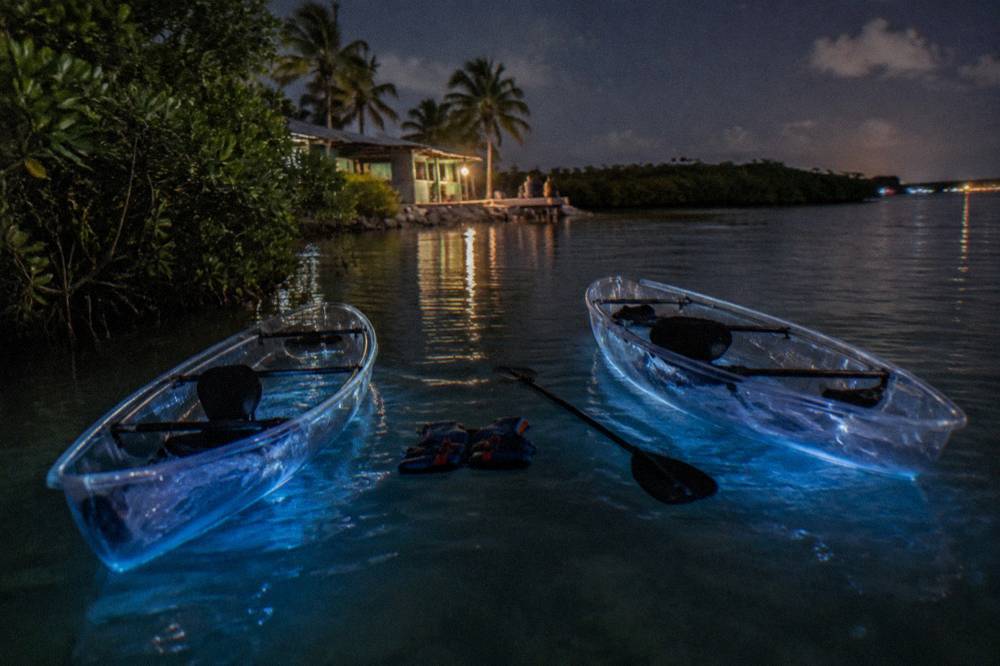
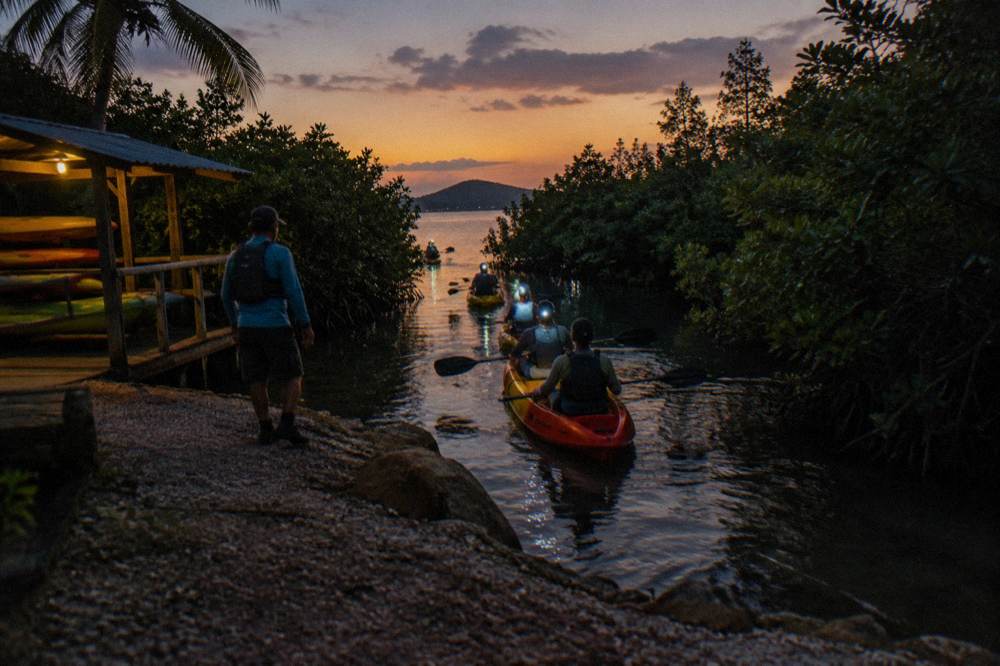
The comparison also explains why the three bays feel so different on the water even though the organism is the same. A tandem kayak threading the Fajardo mangrove channel, a clear kayak over open Vieques water where the glow shows beneath the hull, and a swim off a La Parguera boat are three different experiences of one phenomenon. If you want the full picture of how the three compare, the guide to the three bioluminescent bays breaks down location, access and format for each.
What Affects Whether You See The Glow On A Given Night
The organisms are present year round in all three bays, but visible intensity varies with moonlight, recent rainfall, water temperature and water clarity. No operator can promise a bright night, and honest listings do not try. What you control is timing: a night near the new moon, a calm forecast and a bay that is not dealing with a temporary environmental disturbance.
Moonlight is the biggest factor, and it is the most predictable one. Around a full moon the sky is bright enough to wash out the glow, which is why the Department of Natural and Environmental Resources bars licensed Mosquito Bay operators from running tours the night before, the night of and the night after a full moon. That rule is specific to Mosquito Bay. Laguna Grande tours run on more nights, and one Fajardo operator, Puerto Rico Bio Bay Tours LLC, sells a dedicated full moon kayak tour through the mangrove channels, treating the bright nights as their own experience rather than a blackout. The rest of the planning pages sit on Bioluminescent Bay Tours Puerto Rico.
Rain and cloud matter in the other direction. Heavy rainfall can temporarily reduce dinoflagellate concentration and cloud the water, lowering the visible glow until the bay settles again. A passing storm is not a catastrophe for the ecosystem, but it can make for a dimmer night, and operators cancel outright when weather makes the channel or the bay unsafe. The site's rain and weather cancellation guide covers what happens to your booking when a squall rolls in.
| Factor | Effect On The Glow | Can You Plan Around It |
|---|---|---|
| Moon phase | Bright skies near full moon wash out the visible glow | Yes: book near the new moon |
| Recent heavy rain | Can lower concentration and cloud the water | Partly: check the forecast days ahead |
| Water temperature | Warmer months tend to support denser populations | Yes: pick your travel month |
| Sargassum or algae | Localised influxes can disturb a bay temporarily | Follow local news for the affected bay |
| Water agitation | More movement means more visible flashes | Yes: kayak and swim formats agitate more than sitting still |
Seasonal patterns exist but should not be oversold. A 2024 study of Laguna Grande found dinoflagellate densities fluctuate widely through the year, with generally low values in late winter and higher values in late summer, and hurricanes acting as events that rake and refresh the lagoon. In practice that means the glow is present in every month, and the best time to visit guide weighs the moon calendar against weather, crowds and ferry logistics.
Which Bay And Tour Format Gives You The Best Chance
Mosquito Bay has the highest measured concentration of the three and the Guinness record to show for it, so if maximising the phenomenon is the goal, Vieques is the pick, with the trade-off of a ferry or flight plus a night on the island. Laguna Grande is the most accessible from San Juan, and La Parguera is the only bay where you can swim in the glow.
The Vieques route rewards the effort. The Alikei Adventures clear kayak tour, from $60 per person with a 4.8 rating from 491 reviews, puts you over open bay water in a transparent hull, and the Isla Nena pontoon boat tour, from $85 per person for about 40 minutes, suits travellers who would rather not paddle at all. Both depart from Esperanza, and both carry a likely to sell out badge on their live listings, which reflects genuine demand for a small number of licensed departures on the brightest bay.
The Vieques Kayaks Bio Bay trip remains the workhorse option: two hours, from $65 per person, up to 14 travellers per group, round trip transport from the Calle Flamboyan meeting point to the bay entrance included, and free cancellation up to 24 hours before. Because tours run at night and the last ferry back to Ceiba leaves before they end, an overnight on Vieques is effectively required, which is why the Vieques ferry guide is worth reading before you commit.
Fajardo is the practical choice for a shorter trip. Las Croabas is roughly a one to one and a quarter hour drive from San Juan, and the six operators there run nightly departures through the mangrove channel into Laguna Grande. The Kayaking Puerto Rico flagship tour, the Peniel Access Eco Tours outing at from $65 per person, and the Pure Adventure Corp. trip at from $69.13 per person all cover the same water with slightly different group sizes and inclusions, so the decision usually comes down to price, schedule and meeting point. For travellers without a car, the Peniel Bio Bay Night Kayak tour with transport from San Juan, from $125 per person, bundles the drive and the paddle into one booking.
La Parguera is the format outlier, and the one to choose if being in the water matters more than seeing the densest glow. Swimming is generally permitted there on most nights, subject to each operator's safety rules, and the Mareaito Charters sunset and bio bay cruise, from $65 per person with a 4.8 rating from 573 reviews, runs a two hour boat and swim outing with life jackets, floaties for swimming, and a cooler with ice and water included; snorkel gear is not provided, so bring your own if you want it. It is also the bay to watch for environmental disturbance: in July 2026 the Department of Natural and Environmental Resources activated its sargassum removal protocol after about 80 cuerdas of the bay were covered, a reminder that even a long standing tourist tradition shares water with the wider Caribbean.
| Bay | Concentration Claim | Format Allowed | Swimming | Easiest Access |
|---|---|---|---|---|
| Mosquito Bay, Vieques | Guinness record holder, up to 700,000 organisms per gallon | Kayak, clear kayak, clear canoe, small electric and pontoon boats | Not permitted | Ferry or flight, overnight on Vieques |
| Laguna Grande, Fajardo | Dense year round population, lagoon reached by narrow channel | Kayak only | Not permitted | About 1 to 1.25 hours by car from San Juan |
| La Parguera, Lajas | The only bay where motorboats run at night | Boat and kayak | Generally permitted on most nights | Drive to Lajas, boat from the dock |
The Honest Version Of The Odds
The rare part is the place, not the sighting. On a booked night with a licensed operator, near a new moon, with no storm in the previous days, the overwhelming majority of departures see the water light up, because the organisms are there year round. What no one can do, and no honest page should try, is promise the brightness of any single night.
That distinction is worth holding onto when you read marketing copy elsewhere. A listing that guarantees a spectacular glow is selling something no biologist can promise, since intensity responds to moonlight, rain and water conditions that vary week to week. What the best listings do instead is state the format, the duration and the cancellation policy clearly, and let the bay do the talking. Every tour on this site's roster offers free cancellation up to 24 hours before, which is the practical hedge against a bad forecast.
The deeper point is that you are participating in something genuinely scarce. Three of the world's handful of permanent bioluminescent systems are on one island, two of them are protected reserves, and the brightest of them is being actively restored with federal money and volunteer mangrove nurseries because it has gone dark before. The glow is not a theme park attraction that runs on schedule. It is a live ecosystem that happens to be extraordinarily good at what it does, and visiting it, on a kayak from Las Croabas or a boat from La Parguera, is one of the few ways to see the phenomenon at its full concentration anywhere on earth.
Common Questions About Seeing Bioluminescence
How Rare Is It To See Bioluminescence?
As a phenomenon, bioluminescence is common in the ocean. As a concentrated, permanent bay you can visit on a scheduled tour, it is one of the rarest natural attractions on earth: roughly eleven permanent systems are known worldwide, and three of them are in Puerto Rico. On a booked night with a licensed operator, the organisms are present year round, though visible intensity varies with moonlight and conditions.
Can You See Bioluminescence In Puerto Rico Year Round?
Yes. The dinoflagellates are present in all three bays in every month, and tours run throughout the year. Densities tend to run lower in late winter and higher in late summer, but the difference is one of degree, not presence. The bigger seasonal factor is the moon calendar: nights near a full moon make the glow harder to see.
Which Bay In Puerto Rico Has The Brightest Glow?
Mosquito Bay in Vieques holds the Guinness World Record for the brightest bioluminescent bay, recognised in 2006, with up to 700,000 dinoflagellates per gallon. A June 2026 measurement put the weekly count at 304,000 per gallon. It requires a ferry or flight to Vieques and an overnight stay, since tours run after the last ferry back.
Does A Full Moon Ruin The Trip?
At Mosquito Bay, licensed operators do not run tours the night before, the night of or the night after a full moon, so the question answers itself there. At Laguna Grande and La Parguera tours generally run on bright nights, and one Fajardo operator sells a dedicated full moon kayak tour. The glow is still in the water; it is simply harder to see against a bright sky.
Is The Glow Guaranteed On Every Tour?
No, and no honest operator or listing promises it. The organisms are present year round, but visible intensity depends on moonlight, recent rainfall, water temperature and water clarity. Every listing on this site offers free cancellation up to 24 hours before, which covers you if the forecast turns.
Do You Have To Kayak To See It?
No. Kayaks are the dominant format at Laguna Grande and a common one at Mosquito Bay, but Mosquito Bay also has a pontoon boat tour and an electric catamaran, and La Parguera is visited almost entirely by boat, with swimming generally permitted on most nights. The do you have to kayak guide covers the non-paddling options in full.