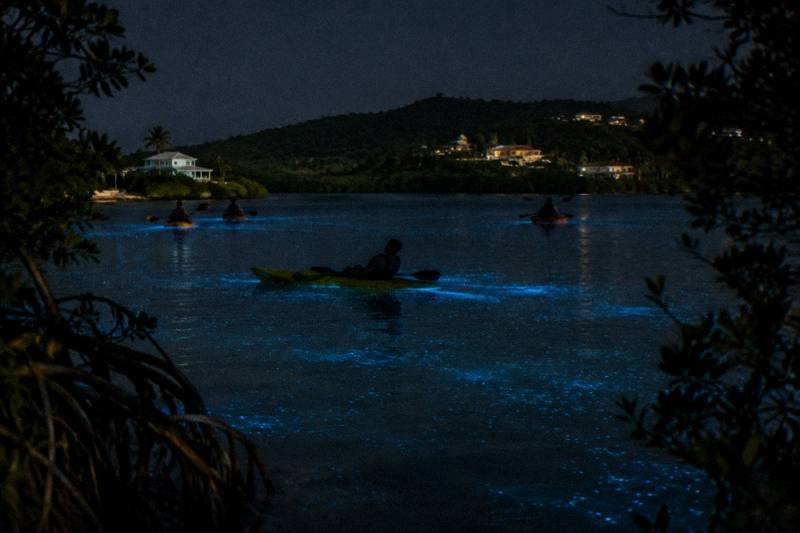
What Are The Three Bioluminescent Bays In Puerto Rico?
The three bioluminescent bays in Puerto Rico are Mosquito Bay in Vieques, Laguna Grande in Fajardo and La Parguera in Lajas. Here is what separates them and how to tour each one.
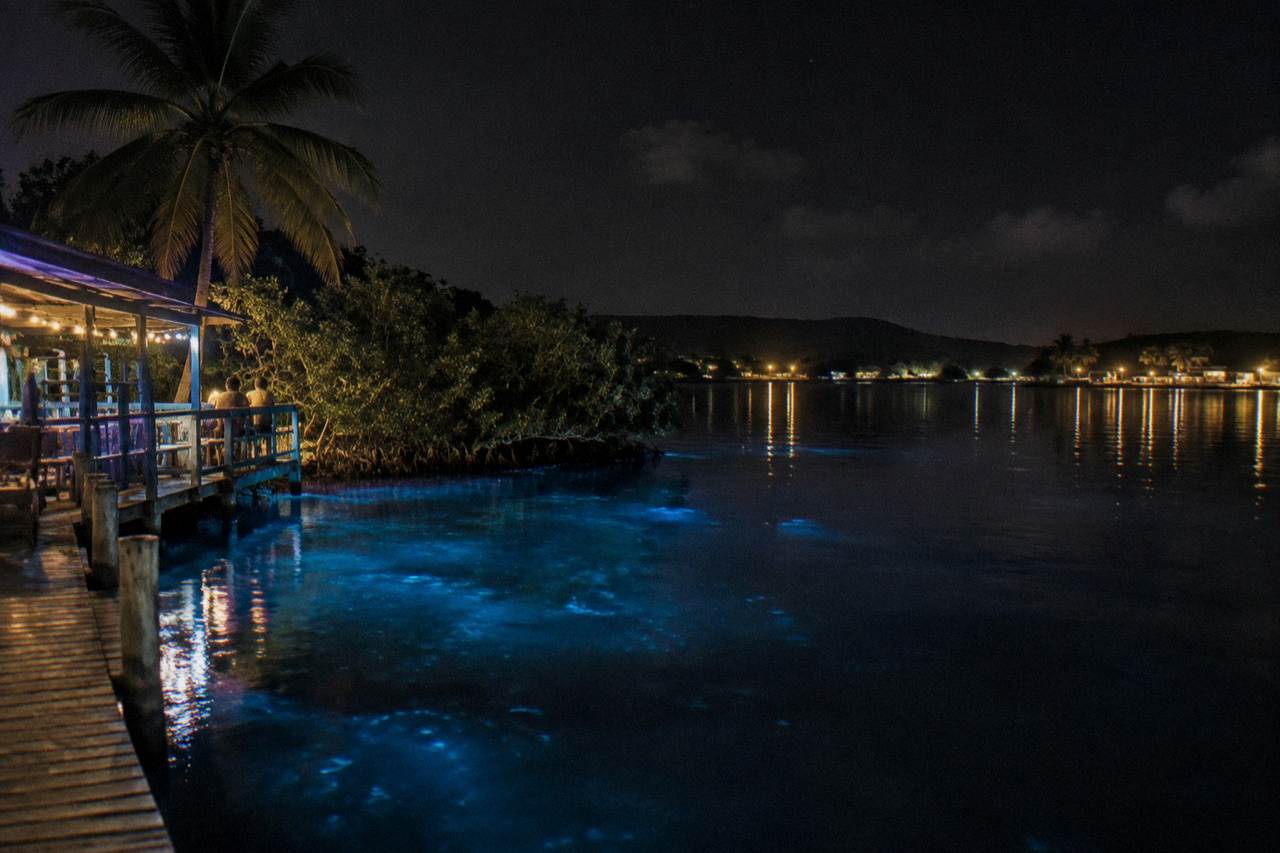
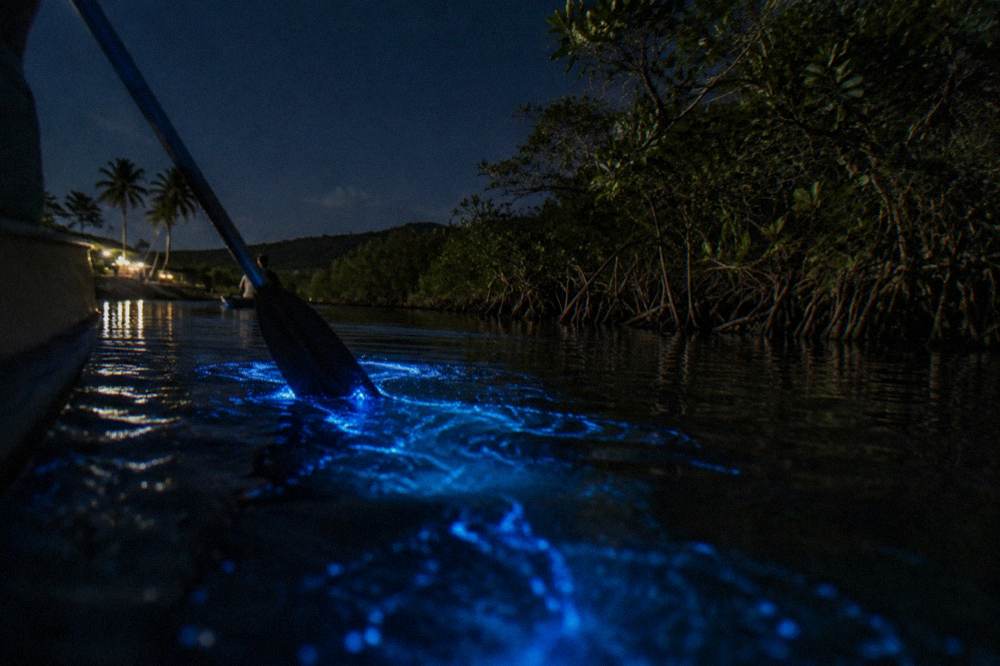
Puerto Rico holds three of the roughly eleven permanent bioluminescent systems known in the world, and they are not interchangeable. One sits behind a mangrove channel on the east coast, one fills a sheltered bay on the island of Vieques, and one opens to the boats of a fishing village in the southwest. Each has its own access route, its own tour formats and its own rules about what visitors may and may not do on the water. The organism behind all three is the same dinoflagellate, Pyrodinium bahamense, which flashes blue when the water around it is disturbed, but the density of that organism, the way you reach it and the kind of night out you get differ enormously from bay to bay. Since the brightest of the three sits on Vieques, our guide to choosing between Vieques and Culebra explains which island fits your trip if the bio bay is the main draw.
What Are The Three Bioluminescent Bays In Puerto Rico?
The three bioluminescent bays in Puerto Rico are Mosquito Bay in Vieques, Laguna Grande in Fajardo and La Parguera in Lajas. Mosquito Bay holds the Guinness World Record for the brightest bioluminescent bay and is reached by kayak from Esperanza. Laguna Grande is a kayak-only lagoon about an hour east of San Juan. La Parguera is the only one of the three reached by motorboat and the only one where swimming is generally permitted. If you were hoping to take a dip in Laguna Grande, this explanation of why kayaking is the only option in the Fajardo bio bay covers what the tours are like and where swimming in the glow is actually allowed.
Start with the geography, because it decides almost everything else. Laguna Grande sits inside the Cabezas de San Juan Natural Reserve area near Fajardo, on the island's eastern tip, roughly 1 to 1.25 hours by car from San Juan. Mosquito Bay is on the south shore of Vieques, the offshore island reached by ferry from Ceiba or by small plane, and its tours leave from the seaside village of Esperanza. La Parguera is in the southwest, part of the Lajas municipality, and its tours run from the village docks out through a maze of mangrove islets and sandbars.
The swim rules are the sharpest dividing line. Swimming is not permitted at Mosquito Bay or at Laguna Grande, a rule enforced to protect the fragile dinoflagellates. La Parguera is the only one of the three where swimming in the glowing water is generally permitted, on most nights, though operators set their own safety rules and a swim is never guaranteed on a given evening. If a swim in the glow is the goal, the southwest is the destination; if the brightest possible display is the goal, the ferry to Vieques is the price of entry. Before you commit to that southwest drive, our honest take on whether La Parguera is worth the trip weighs the chance to swim against the dimmer glow you trade away.
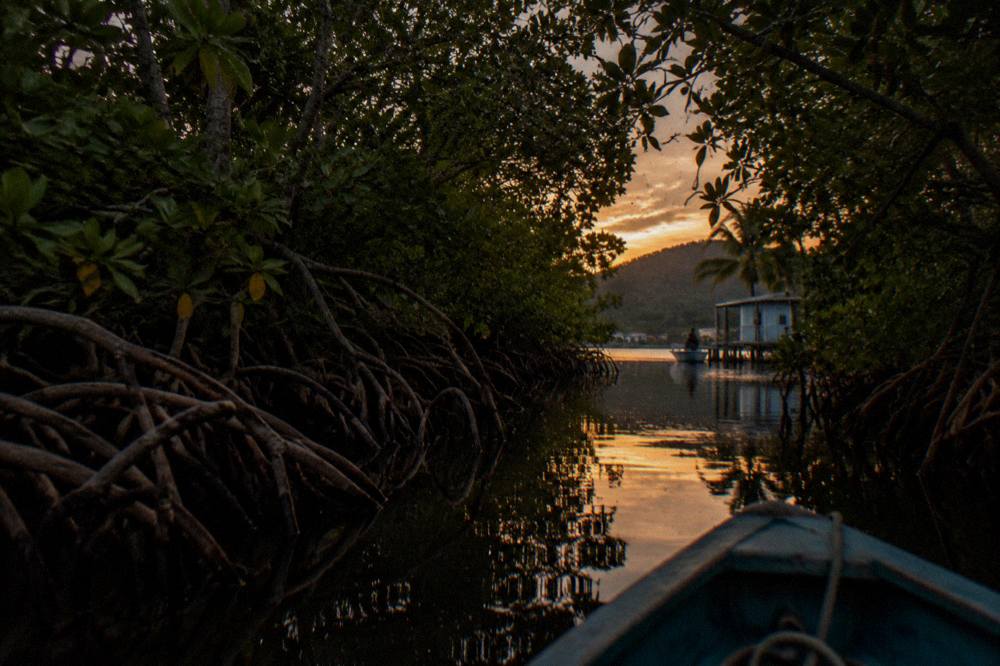
Each bay also has its own bookable route. From San Juan, the fastest evening out is the featured Bio Bay Kayak Tour in Fajardo, run by Kayaking Puerto Rico, from $89 per person for about two hours on the water. On Vieques, the Vieques Kayaks Bio Bay trip, from $65 per person, is the longest-established paddle into Mosquito Bay. In the southwest, the Mareaito Charters sunset and biobay cruise, from $65 per person, pairs a sunset swim stop at the Caracoles sandbar with the glowing bay after dark.
One bay at a time is the clearest way to compare them, starting with the record holder.
Mosquito Bay, Vieques: The Guinness Record Holder
Mosquito Bay in Vieques holds the Guinness World Record for the brightest bioluminescent bay, recognised in 2006, with up to 700,000 dinoflagellates per gallon of water. Tours run by kayak, clear kayak, canoe and electric boat from Esperanza. Swimming is banned, and DRNA-licensed operators may not run tours on the three nights around each full moon.
The record is the headline, but the mechanism behind it is the real story. Water in Mosquito Bay stays in place about 13.5 to 14.5 days before flushing out, a slow exchange that lets the Pyrodinium population accumulate to densities faster-flushing bays simply cannot hold. During a June 2026 site visit, biologists measured about 304,000 organisms per gallon, a figure that swings with the seasons and the weather but that stays far above what an ordinary coastal bay carries. The bay is protected as the Vieques Bioluminescent Bay Natural Reserve, co-managed by the Vieques Conservation and Historical Trust, which runs the plankton counts and water-quality monitoring that track the bloom's health year to year.
Getting there is the commitment. Mosquito Bay sits on the island of Vieques, reached by ferry from Ceiba or by short flight, and because tours run at night, an overnight on the island is the practical choice; the schedule belongs to the official Puerto Rico Ferry itinerary rather than to any tour operator. Tours depart from the Esperanza waterfront. The Vieques Kayaks Bio Bay trip, 4.5 from 1,242 reviews and from $65 per person, runs up to 14 travellers in guided kayaks with round-trip transport from the meeting point to the bay entrance included, and the listing carries a "Likely to sell out" badge. The Alikei Adventures clear kayak tour, 4.8 from 491 reviews and from $60 per person, uses fully transparent kayaks in groups of up to 12, so the water beneath the boat reads as part of the show.
Not every Mosquito Bay tour is a paddle. Isla Nena Bio Bay Boat Tours runs a 24-foot pontoon boat, about 40 minutes on the bay, from $85 per person in groups of up to 9, also flagged "Likely to sell out". Borikua Tours runs an electric catamaran outing, from $105 per person, which keeps the bay free of gas-engine wash; its listing notes the last ferry from Vieques leaves at 7:30 pm, which is exactly why the overnight stays matter. The formats differ but the rules do not: no swimming at Mosquito Bay, and no tours at all on the night before, the night of and the night after a full moon, a DRNA restriction rather than an operator preference. That three-night-per-lunar-cycle blackout is worth planning around, and it is specific to this bay.
There is also a recovery story here that most first-page travel articles miss. Hurricane Maria's storm surge killed almost all of the mangroves at the bay's mouth, the trees whose roots create the sheltered, meandering entrance that holds the bloom in place; natural recovery was estimated at 15 to 30 years. Since then, the Vieques Conservation and Historical Trust has run a mangrove nursery and planting program, and in December 2024 a NOAA-funded restoration of about $2.96 million began in the reserve, planting mangroves, seagrass and coral with close to 4,000 nursery plants and 4,000 biodegradable living shoreline bags. By September 2026 the plantings showed an 84 percent survival rate, according to NOAA's own account of the project. The glow visitors paddle over is, in a literal sense, being rebuilt at its edges.
Laguna Grande, Fajardo: The East Coast Lagoon
Laguna Grande in Fajardo is a lagoon reached through a narrow mangrove channel inside the Cabezas de San Juan Natural Reserve area, roughly 1 to 1.25 hours by car from San Juan. Tours are kayak-only, from $65 per person, departing Las Croabas. Swimming is prohibited, and no tour here offers pickup from San Juan hotels.
Laguna Grande is the bay most visitors from San Juan actually see, and for a plain reason: it is the only one of the three on the main island's road network. The tour hub is Las Croabas at Fajardo's eastern tip, where a cluster of operators runs evening paddles through the mangrove channel and into the lagoon. The structure matters for expectations. This is not an open bay but a lagoon behind a channel, and the 2024 study of its dinoflagellate densities found they fluctuate widely through the year, generally low in late winter and higher in late summer, with hurricanes periodically raking and refreshing the whole system. The organisms are present year-round; the visible intensity varies with the moon, rain and season.
The roster of operators here is the deepest on the island. The featured Bio Bay Kayak Tour in Fajardo by Kayaking Puerto Rico, from $89 per person for about two hours, carries a 4.7 rating from 2,176 reviews, the largest review pool of any listing covered on this site, and lists light snacks, refreshments and eco-friendly insect repellent among its inclusions. Yokahu Kayak Trips runs from $67 per person, 4.6 from 1,821 reviews, with check-in 30 minutes early at the green tent beside the water. Pure Adventure runs from $69.13, and Peniel Access Eco Tours runs from $65 in smaller groups of up to 12, with the listing marked wheelchair accessible. One Fajardo operator, Puerto Rico Bio Bay Tours LLC, even sells its outing as a full-moon kayak option, the only place in the roster where the bright moon is part of the pitch rather than a reason to stay home.
None of the six Las Croabas listings includes hotel pickup; every guest makes their own way to the meeting point, usually the Kayak Village kiosks. That is the trade for the low from-price. Travellers who want the door-to-door version can book one of the San Juan transfer tours, which add pickup and typically run 4 to 5 hours door to door at from $110 to $125 per person, or combine the lagoon with an El Yunque rainforest hike in a 12-hour day trip from $179.65. The cheapest way into glowing water on this entire site is also here by way of comparison: the no-frills local listings at Fajardo start at $65, while the cheapest San Juan-inclusive day sits at $54.99 but goes to La Parguera instead. For more on that trade, the detailed Fajardo kayak guide breaks down every operator listing.
La Parguera, Lajas: The Only One Where You Can Swim
La Parguera in Lajas is the southwest bio bay, reached by motorboat from the village docks, and it is the only one of Puerto Rico's three bays where swimming in the glowing water is generally permitted, on most nights. Tours run from $65 to $80 per person locally, or from about $55 with transport from San Juan.
The southwest bay plays by different rules from the other two. It is the only Puerto Rico bio bay where motorboat navigation is permitted at night, which changes the whole format: instead of a kayak line threading a channel, La Parguera tours are boat runs out through mangrove islets, and several of them include a swim stop in the glow. Discover Puerto Rico's official guidance confirms the distinction: swimming is generally permitted here on most nights, subject to conditions and to each operator's own safety rules, which typically mean flotation required and no touching of the organisms. A swim is never promised for a specific night, but this is the only bay where it is on the menu at all.
The local listings are short and boat-shaped. Mareaito Charters runs a sunset and biobay cruise, 4.8 from 573 reviews and from $65 per person for about two hours, that pairs a sunset swim at the Caracoles sandbar with the bay after dark, with floaties and a cooler of ice and water "Likely to sell out" badge on the listing. Joytourspr runs a small-boat outing, up to 6 participants, from $75 for about an hour, and the listing is candid that there is no bathroom on board. Aventuras Tropicales runs from $80 per person with lifejackets, snacks and bottled water included, and reviews describe swimming in the bay.
From San Juan, La Parguera is roughly a two-hour drive each way, so the transfer listings are long days. Caribbean Breeze Adventures runs the budget option, from $54.99 per person for about 9 hours, 4.0 from 717 reviews, "Likely to sell out". At the other end, Borikua Tours sells a 9-hour small-group day from $250 per person that adds a rum tasting and a sandbar stop, and Bespoke Lifestyle Management runs a boat-and-swim trip from $199 per person, 4.8 from 116 reviews, that stops in La Parguera for an appetizer before the bay.
La Parguera also carries the bays' most visible 2026 environmental problem. In July 2026, sargassum covered about 80 cuerdas of the bay, prompting the DRNA to activate its removal protocol and mobilize a specialized vessel and long-reach excavator from Fajardo, part of a wider response to a record sargassum influx projected at around 55 million tons across the region. None of the official pages fetched for this site describe a closure, and tours were running, but the episode is a reminder that all three of these systems are living water bodies, not theme-park attractions. The DRNA's 2026 Integrated Report continues to list water-quality monitoring segments for both La Parguera and Mosquito Bay, a sign the bays are watched, not assumed.
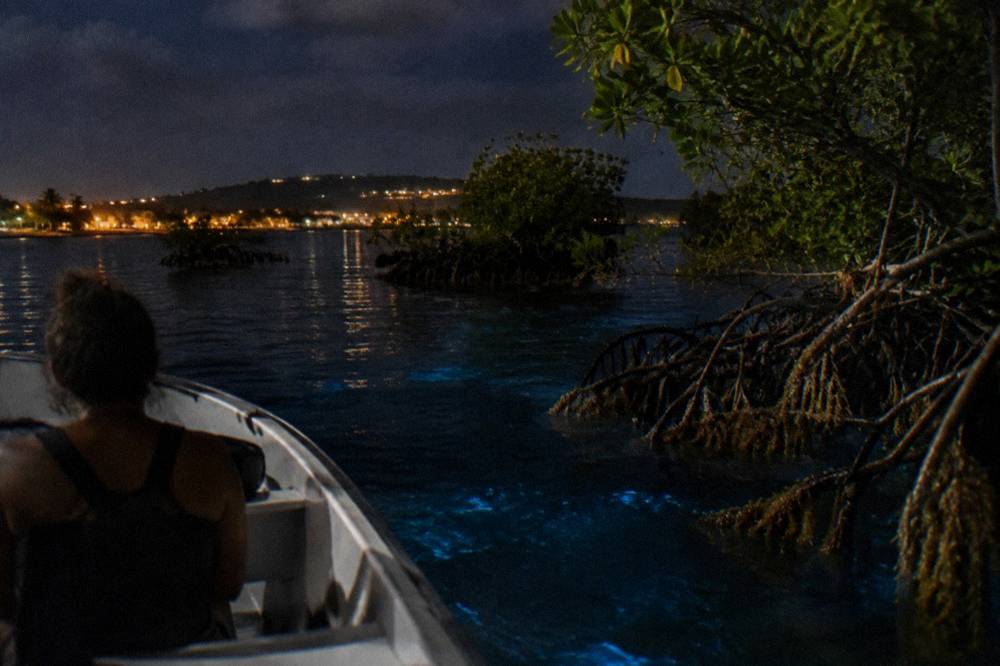
How The Three Bays Compare At A Glance
Comparing the three bays side by side: Mosquito Bay has the highest recorded dinoflagellate density and a three-night full-moon blackout; Laguna Grande is the closest to San Juan and the cheapest to reach independently; La Parguera is the only one with motorboats and the only one with swimming. From prices range from $57 per person at Mosquito Bay to $80 at La Parguera for local tours.
The table below holds the decision-relevant facts in one place. Every price is a verified from price for a local tour departing near the bay itself, not a San Juan day trip; those run higher and are covered in their own San Juan transfer guide.
| Bay | Location | Formats | Swim rule | Local tour from | Best-known listing |
|---|---|---|---|---|---|
| Mosquito Bay | Vieques, tours from Esperanza | Kayak, clear kayak, clear canoe, pontoon, electric catamaran | Swimming prohibited | $57 per person | Vieques Kayaks Bio Bay, 4.5 from 1,242 reviews |
| Laguna Grande | Fajardo, tours from Las Croabas | Kayak only | Swimming prohibited | $65 per person | Bio Bay Kayak Tour in Fajardo, 4.7 from 2,176 reviews |
| La Parguera | Lajas, tours from village docks | Motorboat | Swimming generally permitted on most nights | $65 per person | Mareaito sunset and biobay cruise, 4.8 from 573 reviews |
Format matters more than first-time visitors expect. At Mosquito Bay the choice runs from a standard guided kayak to fully transparent kayaks and canoes, which put the glow directly under every seat, to a 40-minute electric catamaran ride for anyone who would rather not paddle at all. At Laguna Grande the choice is essentially which kayak operator, with group size and from-price as the variables, plus one wheelchair-accessible-marked listing at Peniel. At La Parguera there is no paddle option at all; the listings are boats, and the swim stop is the signature.
| Bay | Getting there from San Juan | Night needed away from San Juan | Full-moon restriction |
|---|---|---|---|
| Mosquito Bay | Ferry from Ceiba or flight to Vieques, then tour from Esperanza | Yes, an overnight on Vieques is recommended | No tours the night before, of, and after a full moon |
| Laguna Grande | About 1 to 1.25 hours by car to Las Croabas | No | Not stated as a bay-wide rule; one operator sells a full-moon tour |
| La Parguera | About a 2-hour drive to Lajas | No for a long day; transfer tours run about 9 hours | Not stated as a bay-wide rule |
The moon row deserves a plain caveat: the only firm, source-backed full-moon closure rule is the DRNA restriction at Mosquito Bay. Nothing in the verified research states a bay-wide closure rule tied to moon phase at Fajardo or La Parguera, and at least one Fajardo operator actively markets a full-moon kayak. The general physics, darker nights show the glow better, applies everywhere, and the moon phase guide covers how to read a lunar calendar against a booking window.
Why Does Puerto Rico Have Three Of The World's Rarest Bays?
Puerto Rico has three of the roughly eleven permanent bioluminescent systems in the world because each bay offers a rare combination: shallow, sheltered water that flushes slowly, warm temperatures that favor Pyrodinium bahamense, and mangrove surroundings that feed and protect the bloom. Seven of the world's known permanent systems sit in the Caribbean, and three of those are here.
The science is what turns a nice night out into a genuinely unusual one. Pyrodinium bahamense is not rare in tropical waters; what is rare is a lagoon or bay where the population can accumulate rather than being flushed to sea. Mosquito Bay's 13.5-to-14.5-day water residence time is the textbook case: water sits long enough for the dinoflagellates to reproduce faster than the tide removes them. Laguna Grande's channel-and-lagoon shape does a similar job at smaller scale, and La Parguera's mangrove islets shelter its own pocket of bloom. The Guinness record page credits Mosquito Bay with up to 700,000 organisms per gallon, and the Vieques Conservation and Historical Trust explains the mangrove mouth's role in keeping that concentration locked in.
Two practical notes follow from the biology, and both are worth knowing before booking anything. First, the organism is not a hazard: analysis of Mosquito Bay samples found an extremely low average saxitoxin quota per cell, and Puerto Rico's bay populations carry none of the shellfish-toxicity reputation documented in places like Florida's Indian River Lagoon. Touching is still out of bounds at the protected bays, but the water is not the concern. Second, the glow is weather-sensitive, not a light switch. Heavy rainfall can temporarily reduce concentrations and cloud the water, hurricanes periodically reset the whole system, and moonlight competes with the display; the organisms are present year-round at all three bays, and visible intensity varies. Discover Puerto Rico's official guidance adds the visiting etiquette that follows from all this: eco-friendly repellent applied well before boarding, no flashlights or phone screens on the water, low noise, and nothing touched or taken.
Which Of The Three Bays Should You Choose?
Choose Mosquito Bay for the strongest possible display and a Vieques overnight; choose Laguna Grande for the easiest, cheapest evening from San Juan with the deepest operator roster; choose La Parguera for the boat-and-swim format and a sandbar sunset. Roughly: brightest glow means the most travel effort, and the least travel effort means no swimming.
A quick set of match-ups handles most travellers. Staying in San Juan without a car plans around the transfer listings, and the fastest of those reach Laguna Grande in a 4-to-5-hour round trip with pickup. Celebrating something, or simply wanting the story, points to Vieques: the Guinness-record bay, the clear kayaks, the electric catamaran, and the one itinerary on this site that includes the Ceiba to Vieques ferry, the I VENTURES clear-bottom kayak day trip from $230 per person. Travellers who want to be in the water, not just above it, point to La Parguera and the Mareaito cruise, which pairs a sunset swim stop with the bay. Families and first-timers usually land at Fajardo, where groups run up to 30 but the paddle is short, the channel is sheltered, and the roster's biggest review pools, 2,176 reviews on the featured listing and 1,821 on Yokahu, give the clearest signal of what the evening actually delivers.
Every listing across all three bays offers free cancellation up to 24 hours before for a full refund, as stated on the platform listings, which matters more here than on most trips: a bio bay outing depends on the sky, and rebooking one night later is a normal move, not a failure. What no operator can promise is the glow itself, and any page that does should be read with suspicion. The honest framing, backed by every monitoring source cited above, is that the organisms are present year-round in all three bays and that the visible show depends on the moon, the rain and the season. Booking a dark-sky window and holding the backup date is the closest thing to a guarantee this phenomenon offers.
For a deeper look at any single bay, the dedicated guides to Mosquito Bay in Vieques, and the wider comparison of all three bays work through the itineraries in detail. The three tours below are the standing picks for this question, one route per bay, and each links to the operator's live listing for dates and availability. More context on choosing between the east and south coasts sits in the Fajardo versus Vieques versus La Parguera breakdown, and the planning basics for Bioluminescent Bay Tours Puerto Rico as a whole start on the homepage trip picker.
Common Questions About The Three Bioluminescent Bays In Puerto Rico
What Are The Three Bioluminescent Bays In Puerto Rico?
The three bioluminescent bays are Mosquito Bay in Vieques, Laguna Grande in Fajardo and La Parguera in Lajas. Mosquito Bay holds the Guinness World Record for brightness and is toured by kayak and electric boat from Esperanza; Laguna Grande is a kayak-only lagoon about an hour east of San Juan; La Parguera is the only bay with motorboat tours and the only one where swimming is generally permitted.
Which Of The Three Bays Is The Brightest?
Mosquito Bay in Vieques holds the Guinness World Record for the brightest bioluminescent bay, with up to 700,000 dinoflagellates per gallon recorded. A June 2026 weekly count measured about 304,000 per gallon. Visible intensity at any bay still varies with moonlight, rain and season, so no tour can promise a specific display on a given night.
Can You Swim In Any Of The Three Bays?
Only at La Parguera, where swimming in the glowing water is generally permitted on most nights, subject to operator safety rules such as required flotation. Swimming is prohibited at both Mosquito Bay and Laguna Grande to protect the dinoflagellates, and tours there are kayaking or boat experiences only.
Which Bay Is Closest To San Juan?
Laguna Grande in Fajardo, roughly 1 to 1.25 hours by car from San Juan, with tours departing Las Croabas. None of the local Fajardo listings includes hotel pickup, but several transfer tours from San Juan add pickup and run about 4 to 5 hours door to door, and combo tours pair the lagoon with an El Yunque rainforest hike in a 12-hour day.
Do The Bays Glow Year-Round?
Yes, the dinoflagellates are present year-round at all three bays, but visible intensity varies with moon phase, rainfall and water conditions. Mosquito Bay tours also do not run on the night before, the night of and the night after a full moon under a DRNA rule. Dark nights near a new moon are the best viewing windows.
How Much Do Tours To The Three Bays Cost?
Local tours start at $57 per person for a clear canoe outing at Mosquito Bay, $65 at Laguna Grande in Fajardo and La Parguera, and $65 for the Vieques Kayaks trip at Mosquito Bay. San Juan transfer and day-trip listings run higher, from $54.99 for a La Parguera group day up to $250 per person for a rum-tasting small-group tour. All listings offer free cancellation up to 24 hours before.