Is It Better To Swim Or Kayak In The Fajardo Bio Bay?
Swimming is not permitted in Laguna Grande, the Fajardo bio bay. Here is what that rule means for your trip, what the kayak tours are like, and where in Puerto Rico you can actually swim in the glow.
Is It Better To Swim Or Kayak In The Fajardo Bio Bay?
Neither, because swimming is not one of the options: swimming is not permitted in Laguna Grande, the Fajardo bio bay, under rules enforced to protect the dinoflagellates. Every licensed experience there is a paddle one, in kayaks or clear canoes. If being in the glowing water matters to you, the honest comparison is kayaking Laguna Grande versus swimming at La Parguera, the only one of Puerto Rico's three bio bays where a swim is generally allowed.
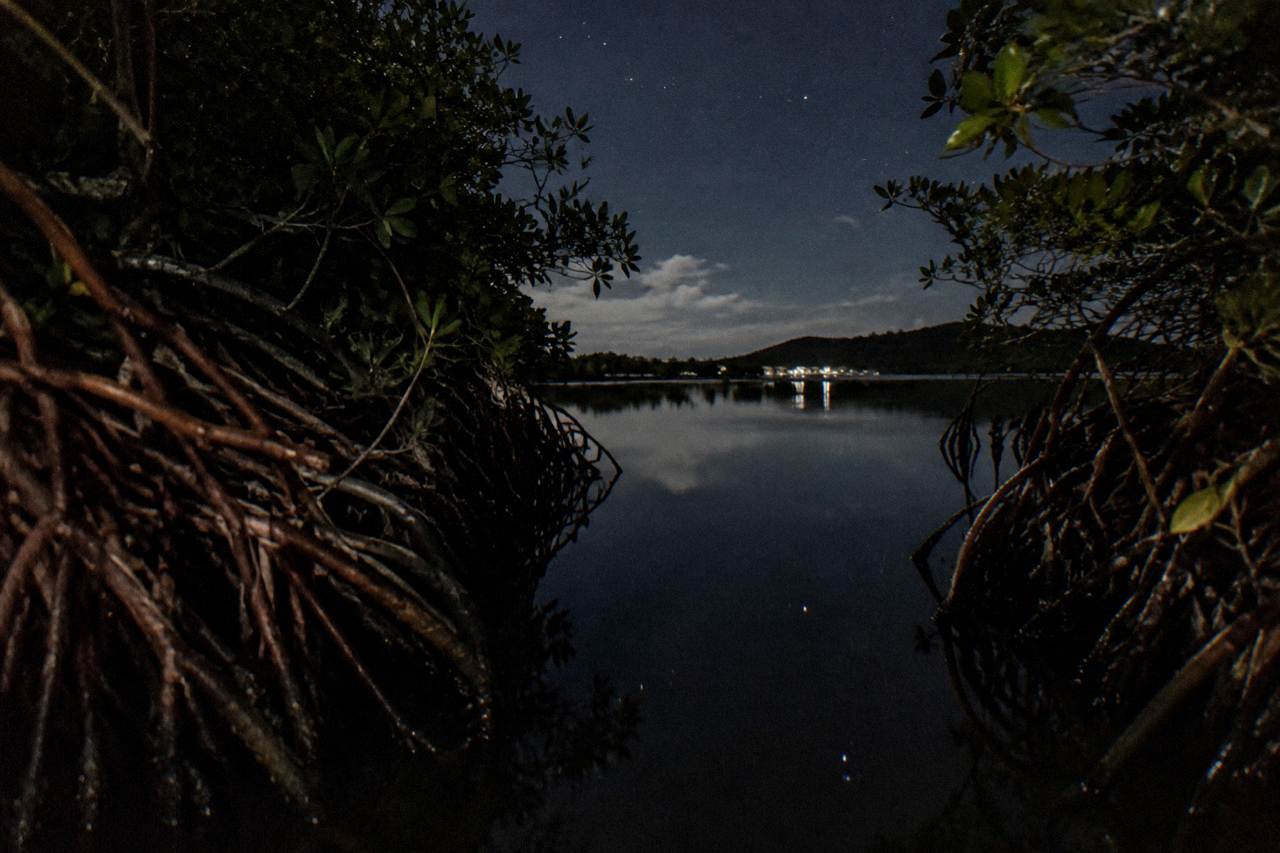
That answer surprises a lot of travelers, and it is worth understanding why the rule exists before dismissing it as bureaucracy. Laguna Grande sits inside the Cabezas de San Juan Natural Reserve area, a protected lagoon reached through a narrow mangrove-lined channel. The organisms that produce the glow, a dinoflagellate called Pyrodinium bahamense, are present year-round, but the visible intensity varies with moonlight, rain, season and water conditions. The authorities that manage the reserve treat the lagoon as a fragile ecosystem rather than a swimming hole, and the official guidance from Discover Puerto Rico's bay protection page is explicit that swimming is not permitted at Laguna Grande or Mosquito Bay to protect the dinoflagellates. If you're wondering whether those restrictions make a visit less appealing, our honest verdict on whether Laguna Grande is worth it weighs the glow, the cost, and the convenience against Mosquito Bay and La Parguera.
So the question reshapes itself. It becomes: do you want the mangrove-channel paddle into a protected lagoon at Fajardo, or do you want to be physically in the water, which means La Parguera in Lajas? Both are real, bookable nights out with licensed operators, and this article walks through each in turn. For context on how the three bays differ generally, the guide to all three bioluminescent bays covers the geography, and the site's Laguna Grande tour guide goes deeper on Fajardo itself.
It also helps to know that Puerto Rico is unusually rich in these systems. The island holds three of the roughly eleven permanent bioluminescent systems in the world, seven of them in the Caribbean, according to a biologist at the Vieques Conservation and Historical Trust. That rarity is the backdrop for every rule on this page: these are not decorative attractions but small, slow-moving bodies of water that took a long time to reach their current state and can be pushed backward quickly.
If you are still weighing the two formats against each other, the selection above pairs the featured Fajardo kayak tour with a second Fajardo operator at a slightly lower price point and a La Parguera swim option that includes transport from San Juan. The rest of this page explains what each of those actually involves.
Why Swimming Is Banned In Laguna Grande?
Swimming is prohibited at Laguna Grande to protect the dinoflagellate population that creates the glow, and the prohibition applies to tour guests and independent visitors alike. The lagoon is part of a protected natural reserve, and swimming is not permitted under the rules, which exist to protect the fragile dinoflagellates that make the bay glow. There is no operator at Fajardo that can legally take you into the water.
The reasoning is ecological rather than safety-related. Laguna Grande's bloom depends on a delicate balance: a 2024 study of the lagoon found dinoflagellate densities fluctuate widely through the year, generally low in late winter and higher in late summer, with hurricanes periodically reshaping the system. A lagoon that flushes and settles on its own rhythm is closed to swimmers so its fragile dinoflagellates stay undisturbed. The official tourism body's guidance for all three bays asks visitors to use eco-friendly repellent as a cream or balm rather than a spray, applied well before the tour, to avoid flashlights and phone screens, and to keep noise down, which tells you how finely tuned the environment is considered to be.
A useful comparison is Mosquito Bay in Vieques, which made the same choice after a warning sign. Mosquito Bay holds the Guinness World Record for the brightest bioluminescent bay, with up to 700,000 dinoflagellates per gallon of water, recognised in 2006. After a blackout period in 2014, swimming was banned there too, and the Vieques Conservation and Historical Trust co-manages the reserve with the Department of Natural and Environmental Resources, running plankton counts and mangrove restoration. The pattern across Puerto Rico's most protected bays is consistent: paddle craft only, no bodies in the water, no gas motorboats at night.
One point worth knowing because first pages of search results rarely mention it: the same protection logic is why La Parguera stands apart. It is the only one of the three bays where motorboat navigation is permitted at night, and the only one where swimming in the glowing water is generally allowed, on most nights, subject to each operator's safety rules. Three bays, three different regulatory outcomes, all from the same starting concern.
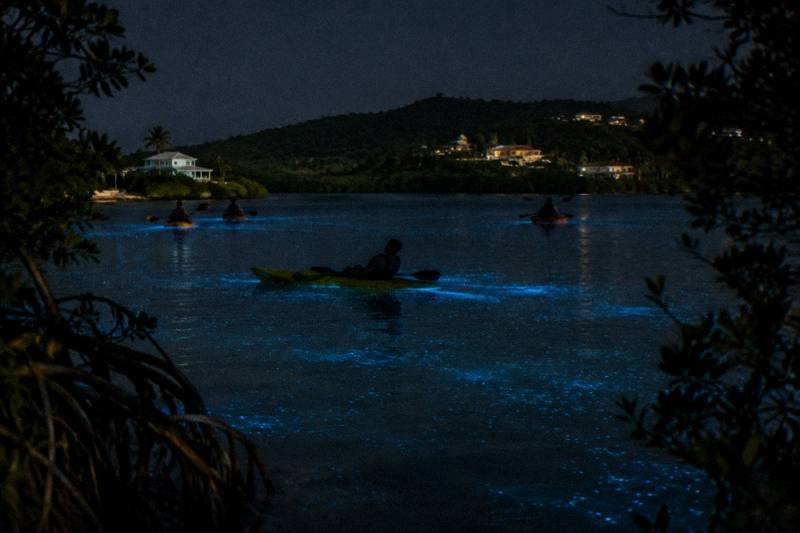
There is a second, quieter reason the no-swimming rule matters at Fajardo specifically. The glow is triggered by agitation: Pyrodinium bahamense flashes blue when the water around it is disturbed, which is why a paddle stroke or a dripping hand lights up the surface. A swimmer would produce plenty of agitation, stirring the top layer of the lagoon, the exact layer where the organisms concentrate. To protect them, swimming is not permitted in Laguna Grande. The rules are not arbitrariness dressed up as conservation; they map onto how the organism lives. Guests who understand this usually report the kayak feels like participation rather than restriction, since every stroke of the paddle draws light from the water alongside the hull.
What Kayaking Laguna Grande Is Actually Like?
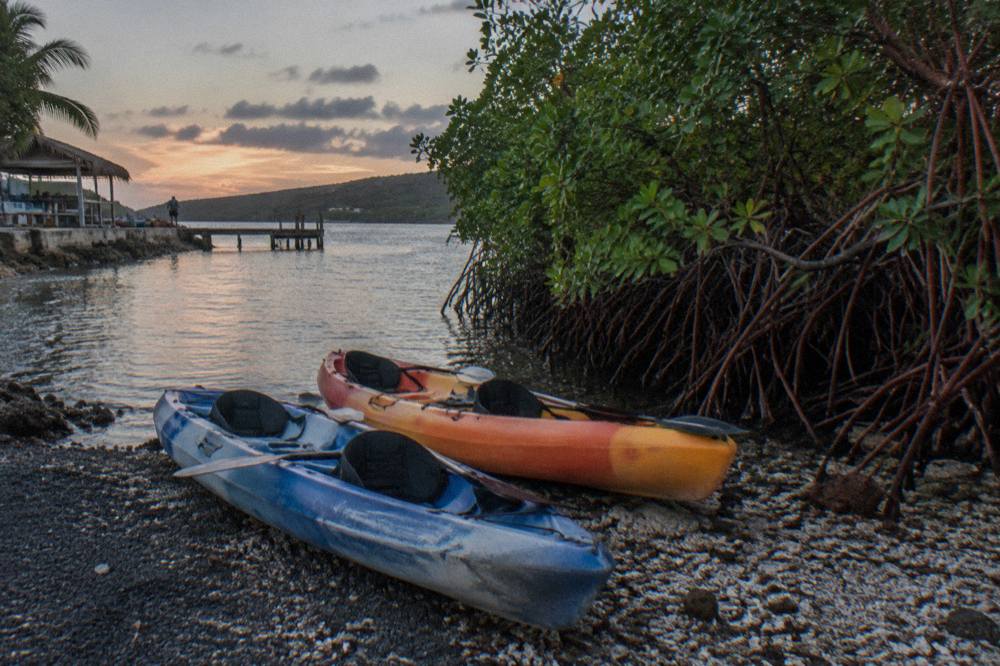
Kayaking Laguna Grande is a guided nighttime paddle through a narrow mangrove channel into the lagoon, usually about two hours from the Las Croabas departure area in Fajardo, in tandem or single kayaks with a licensed operator. Six outfitters run the route on this site's roster, priced from $65 to $89 per person, all with free cancellation up to 24 hours before. You stay in the kayak the whole time.
The shape of the night is fairly consistent across operators. You check in at the Kayak Village kiosks at Las Croabas, get a safety briefing and paddling instruction, then follow a guide through the mangrove channel as darkness settles. The featured Bio Bay Kayak Tour by Kayaking Puerto Rico runs about 2 hours from $89 per person, rated 4.7 from 2,176 reviews, with light snacks, refreshments and eco-friendly insect repellent on the inclusion list. The Yokahu Kayak Trips outing is the volume alternative at from $67 per person with a 4.6 rating from 1,821 reviews, and check-in there is 30 minutes early at the green tent beside the water. Peniel Access Eco Tours runs a smaller-group version capped at 12 travellers from $65 per person, and its listing is marked wheelchair accessible.
Pure Adventure Corp. runs another of the Las Croabas kayak outings, about 2 hours from $69.13 per person, rated 4.6 from 1,649 reviews, with a 240 lb per person weight limit and on-site weighing. Island Kayaking Adventure offers a shorter 1 hour 30 minute tandem paddle from $89, snacks included, and its guides may use a tarp to block moonlight on bright nights, which is a practical touch worth knowing about. Puerto Rico Bio Bay Tours LLC sells a 3 hour version from $85 that is also offered as a full moon tour, one of the few Fajardo listings that leans into bright nights rather than avoiding them.
| Operator | Format | Duration | From (per person) | Rating | Reviews |
|---|---|---|---|---|---|
| Kayaking Puerto Rico | Tandem kayak, up to 30 | About 2 hours | $89 | 4.7 | 2,176 |
| Yokahu Kayak Trips | Guided kayak, up to 30 | About 2 hours | $67 | 4.6 | 1,821 |
| Pure Adventure Corp. | Guided kayak, up to 30 | About 2 hours | $69.13 | 4.6 | 1,649 |
| Island Kayaking Adventure | Tandem kayak, up to 30 | 1 hour 30 minutes | $89 | 4.3 | 529 |
| Peniel Access Eco Tours | Guided kayak, up to 12 | About 2 hours | $65 | 4.4 | 310 |
| Puerto Rico Bio Bay Tours LLC | Guided kayak | About 3 hours | $85 | 4.6 | 274 |
Honesty requires one more line here: no operator can promise what the water will look like on your night. The organisms are present year-round, but visible intensity varies with the moon, recent rainfall and water conditions, and heavy rain can temporarily cloud the water and lower the glow. Book the darkest window you can, which usually means the nights around a new moon, and treat anything brighter as a bonus.
The paddle itself is genuinely beginner-friendly, and that is not marketing talk. The channel is narrow and sheltered, the pace is set by the guide at the front, and tandem kayaks split the work between two people, which is why so many first-timers and family groups choose this format. Group sizes run up to 30 travellers on the larger listings, so if you want a quieter night, the Peniel outing capped at 12 is the small-group pick in that column. Expect to get at least a little wet from paddle drip, wear clothes you do not mind sitting in damp, and skip the phone photography ambitions: the glow is bright to the adapted eye but famously faint to a standard camera sensor, and conservation guidance discourages bright screens on the water anyway. The site's moon phase guide helps with picking that window.
Where Can You Actually Swim In Bioluminescent Water?
La Parguera, in the southwestern town of Lajas, is the only one of Puerto Rico's three bioluminescent bays where swimming in the glowing water is generally permitted, on most nights, and it is the only bay where motorboats run at night. Tours there are boat-based rather than kayak-based, with swimming from the boat when conditions and the operator's rules allow it. Flotation is required and touching the organisms is not allowed.
The difference in format is the whole point. At La Parguera you ride out by boat, and the typical outing includes time in the water rather than time in a kayak. Mareaito Charters runs a sunset and biobay cruise, about 2 hours, rated 4.8 from 573 reviews, with a sunset swim at the Caracoles sandbar before the bay; price sits on the live listing, and snorkel gear is excluded, so bring your own. Joytourspr runs a smaller boat trip capped at 6 participants from $75, about an hour, and its listing is candid that this is not a kayak tour and there is no bathroom on board. Aventuras Tropicales departs from Playa Punta Papayo with lifejackets, snacks and bottled water included, from $80 per person.
There is a trade-off, and this site reports it plainly rather than burying it. Mosquito Bay is the record-holder for brightness, and the bays with the strictest protections, Vieques and Fajardo, are the ones where the densest blooms are defended most aggressively. La Parguera's water residence time is shorter, the bay is more open to boat traffic, and in July 2026 sargassum covered about 80 cuerdas of the bay, prompting the Department of Natural and Environmental Resources to activate its removal protocol. None of that stops the swim from being a genuinely unusual experience, and the organisms are present there year-round too, but a fair comparison acknowledges that you are trading some ecological intensity for the right to be in the water.
If you are staying in San Juan and the swim matters more than the paddle, Caribbean Breeze Adventures runs a La Parguera boat and swim trip with transport from San Juan from $54.99 per person, about 9 hours door to door, rated 4.0 from 717 reviews. It is the cheapest way on this roster to combine a glowing-water swim with round-trip transport, though it is a long evening after a drive of about two hours each way.
How Do The Two Nights Compare Side By Side?
A Fajardo kayak night and a La Parguera swim night differ on almost every axis except the glow itself: Fajardo is a 1 to 2 hour paddle from Las Croabas with no swimming and no motorboats, while La Parguera is a boat ride with a swim, longer travel from San Juan, and a more open bay. Fajardo is roughly 1 to 1.25 hours by car from San Juan; La Parguera is about a two hour drive each way.
| Factor | Laguna Grande, Fajardo | La Parguera, Lajas |
|---|---|---|
| Getting in the water | Not permitted | Generally permitted on most nights |
| Craft | Kayak or clear canoe only | Motorboat, the only bay that allows it |
| Typical duration | 1 hour 30 minutes to 3 hours | 1 to 2 hours on the water |
| Price range on this roster | From $65 to $89 per person | From $65 to $80 per person |
| Travel from San Juan | Roughly 1 to 1.25 hours by car | About 2 hours by car each way |
| Best for | Paddling a mangrove channel, protected lagoon | Being in the water, sunset stops, swim access |
Neither column wins outright; it depends what you want from the night. Families with younger children often prefer Fajardo because the paddle is short, the departure point is an easy drive from San Juan hotels, and the tandem kayaks let a child ride with an adult. Travelers who specifically want to feel the water move around them, or who want a sunset component built into the evening, lean La Parguera. And anyone deciding between Fajardo and Vieques rather than Fajardo and La Parguera should read the Fajardo versus Vieques versus La Parguera comparison, which lays out all three.
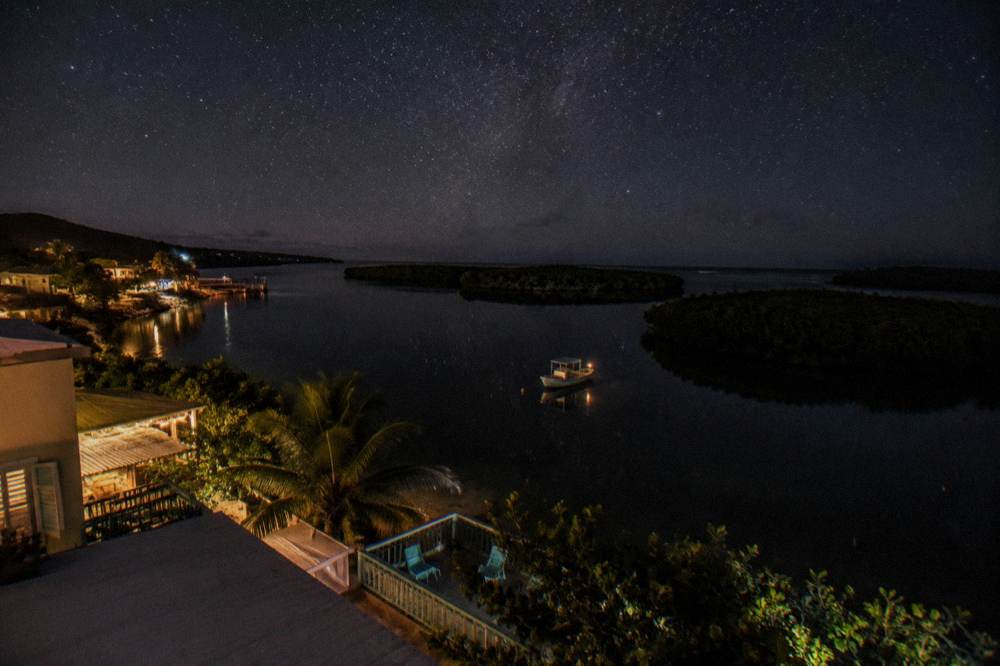
Weather cancels differently at each bay, and that belongs in a fair comparison. Fajardo sits on the northeastern tip of the island, exposed to Atlantic weather moving in, and rain near the lagoon can cloud the channel on short notice. La Parguera faces the calmer southwest coast, but its more open water means wind and chop matter more for a swim stop. In both cases the operator decides, every listing on this roster carries free cancellation up to 24 hours before, and last-minute weather calls are refunded or rescheduled by the operator. The site's rain and cancellation guide covers what happens when a night is called off.
For the full swim question across all three bays, including the Vieques rules and what operators supply, the dedicated guide to swimming in the bioluminescent bays covers it in detail.
Which Should You Book If You Are Already In Fajardo?
If you are already in or near Fajardo, book the kayak: the whole point of being there is the protected lagoon, and the kayak is the only legal way to see it. The featured Bio Bay Kayak Tour by Kayaking Puerto Rico, from $89 per person and rated 4.7 from 2,176 reviews, is the strongest all-round listing, and every Fajardo operator on the roster offers free cancellation up to 24 hours before. Before you lock in a date, check our month by month guide to the best time for Puerto Rico bioluminescence, since the moon plays as big a role in the glow as your choice of bay.
Being on the ground in Fajardo also opens the transport-free options, which are the cheapest listings in that column. None of the six Las Croabas operators offers pickup, so you drive yourself to the kiosks, park, and walk to your check-in point. That is a modest effort for a from price of $65 per person at the Peniel outing. If you would rather not drive at all, two transfer versions exist: Puerto Rico Access Eco Tours runs a kayak outing with hotel pickup from the San Juan area from $125, about 5 hours door to door, and Peniel runs a similar transport-included night from $125, about 4 hours. There is also a same-day combination that pairs an El Yunque rainforest hike with the evening kayak, run by Bespoke Lifestyle Management, 12 hours from $179.65 per person and rated 4.7 from 1,020 reviews. If you're weighing whether to turn the outing into a full stay, our guide to whether Fajardo is worth visiting on a Puerto Rico trip covers how to plan it.
For a deeper look at the featured listing specifically, including what the operator includes and how the night runs, see the Fajardo kayak tour write-up, and check availability through the operator's live listing for your dates. This whole comparison, the roster behind it and the pricing tables on this page come from Bioluminescent Bay Tours Puerto Rico, which tracks the three bays and their listings in one place.
One practical note on timing, since the moon matters more than most first-time visitors expect: darker nights near a new moon give better viewing, and nights near a full moon make the glow harder to see. The DRNA full-moon closure rule applies to Mosquito Bay in Vieques, not to Fajardo, so Fajardo tours generally run through bright nights, and one listing there is even sold as a full moon tour. But if you have flexibility, aim for the darker end of the calendar whichever bay you choose.
A few closing planning notes, all general rather than listing-specific. Wear quick-drying clothes and shoes that can get wet, bring a towel for after, and apply any repellent as a cream or balm well before you reach the water, since sprays are discouraged around the bays. Arrive early enough to check in calmly, especially at Yokahu where the 30 minute early check-in is stated on the listing. And set expectations honestly with your group before you go: the glow is a natural phenomenon that varies night to night, and the travelers who enjoy these tours most are the ones who treat the paddle or the swim as the experience, with whatever the water does that night as the bonus.
Common Questions About Swimming And Kayaking In The Fajardo Bio Bay
Is It Better To Swim Or Kayak In The Fajardo Bio Bay?
Kayak, because swimming is not permitted in Laguna Grande at all. The choice only exists between kayaking Fajardo and swimming at La Parguera, the one bay where a swim is generally allowed.
Can you swim in Laguna Grande in Fajardo?
No. Swimming is not permitted at Laguna Grande to protect the dinoflagellates, and no licensed operator offers it. All Fajardo bio bay experiences are kayak or clear canoe tours.
Which bio bay in Puerto Rico allows swimming?
La Parguera in Lajas is the only one of the three where swimming in the glowing water is generally permitted, on most nights, subject to operator safety rules. Flotation is required and touching the organisms is not allowed.
Is the Fajardo kayak tour worth it if you cannot swim?
For most travelers, yes. The paddle through the mangrove channel is the access route to a protected lagoon, tours run about 1 hour 30 minutes to 3 hours from $65 to $89 per person, and the featured listing carries a 4.7 rating from 2,176 reviews.
Do any Fajardo bio bay tours include transport from San Juan?
Yes. Puerto Rico Access Eco Tours and Peniel Access Eco Tours both run kayak nights with San Juan area pickup from $125 per person, roughly 4 to 5 hours door to door. The six Las Croabas-only listings do not include pickup.