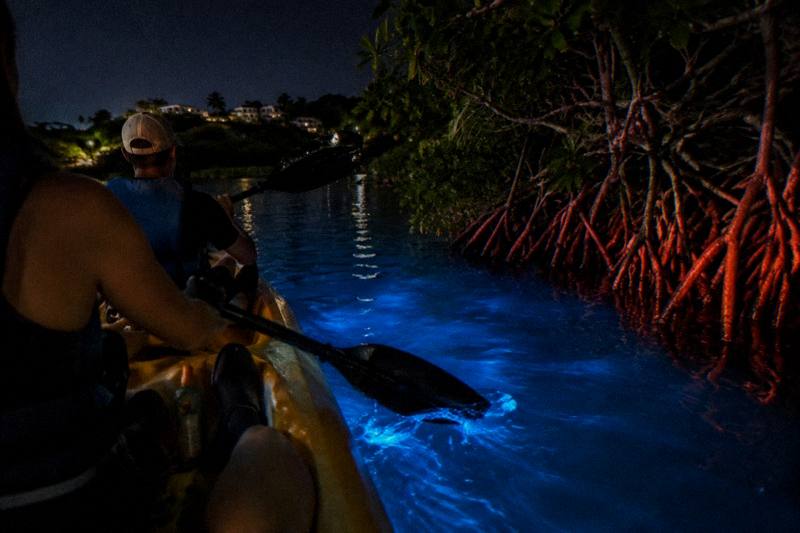
What Month Is Best For Bioluminescence In Puerto Rico?
A month by month verdict on when to book a Puerto Rico bio bay tour: moon mechanics, season patterns at Laguna Grande, hurricane season realities, and a decision table matching your goal to a bay and a listing.
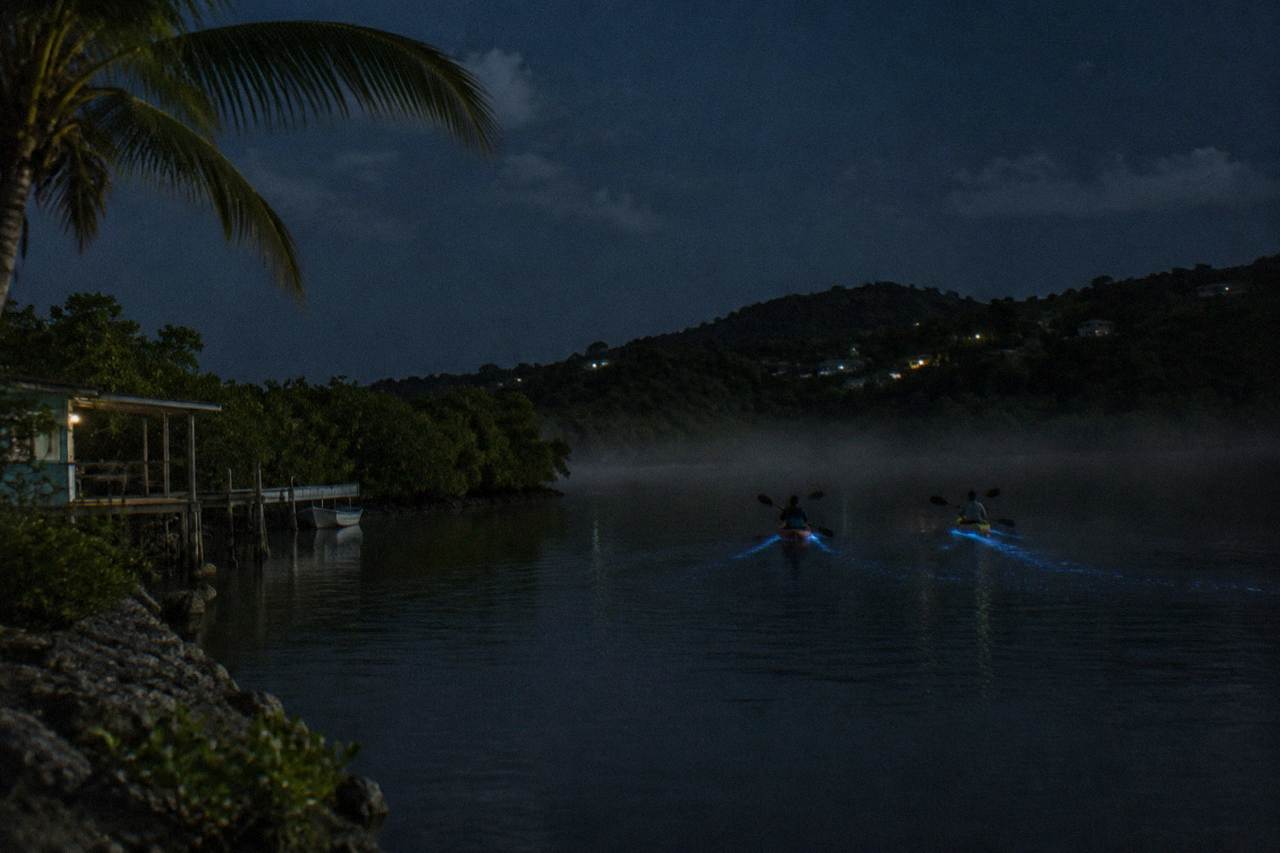
What Month Is Best For Bioluminescence In Puerto Rico?
Ask ten travel pages this question and most will hand you a single month with total confidence. The reality on Puerto Rico's three bioluminescent bays is more interesting, and more useful for planning. The organisms responsible for the glow, a dinoflagellate called Pyrodinium bahamense, are present in the water year-round at Laguna Grande, Mosquito Bay and La Parguera. What changes month to month is not whether they exist, but how the weather, the water and the moon shape what a visitor actually experiences on a given night.
The single biggest factor is lunar, not seasonal. Dark nights near a new moon beat bright nights near a full moon, every month of the year, and on Vieques the full-moon window is not even a matter of choice: licensed operators do not run Mosquito Bay tours on the night before, the night of, or the night after a full moon. That rule alone can make a "wrong" month work beautifully or a "right" month fall flat, depending on where your dates land in the lunar cycle.
Season still matters, in specific and documentable ways. Warmer months are described as slightly brighter at Laguna Grande, when water temperatures support peak dinoflagellate populations, while the drier stretch from December to April offers the most stable viewing weather. Hurricane season, June to November, brings rain that can temporarily cloud the water and reduce concentrations. And in July 2026, sargassum covered roughly 80 cuerdas of La Parguera bay, a reminder that summer brings its own coastal variables.
This article walks the calendar honestly: what each stretch of the year does to the water, how the moon overrides the month, and which bay and which listing fit each kind of trip. The featured Fajardo outing, the Kayaking Puerto Rico kayak tour on Laguna Grande, anchors the Fajardo side of the comparison, alongside the Vieques Kayaks trip on Mosquito Bay and the Mareaito Charters sunset cruise at La Parguera. No month comes with a glow guarantee, because none exists; the organisms are present year-round but visible intensity varies with moonlight, rain and water conditions.
What Month Is Best For Bioluminescence In Puerto Rico?
There is no single best month, because the moon phase matters more than the calendar. If you must pick by season, the December to April dry stretch gives the most stable weather, while the warmer May to October window is described as slightly brighter at Laguna Grande. Whatever month you choose, book the nights closest to a new moon and avoid the full-moon window entirely.
Start with the mechanics, because they explain every recommendation that follows. The glow comes from Pyrodinium bahamense, a single-celled organism that flashes blue when the water around it is agitated, by a paddle stroke, a hull, or a swimming body. Mosquito Bay holds the Guinness World Record for the brightest bioluminescent bay, with counts of up to 700,000 organisms per gallon of water recognised in 2006. During a June 2026 site visit, biologists measured 304,000 organisms per gallon, a strong density by any standard. The bay holds that bloom partly because its water stays put for about 13.5 to 14.5 days before flushing out; faster-flushing bays cannot hold comparable concentrations.
That biology is why the month question has a layered answer. The plankton is not seasonal in the sense of migrating or disappearing. A 2024 study of Laguna Grande found dinoflagellate densities fluctuate widely through the year, with generally low values in late winter and higher values in late summer, roughly August to November. Warmer months are described as slightly brighter at Laguna Grande because warmer water temperatures support peak populations. None of that is a promise for your night; it is a tilt in the odds, and rain or a bright moon can flatten it.
The moon is the stronger lever. Darker nights around a new moon give better viewing, and nights around a full moon make the glow harder to see, as the official tourism guidance puts it, visit on a moonless night. On Vieques this is codified: DRNA-licensed operators may not run Mosquito Bay tours on the three nights around each full moon. So a traveler who picks the "best" month but lands on full-moon dates gets nothing at Mosquito Bay at all, while a traveler in an "average" month with new-moon dates gets the darkest possible sky.
For practical planning, then, the month you choose is really a choice about weather and water, and the dates within that month are a choice about darkness. Both matter. The rest of this article breaks the year into its working parts and ends with a decision table that maps a goal, a month window, a bay and a specific listing.
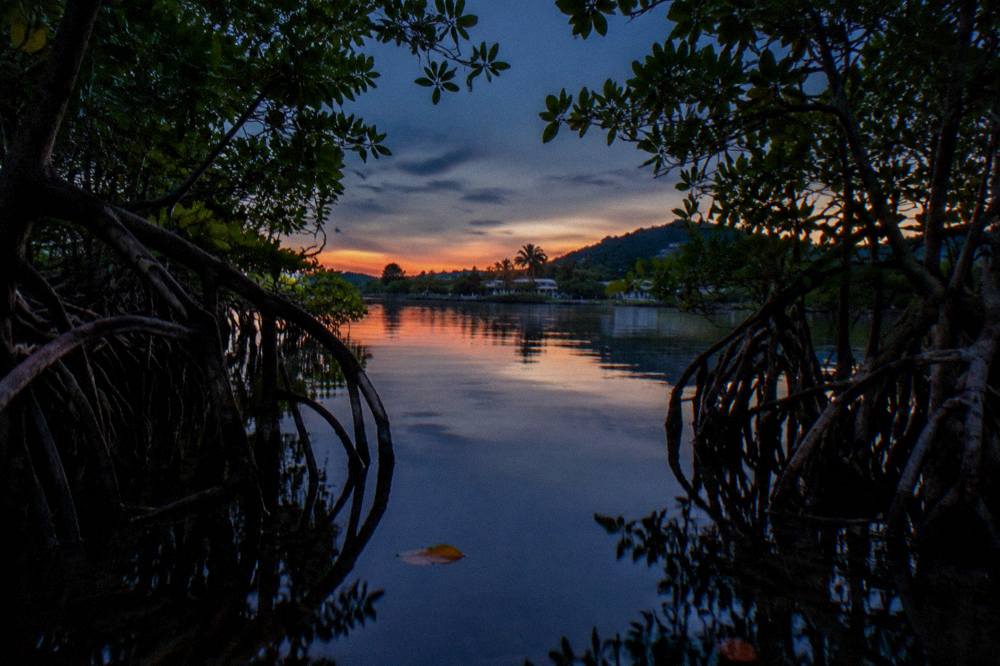
For readers who want the full lunar mechanics, the deeper treatment lives in the moon phase planning guide, and the broader season-by-season breakdown is in the best time to visit guide. The short version for this question: pick a month for its weather, pick your nights for the moon.
How The Moon Outweighs The Calendar At All Three Bays
Every month contains a roughly two-week dark window and a bright window around the full moon, and the dark window is when to go. On Vieques the full-moon window is a legal blackout: licensed operators cannot run Mosquito Bay tours the night before, the night of, or the night after a full moon. Fajardo and La Parguera tours generally keep running, but a bright moon makes the glow harder to see anywhere.
Every calendar month contains both a new moon and a full moon, which is the single most important planning fact on this page, and the reason a month-by-month ranking without moon dates is close to useless. A February trip timed to the new moon will outperform an August trip timed to the full moon for visible glow, even though August sits in the warmer, denser part of the plankton year at Laguna Grande.
On Vieques, the rule is enforced rather than advisory. The three-night blackout around each full moon applies to DRNA-licensed operators at Mosquito Bay, and it exists because moonlight washes out the faint blue flash the organisms produce. The practical consequence: if your travel dates are fixed around a full moon, Mosquito Bay is simply unavailable on those nights, and you should plan the Fajardo or La Parguera side of the island instead, or shift your Vieques nights by a few days. Because Mosquito Bay tours run after dark and the last ferry from Vieques leaves at 7:30 pm per one operator's listing, an overnight stay on the island is part of the plan regardless of moon phase.
Fajardo's Laguna Grande has no comparable blackout. One Fajardo operator, Puerto Rico Bio Bay Tours LLC, even sells the bright window as a product: a dedicated full moon kayak tour through the mangrove channels, a 3-hour outing from $85 per person carrying a 4.6 rating from 274 reviews. That is a different experience, a night paddle under moonlight rather than a maximum-darkness glow hunt, and it exists precisely because the standard tours on bright nights deliver less visible bioluminescence (see Is The Glow Still Happening?). The listing is marked likely to sell out.
The official tourism guidance for all three bays is straightforward: visit on a moonless night. It also asks visitors to avoid flashlights, phone screens and any unnecessary light once on the water, because bright artificial light destroys the night vision that makes the faint blue glow legible. Heavy rain can temporarily reduce concentrations and cloud the water, so the ideal night is dark, dry and calm, in any month.
The listings that visit these bays reflect the same logic. The Vieques Kayaks trip on Mosquito Bay, from $65 per person with a 4.5 rating from 1,242 reviews, only exists on nights the blackout permits, and it carries a likely-to-sell-out badge, which makes new-moon Vieques dates the ones that fill first. At Fajardo, the featured Kayaking Puerto Rico tour runs from $89 per person with a 4.7 rating from 2,176 reviews, and its free cancellation up to 24 hours before, per the listing, gives some flexibility if the forecast turns. The full mechanics of choosing dark dates are laid out in the moon phase guide, which pairs lunar calendars with each bay's rules.
Warm Months Versus Dry Months: What The Water Does
The May to October stretch, with peak densities extending into November, is when Laguna Grande is described as slightly brighter, because warmer water supports peak dinoflagellate populations. The December to April dry season offers the most stable viewing weather. Neither window is a guarantee; both deliver glow on a dark, calm night.
The seasonal signal at Laguna Grande comes from water temperature. Warmer months support larger dinoflagellate populations, and a 2024 study of the lagoon found densities generally low in late winter and higher in late summer, roughly August to November. The same study noted that hurricanes rake and refresh the lagoon, disrupting populations but also setting up subsequent reproduction. So the warm half of the year tilts toward density, and the cool half tilts toward stability, and neither tilt decides your night on its own.
The dry season, December to April, brings its own advantages. Fewer rain events means fewer nights of clouded, stirred-up water. Calmer weather means tours are less likely to be cancelled for wind or storms, which matters a lot when your bio bay night is one fixed evening inside a week-long trip. Travelers who cannot rebook around weather often do better trading a theoretical brightness edge for a practical reliability edge, and that is exactly what the winter window offers.
The warm window has a second practical draw: it coincides with the busiest Fajardo formats. The Yokahu Kayak Trips outing, from $67 per person with a 4.6 rating from 1,821 reviews, and the Pure Adventure Corp kayak tour, from $69.13 per person with a 4.6 rating from 1,649 reviews, both run about 2 hours on Laguna Grande, and summer new-moon dates at both fill fastest. The Pure Adventure listing weighs guests on site with a 240 lb per person limit, a detail worth knowing before you book any month.
Here is how the working parts of the year line up for planning purposes.
| Time of year | Water and weather pattern | Planning implication |
|---|---|---|
| December to April | Drier, calmer; Laguna Grande densities generally lower in late winter | Most stable viewing weather; best for fixed, unchangeable dates |
| May to July | Warming water supports rising dinoflagellate populations; sargassum risk peaks in summer | Good density odds; watch coastal conditions, especially at La Parguera |
| August to November | Peak densities reported at Laguna Grande; hurricane season peaks in September and October | Highest brightness tilt, offset by the highest rain and storm risk |
| Any month, new moon window | Darkest sky of the lunar cycle | The strongest single factor for visible glow, at every bay |
Notice what the table does not say. It does not rank months by brightness, because no month carries a promise, and it does not recommend a bay by season, because the bay choice follows your trip shape, not the calendar. The month sets the weather odds; the moon sets the darkness; the bay follows your logistics.
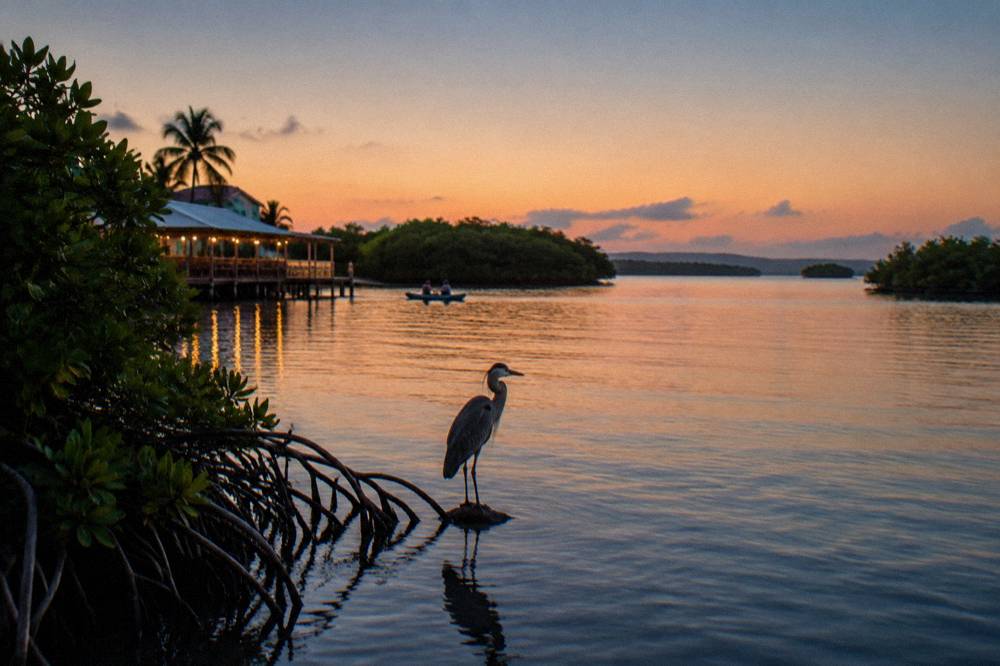
Hurricane Season, June To November: Reading The Risk Honestly
Hurricane season runs June to November, and its main effect on bio bay nights is water, not wind: heavy rainfall can temporarily reduce dinoflagellate concentrations and cloud the water. The peak-density months of late summer sit inside this season, so the brightest window and the stormiest window overlap. Book with free cancellation and keep date flexibility.
The overlap is the uncomfortable truth of the late-summer window. August and November bracket the period when Laguna Grande densities run highest, and September and October are the statistical heart of Atlantic hurricane season. A direct storm is a rare event on any given week; rain is not. What rain does to a bio bay is specific and temporary: it dilutes and clouds the water, lowering visible glow intensity until conditions settle. The organisms remain; the display dims.
There is also the sargassum variable, which is a summer story. In July 2026, sargassum covered about 80 cuerdas of La Parguera bay and DRNA activated its removal protocol, mobilising a specialised vessel and a long-reach excavator from Fajardo. The 2026 influx to Puerto Rico was projected at a record of roughly 55 million tons, up from 40 million the prior year. Sargassum does not end a bay's season, and removal protocols exist precisely because the bays are actively managed, but a summer La Parguera booking is worth making with the weather-and-water caveat in mind.
The listings themselves are structured around this reality. Every tour on this site's roster offers free cancellation up to 24 hours before for a full refund, as stated on the operator's live listing, which converts storm-season risk from a gamble into a manageable booking decision. The Mareaito Charters sunset and bio bay cruise at La Parguera, from $65 per person with a 4.8 rating from 573 reviews, pairs a sunset swim at the Caracoles sandbar with the bay visit; snorkel gear is excluded and guests bring their own. It carries a likely-to-sell-out badge, so summer demand stays strong regardless of the season's reputation.
For Vieques, the storm question compounds with the ferry question. Mosquito Bay requires either the ferry from Ceiba or a flight, and because tours run at night, an overnight on the island is the standard plan. A storm-affected ferry day can strand or delay a tight itinerary, so a Vieques bio bay trip in hurricane season deserves a buffer night. The Alikei Adventures clear kayak tour, from $60 per person with a 4.8 rating from 491 reviews, meets in Esperanza and includes the van ride to the bay; its likely-to-sell-out badge reflects how thin small-group Vieques inventory is on dark nights.
Which Bay And Which Listing For Each Kind Of Trip
Match the bay to your trip shape first, then the month to your weather tolerance. Fajardo suits a San Juan-based trip with an easy drive; Vieques rewards travelers who commit to an island overnight for the record bay; La Parguera is the boat-and-swim option and the only bay where swimming is generally permitted. Each bay has listings at different price and format points.
The month question collapses quickly once the trip shape is fixed. A family based in San Juan with one free evening is a Fajardo trip, full stop, because Laguna Grande sits roughly 1 to 1.25 hours by car from San Juan and the six Fajardo-area listings all depart from the Las Croabas kayak village with no pickup offered. A couple planning a Vieques island stay anyway gets Mosquito Bay as the centrepiece. A group that wants to swim in the glowing water has exactly one option among the three bays: La Parguera, where swimming is generally permitted on most nights, subject to conditions and operator rules. Swimming is not permitted at Mosquito Bay or Laguna Grande, a protection for the dinoflagellates, and no month changes that.
The decision table below maps the common goals to a month window, a bay and a specific bookable listing, using only figures verified on the operator listings.
| Your goal | Best month window | Bay | A listing that fits |
|---|---|---|---|
| Easiest dark-sky night from San Juan, one evening free | December to April for stable weather; any month on a new moon | Laguna Grande, Fajardo | Kayaking Puerto Rico kayak tour, from $89, 4.7 from 2,176 reviews, about 2 hours |
| Lowest price on the record bay, already staying on Vieques | Any month with new-moon dates | Mosquito Bay, Vieques | Vieques Kayaks trip, from $65, 4.5 from 1,242 reviews, about 2 hours |
| Clearest view of the water around you | August to November density tilt, dark dates | Mosquito Bay, Vieques | Alikei Adventures clear kayak, from $60, 4.8 from 491 reviews, about 1 hour 30 minutes |
| Swimming in the glowing water | May to October warm water; check conditions in summer | La Parguera, Lajas | Mareaito Charters sunset and bio bay cruise, from $65, 4.8 from 573 reviews, about 2 hours |
| No kayaking, small boat instead | Any dark-sky window | Mosquito Bay, Vieques | Isla Nena pontoon boat tour, from $85, 4.4 from 262 reviews, about 40 minutes |
| Rainforest and glow in one day | Dry season for the hiking half | Laguna Grande, Fajardo | El Yunque and bio bay combo, from $179.65, 4.7 from 1,020 reviews, about 12 hours |
The table's month column is deliberately a window, not a verdict. The dark-sky date inside the window does more work than the window itself, and every listing in the table runs year-round unless the Vieques full-moon blackout applies.
For the San Juan-based traveler who wants the logistics handled, the transfer listings change the math. The Peniel Access Eco Tours night kayak with transport from San Juan, from $125 per person with a 4.4 rating from 136 reviews, includes round-trip transportation and runs about 4 hours door to door. The Bespoke Lifestyle outing, from $110 per person with a 4.1 rating from 606 reviews, covers about 5 hours with hotel pickup in selected San Juan areas. These wrap the same Laguna Grande water in a no-rental-car package, which matters more in hurricane season, when an evening storm makes a self-drive return along the coast less appealing.
What If Your Dates Land On A Bright Week?
If your dates fall in the full-moon window, Vieques is off the table for those nights and the honest play is Fajardo or La Parguera on the darkest available dates. One Fajardo operator sells the bright window as its own product, a full moon kayak tour, from $85 per person. A dim night is possible any month, and no operator or month can promise otherwise.
Fixed dates are the most common planning constraint, and the full-moon window is the most common collision. The sequence of fallbacks is simple. First, check whether any of your nights fall outside the three-night Vieques blackout; if one does, that night is your Mosquito Bay night. Second, if every night is bright, take Fajardo or La Parguera, where tours run on bright nights even though the glow is harder to see. Third, consider the full moon tour as its own experience: Puerto Rico Bio Bay Tours LLC sells a 3-hour outing built around the bright window, from $85 per person with a 4.6 rating from 274 reviews, and it carries a likely-to-sell-out badge.
The other fixed-date reality is weather. Tours cancel for storms and unsafe water, and a cancelled bio bay night inside a fixed trip is simply lost unless there is a spare evening. This is where the free-cancellation terms on every roster listing earn their keep: book the primary night, and if the forecast turns, the 24-hour window lets you move to the spare evening without losing the payment, per the listings' terms. Travelers with zero slack should weight the December to April window more heavily, because its cancellation odds run lowest.
It is also worth saying plainly what no month can fix. The glow is wild. It varies with moon, rain, season and water conditions, and a dim night is possible on a statistically perfect date. The honest framing, which the bays' own managers use, is that the organisms are present year-round and the visible intensity varies. What a well-chosen month and a well-chosen date buy you is the best position on the board, not a guaranteed result.
For the fullest framing of how these pieces fit, the three bays compared guide walks the bay choice in depth, and Bioluminescent Bay Tours Puerto Rico keeps a verified roster of every bookable listing across the three bays with current prices and ratings.
The Month Verdict, Summarised
Pick December to April for stable weather and fixed dates, May to November for the warmer-water density tilt at Laguna Grande, and always pick your specific nights by the moon. For a Vieques trip, the new-moon window is mandatory knowledge because of the three-night full-moon blackout. Book listings with free cancellation, and hold a spare evening in storm season.
The month decision, reduced to its working parts, is a weather decision stacked on a darkness decision. The weather half favors the dry season for reliability and the warm season for plankton density, with the caveat that the densest months sit inside hurricane season. The darkness half favors the new moon, always, and on Vieques it is enforced by rule. Neither half is optional knowledge, and neither is hard to apply once the trip shape is known.
The listings make the application easy because the roster spans every format: tandem kayaks at Fajardo from $67 per person, clear kayaks and canoes on Vieques from $57 per person, pontoon and electric catamaran boats on Vieques from $85 and $105 per person, boat-and-swim outings at La Parguera from $65 per person, and full transport days from San Juan from $110 to $250 per person. Prices are per person as listed, ratings carry their review counts beside them, and every listing offers free cancellation up to 24 hours before, per the operator's live listing.
One closing note on the long view: these bays are managed systems, not accidents. The Vieques Conservation and Historical Trust co-manages the Mosquito Bay reserve with DRNA, runs plankton counts and water-quality monitoring, and is rebuilding the mangroves at the bay entrance that Hurricane Maria nearly destroyed, work now backed by a NOAA-funded restoration of about $2.96 million begun in December 2024. Choosing a good month and a dark date is also, in a small way, choosing to visit a place that is being actively kept alive.
Common Questions About The Best Month For Bioluminescence
What Month Is Best For Bioluminescence In Puerto Rico?
There is no single best month. The December to April dry season offers the most stable viewing weather, while the warmer May to October window is described as slightly brighter at Laguna Grande, with peak densities extending into November. The moon matters more than the month: book the nights closest to a new moon, and remember that Mosquito Bay on Vieques does not run tours on the three nights around a full moon.
Does bioluminescence happen year-round in Puerto Rico?
Yes. The dinoflagellates are present year-round at all three bays, and bioluminescence remains visible in every season. What varies is visible intensity, driven by moonlight, rainfall, water temperature and water conditions, not by an off-season.
Is summer or winter better for seeing the glow?
Summer tilts toward density: warmer water supports peak dinoflagellate populations, and a 2024 study of Laguna Grande found higher densities from roughly August to November. Winter tilts toward reliability: the December to April stretch is drier and calmer, with fewer rain-clouded nights and fewer weather cancellations. Neither is a guarantee for a specific night.
Why can't I book Mosquito Bay on a full moon?
DRNA-licensed operators may not run Mosquito Bay tours on the night before, the night of, or the night after a full moon, three nights per lunar cycle. The rule exists because moonlight washes out the faint blue glow. Fajardo and La Parguera tours generally keep running through the bright window, though the glow is harder to see.
Does hurricane season ruin bio bay trips?
Not usually, but it raises the odds of rain and cancellations. Heavy rain can temporarily reduce dinoflagellate concentrations and cloud the water. Every listing on this site offers free cancellation up to 24 hours before, per the operator's live listing, so storm-season bookings are manageable with a spare evening in the itinerary.
Which bay should I choose if I can only travel in one specific week?
Start with the moon calendar for your week. If your dates avoid the full-moon window and you can overnight on Vieques, Mosquito Bay is the record-setting choice. If your dates collide with the full moon or you are based in San Juan, Fajardo's Laguna Grande is the practical pick, and La Parguera is the option if you want a boat outing and the chance to swim in the glowing water.