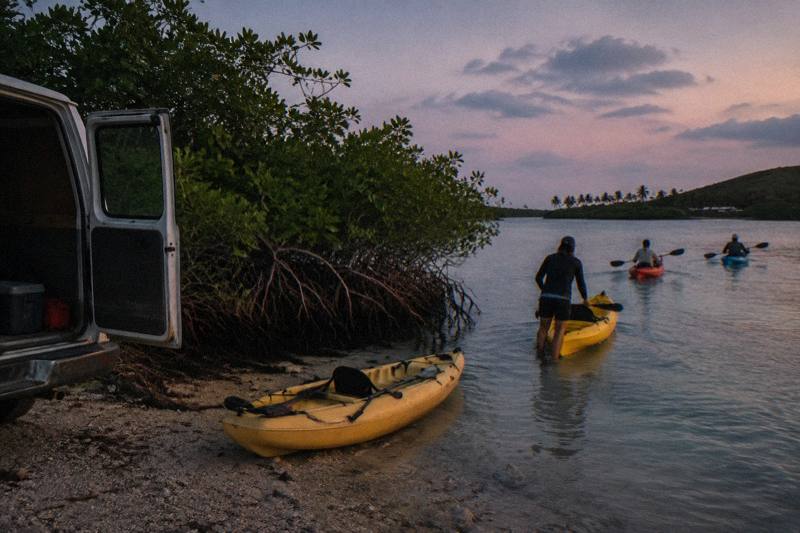
Is Bioluminescence Still Happening In Puerto Rico?
Yes, all three of Puerto Rico's bioluminescent bays still glow. Here is what the 2026 monitoring data, the past blackouts and the restoration work actually show.
Is Bioluminescence Still Happening In Puerto Rico?
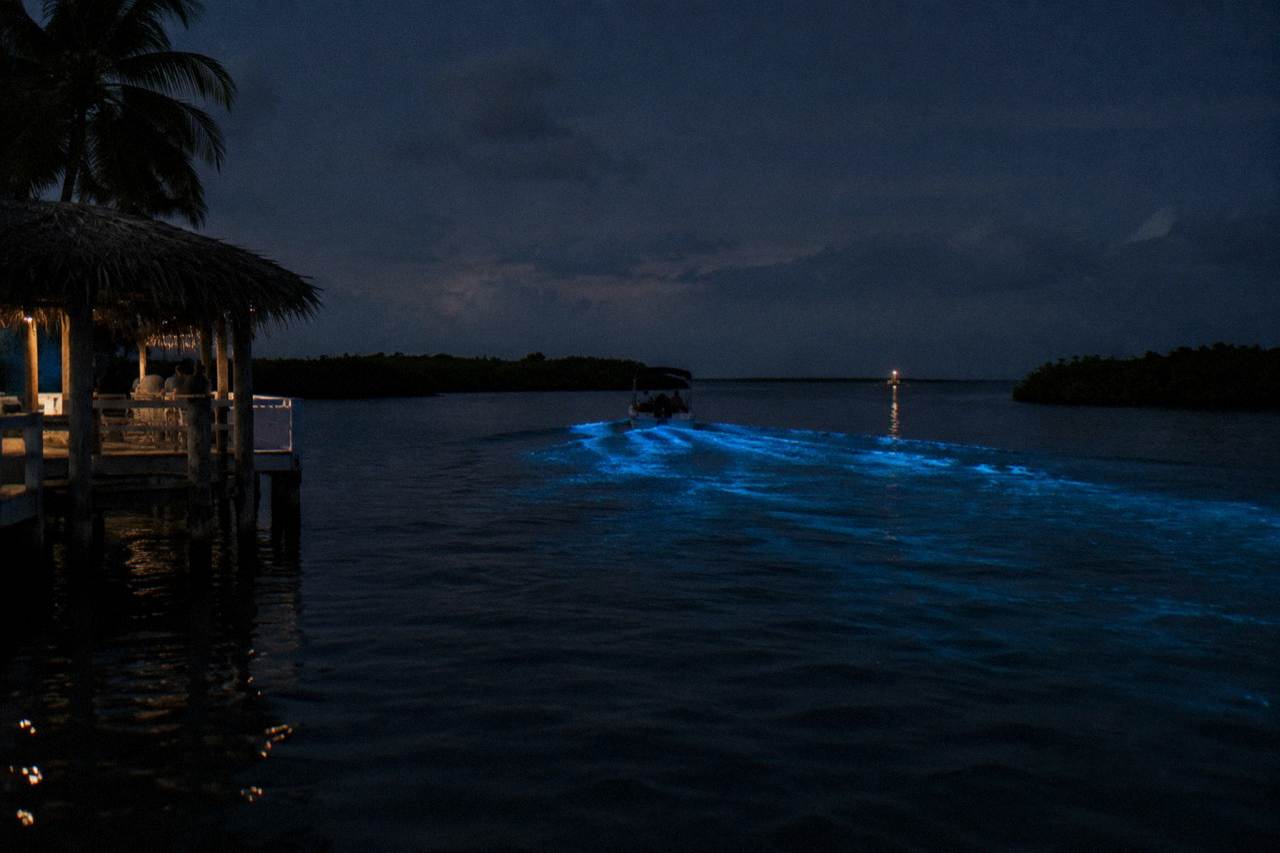
Yes. All three of Puerto Rico's bioluminescent bays, Laguna Grande in Fajardo, Mosquito Bay in Vieques and La Parguera in Lajas, were described as operating normally on the official tourism pages read in September 2026, and no closure notice was found for any of them. The organisms are present year-round, though visible intensity varies with moonlight, rain and water conditions. If you're staying in San Juan, note that none of these bays sit in the city itself, and our guide to seeing bioluminescence from San Juan covers how far each one is and which tours include transport.
That answer comes with an honest caveat: absence of a closure notice is not the same thing as proof of brightness, and the tourism office does not publish nightly glow readings. What does exist is a short, well-documented history of dips and recoveries at Mosquito Bay, a live monitoring program run by the Vieques Conservation and Historical Trust, and a set of recent news reports that give real numbers. Put together, they support a confident yes, with the details below.
The question is a fair one to ask, because the glow has genuinely failed before. Mosquito Bay went dark twice in living memory, once in 2014 and once after Hurricane Maria, when the bay showed no visible organisms for about seven months. Both events are documented, both ended in recovery, and the second one reshaped how the bay is protected today. A traveler who heard a story about a "dead" bay a decade ago is not wrong about the past; they are just out of date about the present.
The practical side is equally settled. Operators are still running nightly trips at all three bays: the Vieques Kayaks Bio Bay trip and the Alikei Adventures clear kayak outing at Mosquito Bay, the Kayaking Puerto Rico and Yokahu Kayak Trips outings to Laguna Grande, and the Mareaito Charters sunset cruise at La Parguera. If the bays had stopped glowing, this roster would not exist. The rest of this article walks through the evidence, the two blackouts, the 2026 monitoring numbers and the restoration work now underway. Once you know the bays are still glowing, the natural next question is just how unusual the spectacle is, and our guide to how rare it is to see bioluminescence puts that rarity in plain terms.
What Happened When Mosquito Bay Went Dark?
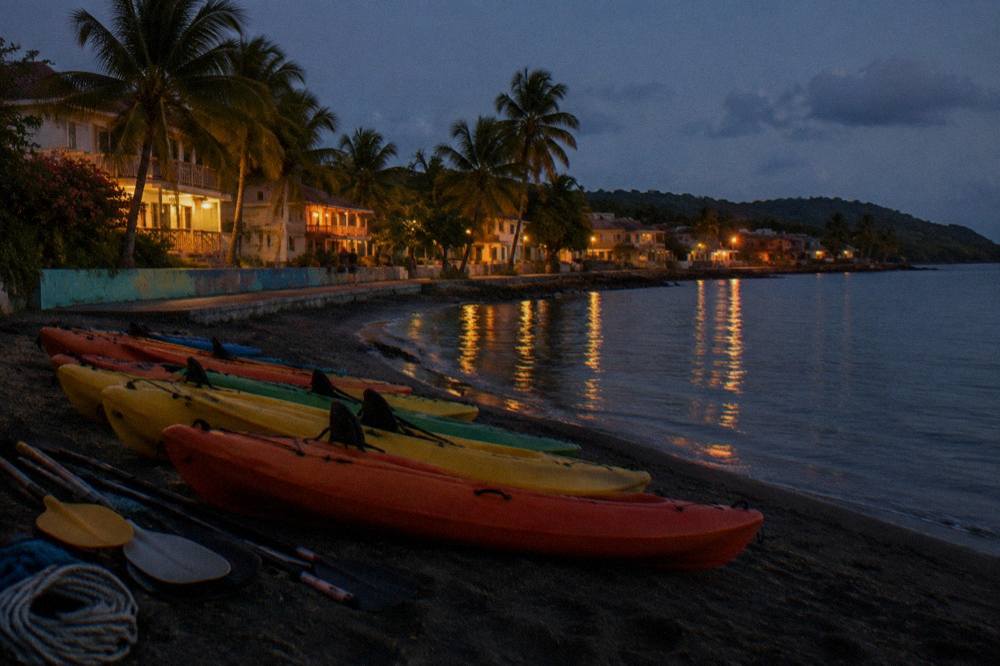
Mosquito Bay has had two documented blackouts: one in 2014, and one after Hurricane Maria, when the storm surge damaged the protecting mangroves at the bay's mouth and the bay showed no visible organisms for about seven months. Both events are part of the public record, and both were followed by a full recovery of the glow.
The 2014 event is the one most often retold, and it had a lasting consequence: it led directly to the ban on swimming in Mosquito Bay. Before that, swimming in the glowing water had been part of the experience for some visitors. The blackout made the vulnerability of the organism population impossible to ignore, and regulators responded by ending swimming at the bay to protect the dinoflagellates. That rule is still in force today, and every licensed kayak operator works under it. For travelers who pictured glowing beaches rather than glowing water, our guide to bioluminescent sand in Puerto Rico explains what is real and where the light actually comes from.
Hurricane Maria was the more serious event. The storm surge caused almost total mortality of the mangroves at the mouth of Puerto Mosquito, the trees whose roots and channels hold the dense bloom of Pyrodinium bahamense inside the bay. The Vieques Conservation and Historical Trust, which co-manages the reserve with the Department of Natural and Environmental Resources, notes that natural recovery of that mangrove fringe can take 15 to 30 years. The glow returned on its own within months, but the habitat that shelters it did not, which is why the trust and its partners have been replanting ever since. For a sense of just how uncommon this natural light show is, our guide to the odds of seeing bioluminescence in Puerto Rico puts the experience in perspective.
The science behind why Mosquito Bay can go dark and come back is well understood. Water in the bay stays put for about 13.5 to 14.5 days before flushing out, a residence time long enough for the dinoflagellate population to reproduce and concentrate. Faster-flushing bays cannot hold the same density. That slow exchange is the engine of the record-setting brightness, and it is also why a physical shock to the bay, a hurricane surge that breaks the mangrove barrier and lets water exchange faster, can temporarily collapse the bloom.
| Event | Year | What happened | How long the glow was affected | Outcome |
|---|---|---|---|---|
| First documented blackout | 2014 | Visible glow collapsed at Mosquito Bay | Months, per contemporaneous reporting | Glow recovered; swimming ban introduced |
| Hurricane Maria | After the storm | Storm surge killed almost all mangroves at the bay mouth | About seven months without visible organisms | Glow recovered; mangrove replanting began |
| Sargassum influx at La Parguera | July 2026 | About 80 cuerdas of the bay covered; DRNA activated removal | Removal protocol activated, work slated to begin that week | Localized and addressed, not a bay-wide blackout |
The pattern across both blackouts is the same: the organisms are resilient, the habitat is the fragile part. That is the framing to keep in mind when a scary headline circulates. The bay is not a light bulb that burns out; it is a population that collapses and rebuilds when its physical conditions are disturbed, and the rebuilding has happened every time so far.
What Do The 2026 Monitoring Numbers Show?
In June 2026, biologists measuring Mosquito Bay during a site visit counted 304,000 Pyrodinium bahamense organisms per gallon of water, a strong concentration though below the record 700,000 per gallon that earned the bay its Guinness World Record in 2006. The count confirms the population is present and dense, not merely surviving.
That June figure is the single most useful data point for answering this article's question, because it is recent, it is measured rather than anecdotal, and it comes with a name attached: the weekly counting program that the Vieques Conservation and Historical Trust runs at the bay. The trust co-manages the reserve with the Department of Natural and Environmental Resources and continues active plankton abundance counts, water-quality monitoring and mangrove reforestation. This is not a bay that anyone is guessing about.
The Guinness record itself is worth restating carefully, because it is the only superlative this site allows. Mosquito Bay holds the Guinness World Record for the brightest bioluminescent bay, recognized in 2006, with counts reaching up to 700,000 dinoflagellates per gallon. A June 2026 reading of 304,000 per gallon is below that peak, but peak readings are peaks precisely because they are not typical, and a population holding at roughly two-fifths of the record maximum, in June, in ordinary conditions, is a healthy bay by any reasonable reading.
Puerto Rico's bays are also rare in a way that makes their protection a standing concern. The Primera Hora reporting from June 2026, citing the trust's biologist, notes that Puerto Rico holds three of the roughly eleven permanent bioluminescent systems in the world, seven of them in the Caribbean. Losing any one of the three would matter globally, which is part of why the monitoring and restoration work is funded and taken seriously.
| Bay | Status on official pages read in September 2026 | Most recent verified data point | Notes on the glow |
|---|---|---|---|
| Mosquito Bay, Vieques | Operating normally, no closure notice found | 304,000 organisms per gallon, June 2026 site visit | Guinness record holder; full-moon closure rule applies |
| Laguna Grande, Fajardo | Operating normally, no closure notice found | 2024 study found densities fluctuate widely, low in late winter and higher from August to November | Kayak-only lagoon; swimming not permitted |
| La Parguera, Lajas | Operating normally, no closure notice found | July 2026 sargassum cover of about 80 cuerdas, DRNA removal protocol activated | Only bay of the three where swimming is generally permitted and motorboats run at night |
One honest limit on that table: the official pages describe normal operation, and no closure notice was found, but absence of a notice is not a guarantee of nightly brightness. The verified facts file for this site is explicit about that distinction, and this article keeps it. What the evidence supports is that all three bays are open, monitored and glowing, with intensity that varies as it always has.
Is The Glow Weaker Now Than In The Past?
There is no verified evidence of a long-term decline at any of the three bays. The documented dips were sudden physical events, the 2014 collapse and Hurricane Maria, not a gradual fading, and the June 2026 count shows Mosquito Bay holding a dense population. Year to year, density rises and falls with the seasons at every bay.
The seasonal pattern is real and worth planning around. A 2024 study of Laguna Grande found dinoflagellate densities fluctuate widely through the year, with generally low values in late winter and higher values in late summer, from August to November. The same reporting describes how hurricanes "rake and refresh" the lagoon, disturbing the water but setting up subsequent reproduction. In plain terms, the glow is not a fixed quantity; it breathes with the calendar, and a visitor in March and a visitor in September are not seeing the same bay even in a completely normal year.
Rain is the other short-term factor. Heavy rainfall can temporarily reduce dinoflagellate concentrations and cloud the water, lowering visible glow intensity in the nights that follow. This is why operators watch the weather and why free cancellation up to 24 hours before, which every listing on this site's roster offers, matters more on a bio bay trip than on most tours. A storm on Tuesday does not mean the bay is dying; it means Wednesday's paddle may be dimmer than Saturday's.
The July 2026 sargassum event at La Parguera is the newest example of a temporary, local, physical disturbance. About 80 cuerdas of the bay were covered, and the Department of Natural and Environmental Resources activated its removal protocol, mobilizing a specialized vessel and a long-reach excavator from Fajardo with removal work slated to begin late that week. It was a cleanup operation, not a closure, and it did not affect Mosquito Bay or Laguna Grande. The 2026 sargassum influx to Puerto Rico overall was projected to reach a record of roughly 55 million tons, up from 40 million the prior year, which is why the removal protocol exists and why it gets used. And if you have also wondered whether the glow ever shows up on the shore itself, our guide to bioluminescent sand in Puerto Rico explains why the light stays in the water.
What no source shows is the thing the scary version of this question imagines: a slow dimming across years, a bay quietly going out. The verified record contains sudden shocks followed by recovery, seasonal swings, and temporary algae events. Anyone telling you the glow is "fading" in Puerto Rico is describing something the monitoring data does not contain. The glow isn't going anywhere, but it remains one of the planet's rarest sights, and the chances of actually seeing bioluminescence for yourself explains what that means for your trip.
What Is Being Done To Keep The Bays Glowing?
A NOAA-funded restoration of about $2.96 million, begun in December 2024 with the Vieques Conservation and Historical Trust and the Department of Natural and Environmental Resources, is rebuilding mangroves, seagrass and coral in the Vieques Bioluminescent Bay Natural Reserve, with a nursery of close to 4,000 plants and an 84 percent mangrove planting success rate reported by NOAA in September 2026.
The restoration matters to the glow directly, because the mangroves are not decoration. The meandering channel and rooted fringe at Mosquito Bay's entrance are what keep the water resident for those 13.5 to 14.5 days, and Hurricane Maria's near-total mangrove mortality at the mouth threatened exactly that retention. The trust's replanting program uses four mangrove species, red, black, white and button, grown in a solar-powered nursery, with the stated aim of restoring the bay entrance toward pre-Maria conditions. NOAA's September 2026 update on the project reports the 84 percent survival rate for planted red mangrove and the deployment of 4,000 biodegradable living shoreline bags.
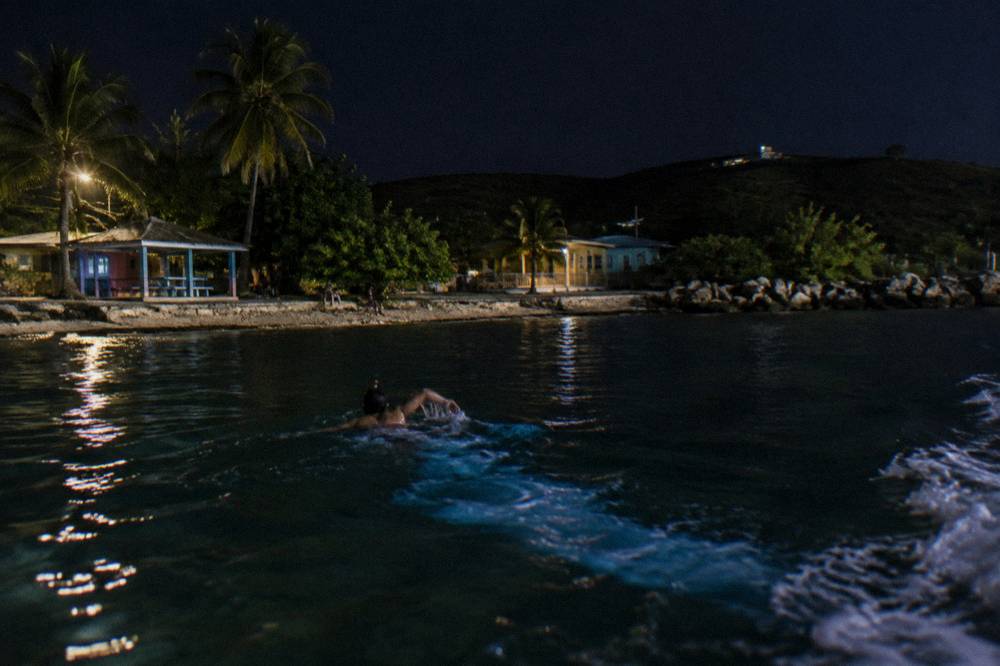
Regulation works alongside the planting. Licensed operators at Mosquito Bay may not run tours the night before, the night of or the night after a full moon, a rule specific to that bay, which is why a Vieques trip needs date planning around the lunar calendar. Laguna Grande is kayak-only within its natural reserve, with swimming prohibited to protect the dinoflagellates. La Parguera is the only one of the three where motorboat navigation is permitted at night and where swimming in the glowing water is generally permitted on most nights, with operators setting their own safety rules. The through-line is that every restriction on visitors exists because something about the bay's physics or biology needed protecting.
The responsible-visitor guidance from the official tourism site is part of the same effort: eco-friendly insect repellent applied as a cream or balm, never a spray, at least 30 minutes before the tour; no flashlights, phone screens or unnecessary light on the water; noise kept down; and nothing touched or removed from the water. These are small behaviors, but they are the ones the bay's managers actually ask for, and they are the reason a kayak tour at Laguna Grande can list eco-friendly insect repellent on its inclusions, as the featured Kayaking Puerto Rico outing does. If you have also heard that the beaches on this island glow after dark, our guide to whether bioluminescent sand actually exists in Puerto Rico explains what is really behind that famous blue sparkle.
The operators themselves are the other half of the protection story. The trust counts plankton weekly, but it is outfits like Vieques Kayaks Bio Bay, running small groups of up to 14 into Mosquito Bay, and Peniel Access Eco Tours, capping its Laguna Grande groups at 12, that put visitors on the water under the rules every night. Booking a licensed trip is not just the practical way to see the glow; it is the way that keeps the counting, the replanting and the enforcement funded.
Which Tours Are Still Running, And Where?
All 24 listings on this site's roster are live bookable products, spanning six kayak outings at Laguna Grande from Las Croabas, six tours at Mosquito Bay from Esperanza in Vieques, three boat tours at La Parguera, and nine San Juan departure options with hotel pickup, from $54.99 to $250 per person. Every listing offers free cancellation up to 24 hours before.
The shape of the roster answers the "still happening" question on its own. At Fajardo, the Kayaking Puerto Rico outing runs about 2 hours from $89 per person with a 4.7 rating from 2,176 reviews, the Yokahu Kayak Trips outing runs from $67 with a 4.6 rating from 1,821 reviews, and Pure Adventure, Island Kayaking Adventure, Peniel Access Eco Tours and Puerto Rico Bio Bay Tours all run nightly departures from the Las Croabas kayak village. Six operators do not maintain infrastructure on a bay that has stopped glowing.
At Vieques, the Vieques Kayaks Bio Bay trip runs about 2 hours from $65 per person with a 4.5 rating from 1,242 reviews, and it carries a "likely to sell out" badge on its listing, which is demand language, not decline language. The Alikei Adventures clear kayak outing runs from $60 with a 4.8 rating from 491 reviews, Adventure Vieques runs full clear canoes from $57, and two boat formats, the Isla Nena pontoon and the Borikua electric catamaran, carry small groups onto the bay. Because Mosquito Bay tours run at night and the last ferry from Vieques leaves at 7:30 pm per the Borikua listing, an overnight on the island is part of the plan for this bay.
At La Parguera, the Mareaito Charters sunset and bio bay cruise runs about 2 hours from $65 per person with a 4.8 rating from 573 reviews, pairing a sunset swim at the Caracoles sandbar with the bay visit, and it also carries a "likely to sell out" badge. Joytourspr and Aventuras Tropicales run smaller boat outings from $75 and $80 respectively. From San Juan, nine listings add hotel pickup, from the Caribbean Breeze La Parguera swim trip at from $54.99 per person to the Borikua rum tasting day at from $250, and the two El Yunque and bio bay combos pack a rainforest hike and a night paddle into a 12 hour day.
| Bay and departure area | Formats still running | Example listings and from prices | Group size | Pickup |
|---|---|---|---|---|
| Laguna Grande, Las Croabas | Guided tandem and single kayaks | Kayaking Puerto Rico from $89; Yokahu from $67; Peniel from $65 | Up to 30 on the water | Not offered, meet at the kayak village |
| Mosquito Bay, Esperanza | Kayaks, clear kayaks, clear canoes, pontoon and electric boats | Vieques Kayaks from $65; Alikei clear kayak from $60; Isla Nena pontoon from $85 | Up to 14 on the largest kayak trips | Not offered, meet in Esperanza |
| La Parguera | Motorboats with swimming | Mareaito sunset cruise from $65; Joytourspr from $75 | Boat group, up to 6 on the smallest | Not offered, meet at the dock |
| From San Juan | Kayak and boat day trips with transport | Caribbean Breeze from $54.99; El Yunque combos from $179.65 | Up to 15 on the combos | Offered on all nine listings |
The formats also tell the conservation story in miniature. Mosquito Bay and Laguna Grande allow only kayak, clear kayak, canoe and, at Vieques, electric and pontoon vessels, because gas motors and propeller wash are hard on the organisms. La Parguera's motorboat nights are the exception, and they are the reason the swim-and-boat experience exists only there. A traveler deciding between a paddle and a swim is really deciding between two different bays with two different rulebooks, and the Fajardo, Vieques and La Parguera comparison lays out those differences side by side.
When Is The Glow Hardest To See?
The glow is hardest to see in the nights around a full moon, when moonlight washes out the blue flashes, and after heavy rain, which can reduce concentrations and cloud the water. At Mosquito Bay specifically, licensed operators do not run at all on the three nights around each full moon, so the calendar does part of the work for you there.
The moon is the biggest factor a visitor can plan around. Darker nights near a new moon give the best viewing, and the official guidance is blunt about it: visit on a moonless night. The organisms are present year-round at all three bays, but the visible display depends on how dark the sky is, and a bright moon overhead competes directly with the light in the water. The full moon phase guide on this site exists for exactly this planning step.
The Mosquito Bay full-moon rule makes that bay the easiest to book well: if a licensed operator is running the night you want, the moon is not against you. At Laguna Grande and La Parguera, tours do run on bright nights, and one Fajardo listing is even sold as a full moon kayak tour, a mangrove channel paddle under moonlight rather than a glow hunt. On those nights the experience is different rather than absent, and one Fajardo operator's guides may use a tarp to block moonlight where the listing says so. Expecting peak glow on a full-moon night at Fajardo is the single most common way to leave disappointed.
Rain and runoff are the second factor, and they are less predictable. A heavy storm in the hours before a tour can lower both the concentration and the clarity of the water, and the effect passes as the water settles. This is where the free cancellation window on every listing earns its keep: with 24 hours' notice you can move a booking to a clearer night at no cost. Checking the forecast two days out, rather than the day of, is the practical habit.
The honest framing, which this site holds to everywhere, is that no operator, no biologist and no article can promise what a wild organism will do on a given night. What the record supports is that the population is present year-round, dense, monitored and recovering its habitat. Book near a new moon, avoid the nights after a big storm, and the odds are as good as the bay can make them.
How Should You Plan A Trip Around All This?
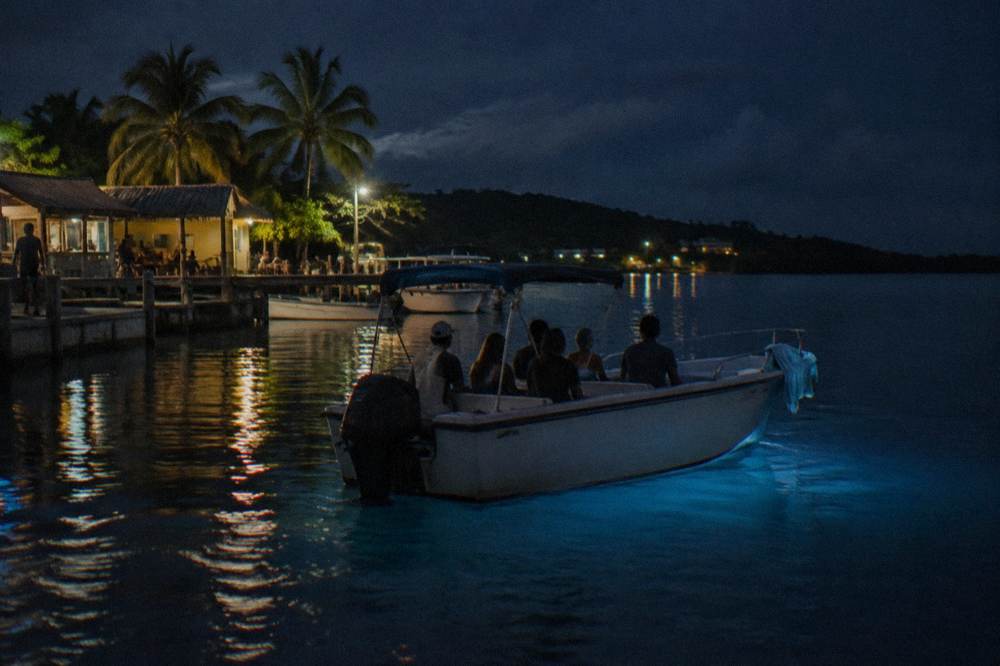
Plan around three things: the moon calendar, the bay that fits your trip shape, and the transport reality of each departure point. Pick a night within about a week of the new moon, choose Fajardo for a self-drive evening, Vieques for the brightest water with an overnight, or La Parguera for a boat and swim, and book with the 24 hour free cancellation every listing carries. If you're staying in San Juan and wondering how close the nearest glowing bay actually is, our guide to seeing bioluminescence from San Juan breaks down the distance to each bay and which tours include transport from the city.
For most visitors flying into San Juan, the first fork is whether to stay on the main island or cross to Vieques. Fajardo is roughly 1 to 1.25 hours by car from San Juan, and the six Las Croabas operators all require you to make your own way to the kayak village, so a rental car or a transfer is part of the evening. The San Juan transport listings solve this by adding hotel pickup, from $110 to $125 per person for the straightforward evening kayak runs. For a fuller treatment of that fork, the guide to bio bay tours from San Juan walks the trade-offs.
Vieques is the commitment option, and the monitoring data above is the argument for making it. Mosquito Bay is the record holder, the most closely watched bay in Puerto Rico, and the one where the full-moon rule guarantees your booked night is a dark one. The cost of that is logistics: a ferry from Ceiba or a flight, and because tours run at night and the last ferry leaves at 7:30 pm per the Borikua listing, an overnight on the island. The I VENTURES ferry day trip from San Juan, from $230 per person, is the one listing on the roster that folds the crossing into a single booked day.
La Parguera is the swim option, and it is also the most flexible evening: a motorboat out, a swim in the glowing water on most nights, and a sunset start on the Mareaito cruise. It sits farthest from San Juan, about a two hour drive each way per one listing's description, which is why the San Juan boat day trips with pickup exist. For the full picture of what each bay's rules mean for visitors, the swimming guide answers the water question bay by bay.
Booking itself is simple on this roster. Every listing offers free cancellation up to 24 hours before for a full refund, prices run from $54.99 to $250 per person depending on format and transport, and the "likely to sell out" badges on seven listings, including the Vieques Kayaks trip and the Mareaito cruise, are a real signal to book ahead in high season. The Bioluminescent Bay Tours Puerto Rico roster exists to make that comparison in one place, with verified prices and ratings on every listing.
Common Questions About The Glow In Puerto Rico
Is Bioluminescence Still Happening In Puerto Rico?
Yes. All three bays were described as operating normally on the official tourism pages read in September 2026, no closure notice was found, and a June 2026 site visit counted 304,000 organisms per gallon at Mosquito Bay. The glow varies with moon, rain and season, as it always has, but the bays are open and the organisms are present year-round.
Did Mosquito Bay ever stop glowing completely?
It went dark twice, in 2014 and after Hurricane Maria, when the bay showed no visible organisms for about seven months. Both events ended in recovery, and the 2014 blackout led to the swimming ban that is still in force at the bay.
Is the glow weaker than it used to be?
There is no verified evidence of a long-term decline. The documented dips were sudden physical events followed by recovery, and density swings seasonally at every bay, with Laguna Grande generally lower in late winter and higher from August to November.
Can you swim in the bioluminescent bays in Puerto Rico?
Only at La Parguera, where swimming in the glowing water is generally permitted on most nights, subject to operator safety rules. Swimming is not permitted at Mosquito Bay or Laguna Grande, to protect the dinoflagellates.
Does the full moon stop the tours?
At Mosquito Bay, licensed operators do not run the night before, the night of or the night after a full moon. At Fajardo and La Parguera, tours run on bright nights, and one Fajardo listing is sold as a full moon kayak tour.
What if it rains before my tour?
Heavy rain can temporarily lower concentrations and cloud the water. Every listing on this site's roster offers free cancellation up to 24 hours before, so you can move to a clearer night at no cost if the forecast turns bad.