Is There Bioluminescent Sand In Puerto Rico?
No confirmed glowing sand exists in Puerto Rico. The blue glow travelers see is in the water: dinoflagellates that light up when the sea is disturbed. Here is the science and where to see it.
Is There Bioluminescent Sand In Puerto Rico?
No confirmed bioluminescent sand exists in Puerto Rico, and no primary source records any glowing beach there. The blue light travelers describe is produced in the water by dinoflagellates, microscopic organisms that flash when the sea is agitated. Stilled water goes dark again within moments, and dry sand has never glowed on its own.
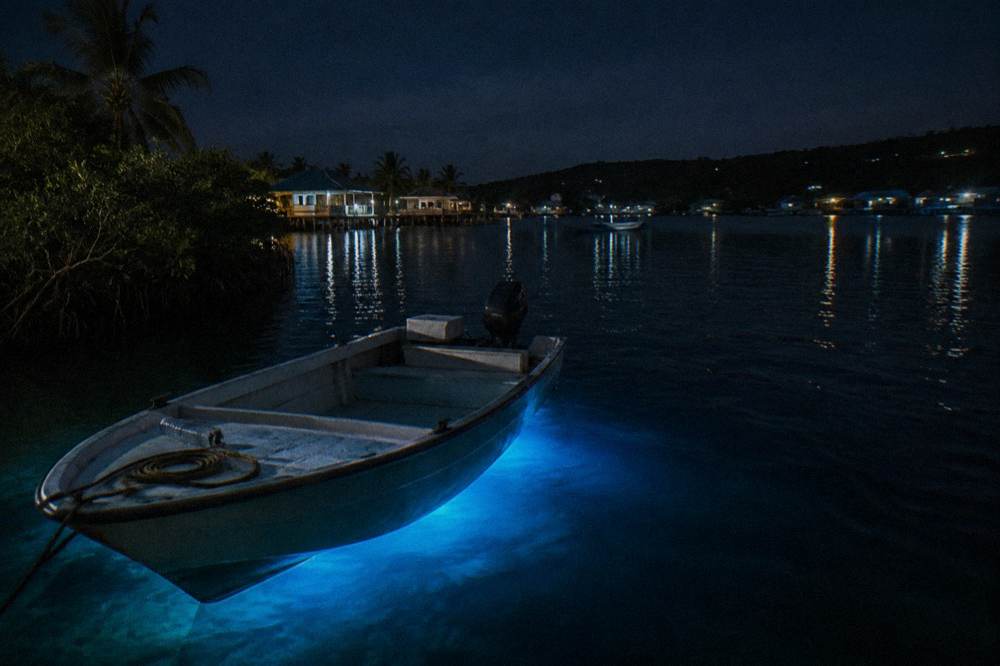
The short answer disappoints people, then reassures them: the real thing is stranger than the myth. Puerto Rico holds three of the few permanent bioluminescent bays on Earth, and in each one the glow lives in the top layer of the water column, not in the sediment. When a paddle slices through a lagoon at Las Croabas, or a boat wake rolls across La Parguera, millions of single-celled organisms fire simultaneously and the water itself turns electric blue. Lift your hand out and the light stops. Step onto the beach and nothing happens at all.
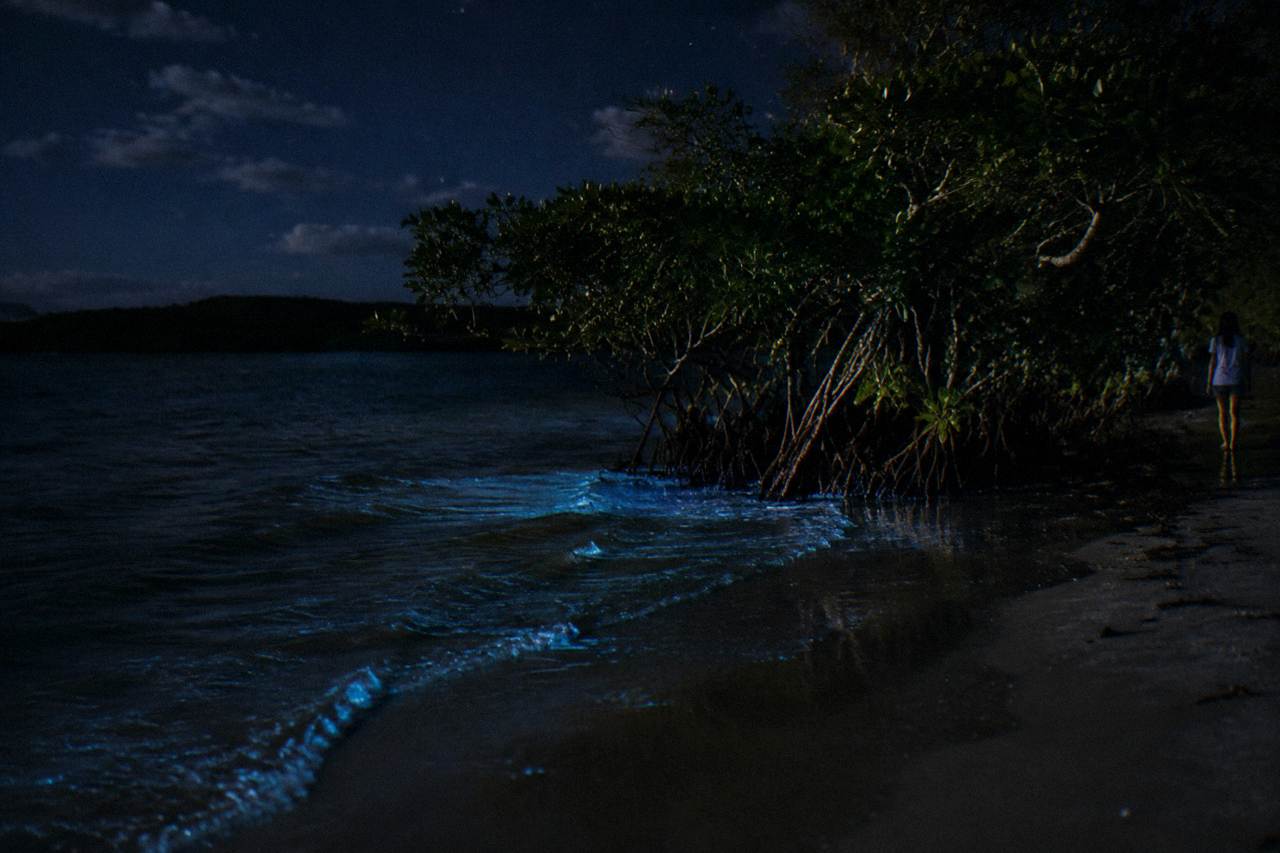
The confusion is understandable. Photos of bio bays, long exposures that phones cannot replicate, often show the shoreline rimmed with blue, and the light appears to sit on the sand like frost. Some tropical destinations elsewhere in the world do have glow-in-the-dark shore phenomena caused by different organisms, which muddies searches further. But in Puerto Rico specifically, the fresh research sweep for this site found no primary source confirming glowing sand anywhere on the island: the phenomenon is water-based, full stop.
The science file behind this article is blunt about it. Bioluminescence in Puerto Rico's bays comes from the dinoflagellate Pyrodinium bahamense, which glows blue when the water around it is disturbed. Sand plays no part in the reaction, and no beach, dune or shoreline deposit in Puerto Rico has been documented producing its own light. What the bays offer instead is a living light show you can trigger with every stroke of a paddle.
What Actually Glows: The Organisms In The Water
The glow comes from Pyrodinium bahamense, a dinoflagellate that produces a blue flash through an internal chemical reaction whenever the water around it is agitated. Each cell is microscopic, but a bay can hold hundreds of thousands per gallon, so a single paddle stroke triggers millions of flashes at once.
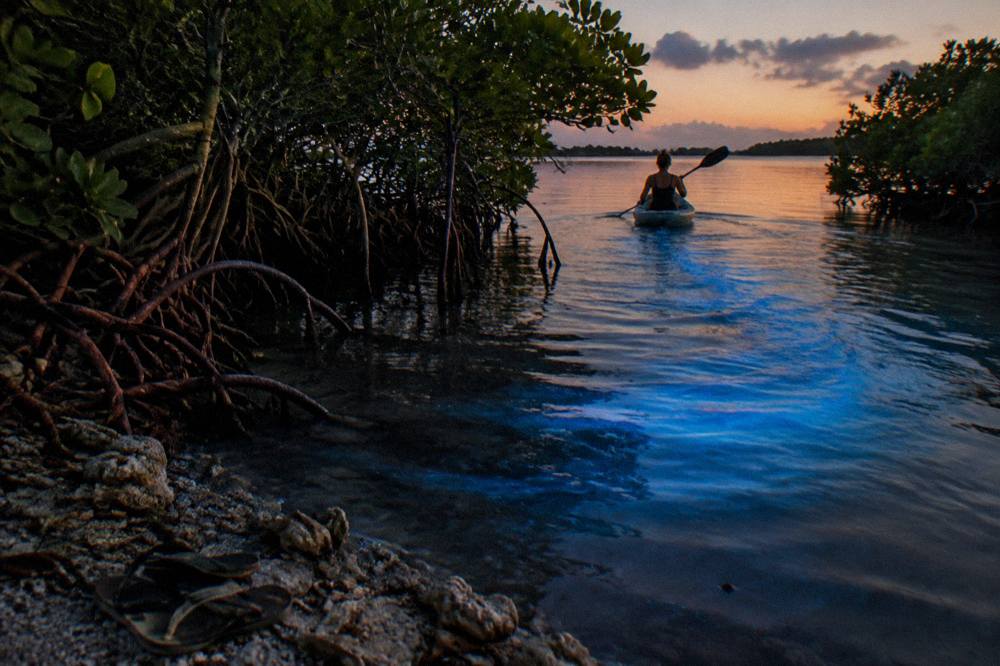
The mechanism is chemistry, not magic. Inside each cell, the substance luciferin reacts with the enzyme luciferase when the organism is mechanically stimulated, releasing energy as a pulse of cold blue light. The flash lasts a fraction of a second per cell, but with enough cells in the water the effect reads to the eye as a continuous blue trail behind anything that moves: a kayak, a fish, a dripping hand, raindrops on the surface. Scientists describe the display as a defense response, the evolutionary logic being that a sudden flash startles whatever small creature was disturbing the water.
Mosquito Bay on Vieques is the record holder. It holds the Guinness World Record for the brightest bioluminescent bay, with counts of up to 700,000 dinoflagellates per gallon of water, recognised in 2006. During a June 2026 site visit by biologists, the weekly count was still an extraordinary 304,000 organisms per gallon. Those numbers explain why a kayak tour on Mosquito Bay reads so differently from the same tour on a lighter bay: more cells per gallon means more light per stroke.
The reason Mosquito Bay concentrates so densely is hydrology. Water in the bay stays put for about 13.5 to 14.5 days before flushing to the sea, an unusually long residence time that lets the population reproduce faster than the tides can carry it away. Faster-flushing bays cannot hold the same concentration, which is part of why the three Puerto Rico bays differ in character even though all three host the same organism. The Vieques Conservation and Historical Trust co-manages the reserve and runs the plankton counts that track these swings; its conservation work is described at the Trust's bay page.
A 2024 study of Laguna Grande in Fajardo adds a seasonal wrinkle worth knowing before you book. Dinoflagellate densities there fluctuate widely through the year, generally low in late winter and higher from August through November, and hurricanes historically rake and refresh the lagoon in ways that reset the population. The organisms are present year-round, but the visible intensity varies with season, rainfall, moonlight and water conditions. No honest page promises a specific brightness on a specific night.
Why So Many Travelers Believe The Sand Glows
The myth survives because long-exposure photographs smear the water's blue light onto the shoreline, because some beaches abroad genuinely glow from different organisms, and because tour marketing uses the word glow loosely. In Puerto Rico, every verified case traces back to agitated water, never to sand.
Start with photography. The human eye sees the glow as a soft blue shimmer that moves with the water, but a camera set to a 15 or 30 second exposure collects far more light than the eye does, painting the whole shoreline blue. When those images circulate on social media, stripped of their technical context, the shoreline itself appears luminous, as if the beach were dusted with something radioactive. It is not. It is moving water, averaged over half a minute.
Then there is honest cross-wiring. Certain shores elsewhere in the world, most famously a lagoon in Jamaica and some beaches in the Maldives and Tasmania, do host shoreline glow phenomena from other light-producing organisms, and those clips get mixed into Puerto Rico searches. The fresh research file for this site checked specifically for Puerto Rico: no primary source confirms glowing sand or glowing beaches there. The phenomenon on this island is entirely water-based.
The word glow does the rest. Tour listings, blog posts and even news articles write glow without specifying medium, and readers reasonably assume that if the bay glows, its beach must too. The distinction matters practically: a visitor who waits on the sand at Sun Bay for the beach to light up will wait forever, while the person in the clear canoe a mile away is watching the water burn blue under every stroke. If you want the deep background, our guide on what makes the bays glow walks through the chemistry in full.
One more source of confusion deserves its own sentence: wet sand at the waterline sometimes picks up a faint reflected shimmer when the lagoon behind it is glowing hard, and that reflection gets reported as glowing sand. Reflection is not emission. The distinction is easy to test: scoop a handful of dry sand and it stays dark; scoop a handful of glowing water and your palm lights up.
Where To Actually See The Glow In Puerto Rico
All three of Puerto Rico's bioluminescent bays produce the same water-based glow: Laguna Grande in Fajardo, Mosquito Bay in Vieques and La Parguera in Lajas. None has glowing sand, and none is a beach phenomenon; each is a lagoon or bay visited by kayak, clear canoe or, at La Parguera only, motorboat.
The three bays differ in setting, access and rules, which matters more for planning than any brightness ranking. Laguna Grande is a lagoon inside the Cabezas de San Juan natural reserve area, reached through a narrow mangrove channel, roughly 1 to 1.25 hours by car from San Juan. Mosquito Bay sits on Vieques and needs a ferry from Ceiba or a flight, and because tours run at night, an overnight on the island is recommended. La Parguera, on the southwest coast, is the only one of the three where swimming in the glowing water is generally permitted on most nights, and the only one where motorboats may run after dark.
| Bay | Location | Format | Swimming | Notes |
|---|---|---|---|---|
| Laguna Grande | Fajardo, east coast | Kayak only | Not permitted | Mangrove channel entry, no motorboats at night |
| Mosquito Bay | Vieques island | Kayak, clear kayak, canoe, electric boat | Not permitted | Guinness record holder, tours pause near full moon |
| La Parguera | Lajas, southwest | Motorboat, swim | Generally permitted on most nights | Only bay with boat engine access after dark |
The formats follow the rules. At Laguna Grande every listing on this site is a kayak trip: the featured Kayaking Puerto Rico outing at $89 per person, the Yokahu trip from $67, Pure Adventure from $69.13, Island Kayaking Adventure from $89, Peniel Access Eco Tours from $65 and the Puerto Rico Bio Bay Tours full-moon kayak from $85. Mosquito Bay adds clear kayaks and canoes, like the Alikei Adventures clear kayak trip from $60 and the Adventure Vieques full clear canoe experience from $57, plus electric and pontoon boats. La Parguera is the boat bay: Mareaito Charters runs a sunset and bio bay cruise from $65, Joytourspr a small-group boat tour from $75.
Guided access is not a formality at any of the three. Laguna Grande sits within a protected reserve, Mosquito Bay is the Vieques Bioluminescent Bay Natural Reserve co-managed with the Vieques Conservation and Historical Trust, and licensed operators are the practical way in. For travelers weighing a do-it-yourself visit, our piece on going without a guided tour sets out what is and is not possible at each bay.
What A Night On The Water Actually Feels Like
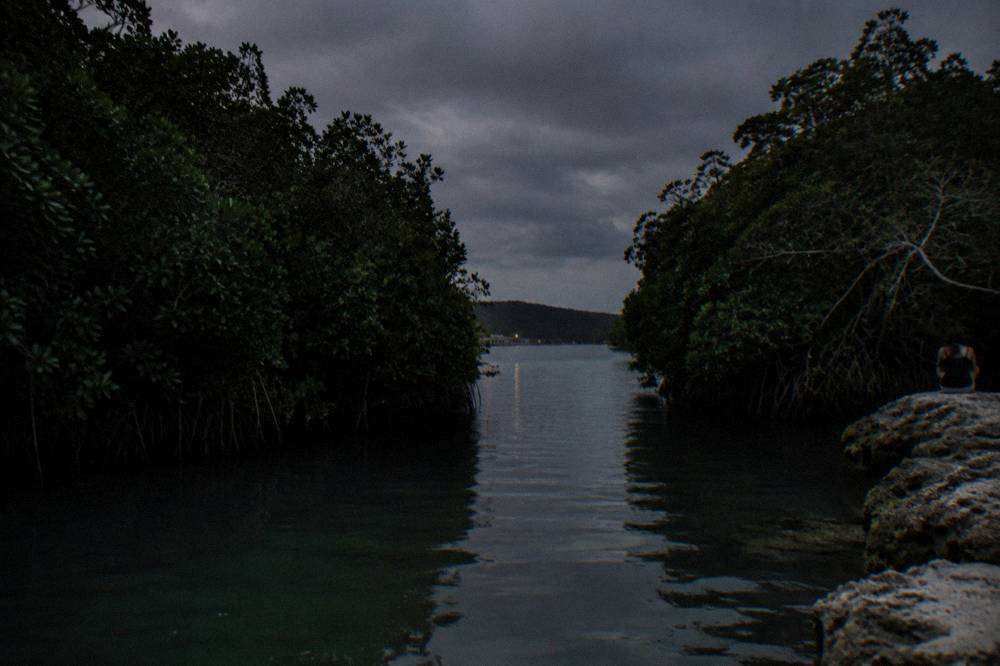
A bio bay tour is a slow paddle or boat ride into a sheltered lagoon after dark, where every disturbance of the water produces a blue flash: paddle strokes, droplets, the wake under the hull. The light appears and disappears in real time, and only in the water, never on the hull, the gear or the shore.
The Vieques Kayaks trip from Esperanza illustrates the format. It runs about 2 hours from $65 per person, carries a 4.5 rating from 1,242 reviews, includes round-trip transport from the meeting point on Calle Flamboyan to the bay entrance, and caps groups at 14 travelers. Guests meet the operator in town, ride to the bay together, then paddle Mosquito Bay in guided kayaks. It is one of the listings flagged likely to sell out, which matches the bay's standing as the island's marquee night out. Check availability on the operator's listing if Vieques is your base, since dates around the new moon fill first.
Fajardo's version concentrates in Las Croabas at the Kayak Village kiosks. The featured Bio Bay Kayak Tour by Kayaking Puerto Rico runs about 2 hours from $89 per person with a 4.7 rating from 2,176 reviews, the largest review pool on this site's roster, and groups of up to 30 tandem kayaks. The listing includes light snacks, refreshments and eco-friendly insect repellent, and cancels free up to 24 hours before. Nearby, Island Kayaking Adventure runs a shorter 1 hour 30 minute tandem outing from $89, and its guides may rig a tarp to block moonlight on bright nights, a telling detail: operators know the water glows and the sky's brightness is what hides it.
La Parguera runs on a different rhythm entirely. The Mareaito Charters sunset and bio bay cruise, from $65 per person with a 4.8 rating from 573 reviews, starts with a sunset swim at the Caracoles sandbar before moving into the bay after dark; snorkel gear is not included, so bring your own. Because La Parguera permits motorboats at night, this is the bay where you can float in the water and watch the glow bloom around your own body, the closest legal experience in Puerto Rico to standing inside the light. Even here, the glow is the water's doing, not the seabed's.
Travelers based in San Juan without a rental car are not shut out. Nine listings on this site include hotel pickup, from the Puerto Rico Access Eco Tours kayak transfer at $125 per person to the Borikua rum-tasting day to La Parguera at $250 with a meal included. The cheapest door-to-door option is the Caribbean Breeze La Parguera boat ride at $54.99, a 9 hour day with a roughly two hour drive each way, rated 4.0 from 717 reviews. The premium pick for one big day is the El Yunque and bio bay combo: rainforest hike in daylight, Laguna Grande kayak after dark, from $179.65 with a 4.7 rating from 1,020 reviews.
How To Maximize The Glow You Do See
Since the light lives in the water, your odds improve by targeting dark nights, warm months and calm conditions: book near a new moon, avoid nights right after heavy rain, and pick a bay and format that agitates a lot of water, like a kayak or a swim at La Parguera.
Moon phase is the single biggest lever. Darker nights around a new moon give better viewing; nights around a full moon make the glow harder to see because the organisms are still there but the sky is not. At Mosquito Bay this is not just advice but law: DRNA-licensed operators may not run tours the night before, the night of and the night after a full moon, three dark nights off per lunar cycle. Our moon phase planning guide covers how to read the calendar against your travel dates.
| Viewing factor | Better glow | Weaker glow | Why |
|---|---|---|---|
| Moon phase | Near new moon | Near full moon | Dark sky lets faint flashes read |
| Season | Late summer into autumn | Late winter | Densities peak roughly August to November at Laguna Grande |
| Rain | After a dry stretch | Right after heavy rain | Rain dilutes and clouds the water column |
| Bay | Mosquito Bay, Vieques | Faster-flushing water | Long residence time concentrates cells |
| Motion | Active paddling or swimming | Still water | Agitation triggers the flash |
Rain matters more than most visitors expect. Heavy rainfall can temporarily reduce dinoflagellate concentrations and cloud the water, lowering the visible intensity, so a night shortly after a big storm can disappoint even at the record-holding bay. Season plays a role too: the same 2024 Laguna Grande research found densities generally low in late winter and higher from August through November. None of this is a promise either way; it is a set of odds you can nudge by choosing your date, and our month-by-month breakdown of the best month for bioluminescence goes deeper.
Responsible viewing protects the resource you came for. The official guidance from Discover Puerto Rico asks visitors to use eco-friendly insect repellent as a balm or cream rather than a spray, applied at least 30 minutes before the tour; to avoid flashlights, phone screens and any unnecessary light; to keep noise down; and to never touch or remove anything from the water, per the tourism authority's protection page. Swimming is not permitted at two of the three bays, a rule in place to protect the dinoflagellates themselves.
Is The Bay Worth It Without The Beach Myth?
Yes, and arguably more so: what Puerto Rico actually offers is rarer than glowing sand. Only a handful of permanent bioluminescent systems exist worldwide, roughly eleven, and three of them are on this island. Water that lights up under your own paddle is the genuine article.
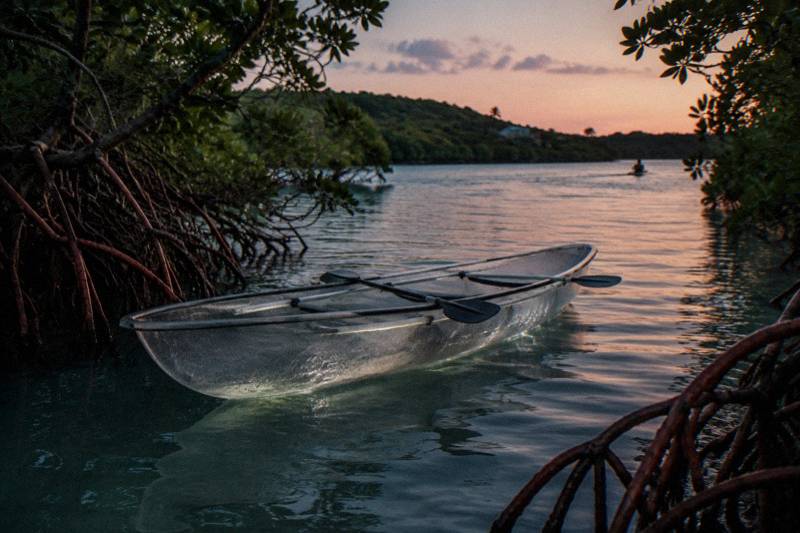
Glowing sand, where it exists at all on Earth, is a passive spectacle you watch. A bio bay is interactive: every stroke, splash and wake is your own doing, and the bay answers in light. That difference is why the format matters so much in the listings. A clear kayak or full clear canoe, like the Adventure Vieques experience from $57, shows the glow under and around you through the hull. A swim at La Parguera puts you inside it. A pontoon boat like the Isla Nena tour at Mosquito Bay, 40 minutes from $85, drags a glowing wake for a small group of up to 9.
The bays are also conservation stories worth knowing before you go. The record-holding Mosquito Bay has gone dark twice in living memory, in 2014 and for about seven months after Hurricane Maria, when the storm killed nearly all the mangroves at the bay's mouth that shelter the bloom from washing out; the 2014 blackout led to the swimming ban. The restoration now underway is serious money and serious science: a NOAA-funded project of about $2.96 million begun in December 2024 has planted a nursery of close to 4,000 mangrove plants with an 84 percent success rate, alongside 4,000 biodegradable living shoreline bags, as NOAA's own project story reports. Your tour fee is part of that economy.
So adjust the expectation, not the enthusiasm. Nobody in Puerto Rico will hand you a glowing beach, and any listing that implies one is selling the water short. What you can book tonight, on Bioluminescent Bay Tours Puerto Rico and its compared roster, is a paddle into one of the densest concentrations of living light on the planet, with free cancellation up to 24 hours before on every listing this site carries. The sand stays dark. The water does not disappoint on its good nights, and it has more good nights than almost anywhere else on Earth.
Common Questions About Bioluminescent Sand In Puerto Rico
Is There Bioluminescent Sand In Puerto Rico?
No. No primary source confirms glowing sand or glowing beaches anywhere in Puerto Rico. The bioluminescence is in the water, produced by dinoflagellates that flash when the water is disturbed, and the sand plays no part in the reaction.
Why does the water glow but not the sand?
The glow is a chemical reaction inside microscopic organisms called Pyrodinium bahamense that live suspended in the water. When the water is agitated, each cell emits a brief blue flash. Sand contains no light-producing organisms, so it stays dark no matter what.
Can you see bioluminescence from the beach?
Rarely and only secondhand. On very active nights the water near a bay's shoreline may shimmer, but Puerto Rico's three bio bays are lagoons and bays best reached by kayak, clear canoe or boat, not beach viewing spots, and the visible glow follows whatever stirs the water.
Do phones capture the glow?
Standard phones and cameras struggle badly. The flashes are faint and brief, so long-exposure photos show far more blue than the eye sees, which is partly why the glowing-sand myth spread. Expect to experience the glow rather than photograph it.
Which bay is the brightest?
Mosquito Bay on Vieques holds the Guinness World Record for the brightest bioluminescent bay, with counts of up to 700,000 dinoflagellates per gallon. A June 2026 measurement recorded 304,000 per gallon. Intensity still varies with moon, rain and season on any given night.
Is it safe to touch the glowing water?
Research on the Puerto Rico bays has found the dinoflagellate populations there are generally non-toxic, with no documented risk from skin contact. Even so, swimming and touching are prohibited at Mosquito Bay and Laguna Grande to protect the organisms, and La Parguera operators set their own flotation and no-touching rules.