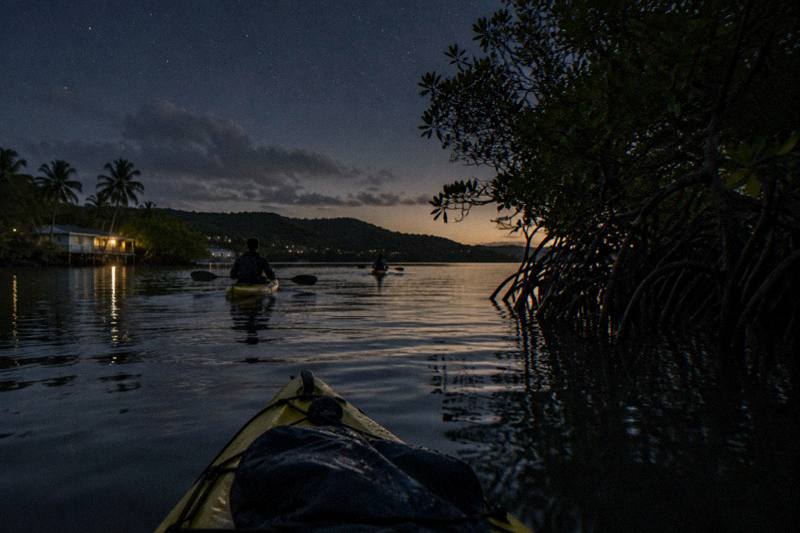
Can You Go To The Bioluminescent Bay Without A Tour?
Access rules for Puerto Rico's three bioluminescent bays: where independent visits are possible, where a licensed tour is the practical route, and what going guided actually buys you.
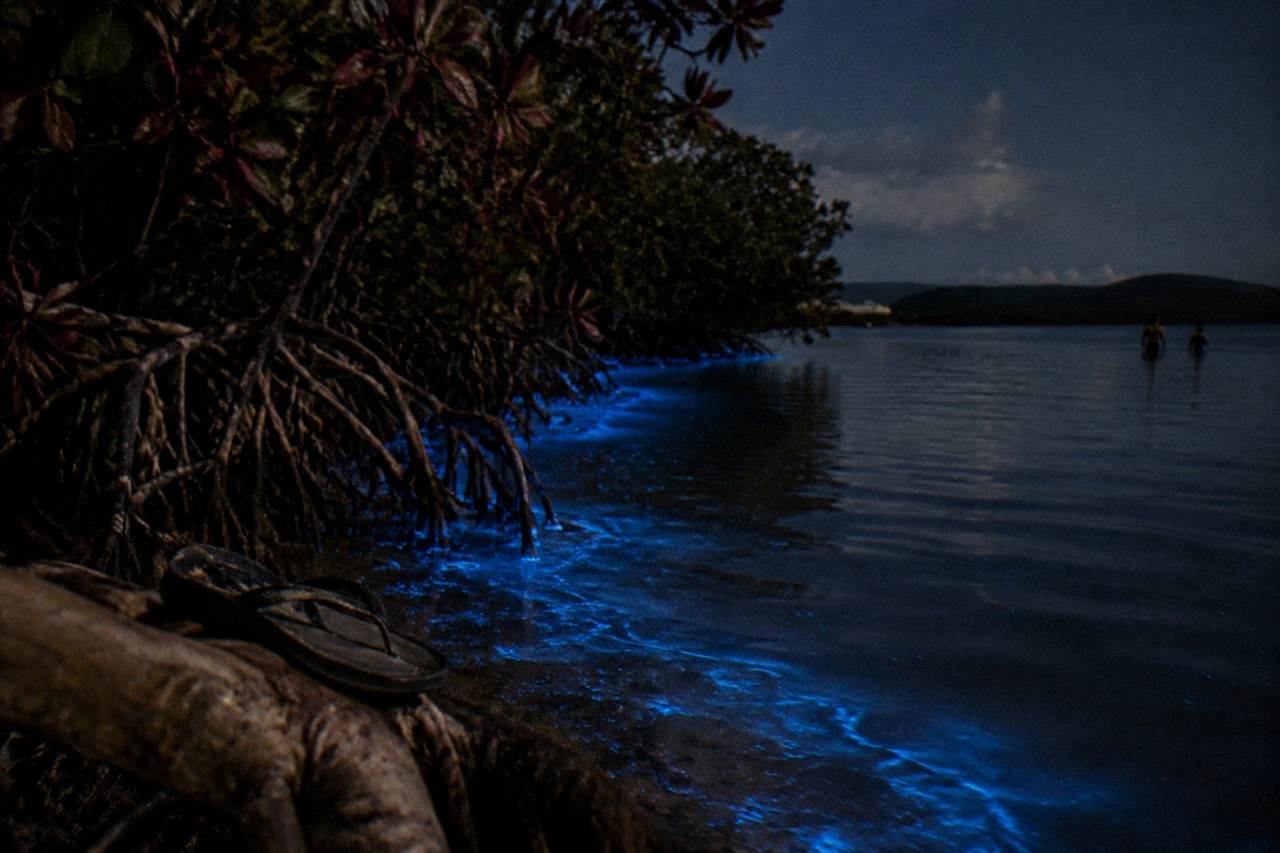
Can You Go To The Bioluminescent Bay Without A Tour?
Not in any practical sense at Mosquito Bay or Laguna Grande, and only partially at La Parguera. Mosquito Bay sits inside a DRNA-co-managed reserve where night tours run through licensed operators, Laguna Grande hides behind a narrow mangrove channel inside the Cabezas de San Juan Natural Reserve, and La Parguera is the one bay with public docks and permitted motorboats at night. A guided tour is the route the geography and the rules have already chosen for you at two of the three.
The short version of the access question is a geography question. Puerto Rico has exactly three bioluminescent bays: Laguna Grande in Fajardo, Mosquito Bay in Vieques, and La Parguera in Lajas. Each one is reached differently, and the difference decides whether an independent visit is even on the table. If you're staying in San Juan and wondering how far each bay actually sits from the city, the guide to seeing bioluminescence from San Juan lays out the distances and the tours that include transport.
Mosquito Bay, the Guinness World Record holder for the brightest bioluminescent bay, is protected as the Vieques Bioluminescent Bay Natural Reserve, co-managed by the Vieques Conservation and Historical Trust and the DRNA. The Vieques Kayaks Bio Bay trip, the Alikei Adventures clear kayak outing, and the Isla Nena pontoon boat all operate inside that framework, with licensed operators running the night visits. You can stand on Vieques and look at the water on your own, but the bay itself sits south of Sun Bay and the organized night experience runs through those permitted operators. Since those licensed night trips end late, staying close by makes the whole evening easier, and our guide to hotels and guesthouses near the glowing bays lays out the best options.
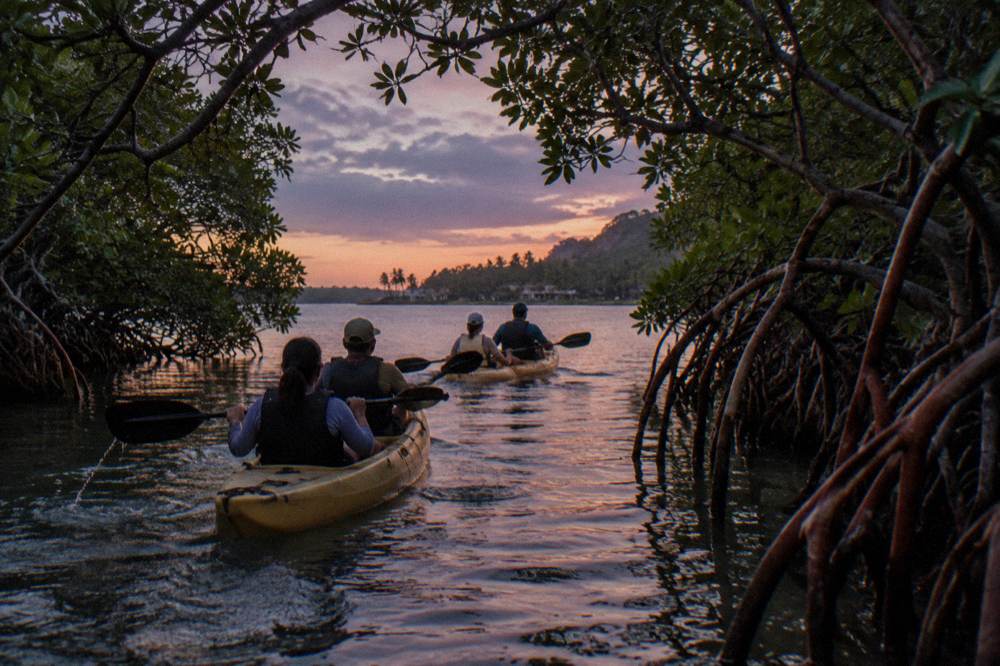
Laguna Grande is technically a lagoon, reached through a narrow mangrove-lined channel inside the Cabezas de San Juan Natural Reserve area. Kayaking Puerto Rico, Yokahu Kayak Trips, Pure Adventure, and the other Las Croabas operators paddle that channel nightly. That channel is the whole reason independent access is not realistic: there is no walk-up viewpoint where the glow is visible, and the lagoon opens only through the mangroves. Protecting that fragile channel is part of why the glow endures at all, and our guide to how rare it really is to see bioluminescence explains what makes these bays so uncommon in the first place.
La Parguera is the exception, and the only one. It is the only bio bay in Puerto Rico where motorboat navigation is permitted at night, per Discover Puerto Rico's official guidance, and boats run from the town's docks. That changes the math for independent travellers more than any other single fact on this page.
If you are weighing the guided options before the independent ones, these three cover the brightest bay, the most-booked Fajardo channel, and the La Parguera boat-and-swim format:
The rest of this page walks each bay in turn, then looks at what a tour actually adds and whether skipping one saves anything real.
Can You Visit Mosquito Bay In Vieques On Your Own?
Realistically, no. Mosquito Bay lies inside a protected natural reserve, night visits run through DRNA-licensed operators, and the bay sits far enough from Esperanza that arriving independently at night, on an island you can only reach by ferry or flight, is not the practical route. The reserve framework, not a fence, is what closes the door.
Start with the island itself. Vieques sits off the east coast of Puerto Rico, reached by ferry from Ceiba or by a short flight. Tours run at night, and because the last ferry from Vieques departs at 7:30 pm per one operator's listing, anyone touring Mosquito Bay needs at least one night of accommodation on the island. The official Puerto Rico Ferry itinerary carries the current sailing schedule. That single logistics fact already makes the independent night visit a two-day project.
Then there is the regulation layer. DRNA-licensed operators are restricted from running Mosquito Bay tours on the night before, the night of, and the night after a full moon, three nights per lunar cycle, a rule specific to this bay because moonlight washes out the glow. The co-managers, the Vieques Conservation and Historical Trust and the DRNA, run ongoing plankton counts, water-quality monitoring, and mangrove reforestation in the reserve, per the Trust's own bay page. The bay is managed as a living research site, and the night access model is built around licensed operators, from the Vieques Kayaks trip that carries up to 14 travellers to the Isla Nena pontoon that takes 9.
Swimming is not permitted at Mosquito Bay, to protect the dinoflagellates. The 2014 blackout at the bay led to that ban, and the bay went dark again after Hurricane Maria, roughly seven months without visible organisms. So even the idea of walking to the shoreline and wading in is off the table in both letter and spirit.
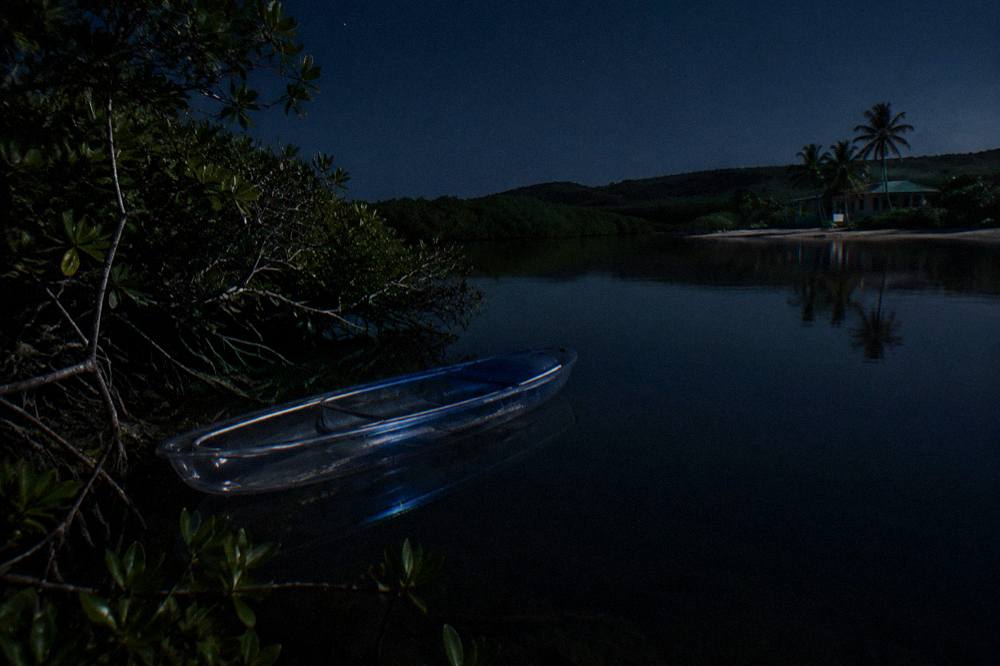
What independent travel does get you is the island. You can arrange your own ferry, your own stay, your own dinner in Esperanza, and then join a licensed tour as the night portion of a self-planned day. The Alikei Adventures clear kayak tour meets at a spot across from the Sun Bay entrance and includes the van ride to the bay; the Adventure Vieques clear canoe trip meets at a red and white van before the El Blok area. You handle everything except the ninety minutes on the water. For the lodging piece of that plan, our guide to guesthouses and rentals near the glowing bays lays out the best home bases.
For travellers who want the deepest look at what makes this bay different, the Mosquito Bay guide on this site covers the record, the blackouts, and the restoration work in full.
Can You Reach Laguna Grande In Fajardo Without A Guide?
No, because Laguna Grande is a lagoon behind a narrow mangrove channel inside the Cabezas de San Juan Natural Reserve, and the channel is the only way in. There is no shore path, no viewpoint, and no independent paddle option; the kayaks that enter the channel go out with licensed operators. The bay is functionally inaccessible without one.
This is the part first-time visitors most often get wrong. Fajardo looks like a coastal town with a bay you could walk to, the way you might walk to any beach. Laguna Grande is not that. It sits behind a fringe of mangroves, and the tours from Las Croabas, the Kayaking Puerto Rico trip from Kiosk 11, the Yokahu Kayak Trips outing from its green tent, the Pure Adventure tour from Kiosk 1, all paddle a two-person or single kayak through that narrow channel to reach the open lagoon. The listing facts are consistent: about 2 hours, groups up to 30 travellers, no pickup offered, everyone makes their own way to the Kayak Village meeting points.
The reserve rules reinforce the access reality. Laguna Grande is strictly kayak-only within the Cabezas de San Juan Natural Reserve, and swimming is prohibited there just as it is at Mosquito Bay, to protect the fragile dinoflagellate population. Motorboats do not run there at night; that format belongs to La Parguera alone. So the set of ways to see Laguna Grande is short: a guided kayak, or nothing.
The good news is that Fajardo is the easiest bay to reach independently up to the tour itself. The drive from San Juan runs roughly 1 to 1.25 hours, and once you are at Las Croabas the tour operators are steps apart in the Kayak Village. The independent part of the Fajardo visit, the driving, the parking, the dinner before or after, is entirely yours. The ninety minutes to two hours on the water is the guided part, and there is no workaround.
One Fajardo listing is even sold as a full moon tour, the Puerto Rico Bio Bay Tours outing that runs about 3 hours from $85 per person. That is the exception to the moon-phase caution elsewhere: this operator deliberately runs a version of the trip around bright nights. Every other planning question about moonlight is covered in the bioluminescent bay moon phase guide on this site. For a sense of whether the bay will actually glow on your night, this guide to how rare it really is to see bioluminescence puts your odds in perspective.
Is La Parguera The One Bay You Can Visit Independently?
Partly, yes. La Parguera is the only one of the three bays where motorboats run at night and the only one where swimming in the glowing water is generally permitted, on most nights, and the boats leave from the town's public docks. It is the closest thing Puerto Rico has to a bio bay you can approach on your own terms. Even with that level of freedom, the glow is never a sure thing, so read our guide to your odds of seeing bioluminescence before you plan the trip.
The distinction comes straight from the official tourism guidance. La Parguera is the only bio bay where motorboat navigation is permitted at night, and the only one where swimming in the bioluminescent water is generally permitted, though not guaranteed every night, with operators setting their own safety rules such as required flotation and no touching of organisms. The other two bays prohibit swimming outright to protect the dinoflagellates. Where you base yourself also shapes which bay you can realistically visit after dark, so our guide to lodging near the bioluminescent bays maps out the closest towns for each one.
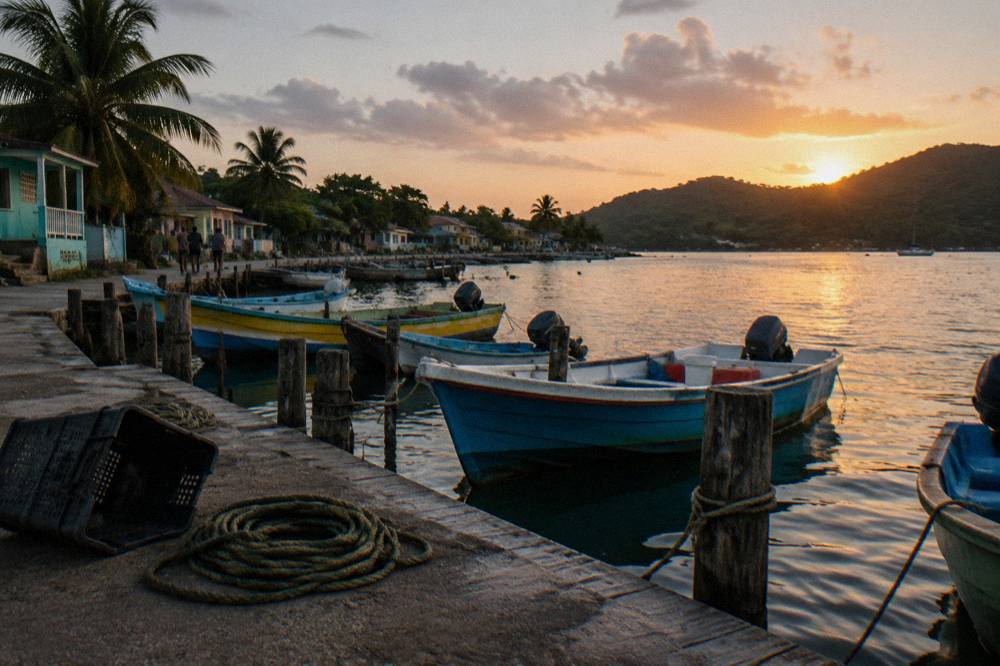
What that means in practice is that the water side of a La Parguera visit still runs through an operator. The Mareaito Charters sunset cruise, 4.8 from 573 reviews, stops for a sunset swim at the Caracoles sandbar before entering the bay. Snorkel gear is not on the inclusion list, so bring your own if you want it. The Joytourspr boat takes up to 6 participants for about an hour from $75. Aventuras Tropicales runs from Playa Punta Papayo with lifejackets, snacks and bottled water included. These are the boats that legally enter the bay at night, and the listings that carry the "Likely to sell out" badge, Mareaito among them, suggest planning ahead rather than walking the docks on the night.
The genuinely independent piece is everything around the boat: La Parguera is a normal town with a waterfront, and unlike the reserve-locked bays, you can arrive on your own schedule, eat, walk the malecón, and board a scheduled departure. Whether any given night allows swimming is set by conditions and by each operator's rules, so the honest framing is "generally permitted, check the operator", never a promise.
La Parguera also carries its own environmental watch item. In July 2026, sargassum covered about 80 cuerdas of the bay and the DRNA activated its removal protocol, mobilizing a specialized vessel and a long-reach excavator from Fajardo (see Tour Length). The 2026 sargassum influx to Puerto Rico was projected at a record of roughly 55 million tons, up from 40 million the prior year. The glow is visible year-round at all three bays, but a bay dealing with sargassum is a bay in flux, and conditions vary.
What Does A Guided Tour Actually Get You?
A guided tour gets you three things you cannot assemble on your own: legal night access to two protected reserves, a kayak or boat that is already on the water, and a guide who knows the channel, the wind and the moon. At Mosquito Bay and Laguna Grande the first item alone settles the question; at La Parguera the second and third are what you are paying for.
Consider what the listings actually include. The Vieques Kayaks Bio Bay trip, from $65 per person and 4.5 from 1,242 reviews, lists round trip transport from the meeting point to the bay entrance, which matters because the bay entrance is not walking distance from Esperanza. The Kayaking Puerto Rico Fajardo tour, from $89 and 4.7 from 2,176 reviews, lists light snacks, refreshments and eco-friendly insect repellent. The Isla Nena pontoon, a 24 foot boat carrying up to 9 travellers, spends about 40 minutes on Mosquito Bay for from $85, a format that suits anyone who cannot or prefers not to paddle.
The guide also handles the two things that ruin independent bio bay plans: moonlight and weather. Darker nights near a new moon give the best viewing, and the organisms are present year-round while the visible intensity varies with moonlight, rain and water conditions. Heavy rainfall can temporarily reduce dinoflagellate concentrations and cloud the water. Operators watch these variables nightly; a traveller who has driven two hours does not. The bioluminescent bay rain and weather cancellations guide on this site covers what happens when conditions turn.
There is a knowledge layer too. Guides on the Vieques trips talk about Pyrodinium bahamense, the dinoflagellate that glows blue when the water is agitated, and about why this bay holds its bloom: water in Mosquito Bay stays about 13.5 to 14.5 days, and that slow residence time is why the concentration builds to levels faster-flushing bays cannot hold. The June 2026 weekly count during a Primera Hora visit measured 304,000 organisms per gallon, against a Guinness-cited peak of up to 700,000. You can read those numbers here, but hearing them on the water, from someone who counts on that bay, is a different experience.
None of this means guided is the only way to encounter Puerto Rico's bioluminescence. It means guided is the only way to encounter it at the two reserve bays, and the most reliable way at the third. The question of which bay suits you is a separate one, and the three-question trip picker on the Bioluminescent Bay Tours Puerto Rico homepage walks it quickly.
How Much Does Going Without A Tour Save?
At Mosquito Bay and Laguna Grande, nothing, because there is no independent option to compare against. At La Parguera, the comparison is between boat listings that run from $54.99 to $199 per person, and the cheapest of them includes San Juan transport, so the saving depends entirely on where you start. There is no free version of the experience at any of the three bays. If you're starting from the city, our guide to each bio bay's distance from San Juan spells out which tours bundle the ride both ways.
The price floor on this site's roster runs from $54.99 per person, the Caribbean Breeze La Parguera trip with San Juan pickup, up to $250 for the Borikua rum tasting day trip. Within a single bay the spread is narrow and the format, not the price, is what moves. At Laguna Grande, the kayak listings run from $65 to $89 per person for roughly two hours on the water. At Mosquito Bay, kayak and canoe formats start at $57 and the pontoon and electric catamaran run $85 to $105.
| Bay | Independent access | Night format | Entry price on this roster | Swimming |
|---|---|---|---|---|
| Mosquito Bay, Vieques | Not practical; reserve, licensed operators, overnight required | Kayak, clear kayak, clear canoe, pontoon, electric catamaran | From $57 per person | Not permitted |
| Laguna Grande, Fajardo | No; lagoon behind a mangrove channel in a natural reserve | Guided kayak only | From $65 per person | Not permitted |
| La Parguera, Lajas | Closest to independent; public docks, motorboats permitted | Motorboat, some with swim stops | From $65 per person (from $54.99 with San Juan transport) | Generally permitted on most nights, operator rules apply |
The one real saving available is transport. Nine listings on the roster include pickup from San Juan, and they span from the $54.99 Caribbean Breeze boat ride to the $250 Borikua day with rum tasting. If you were going to rent a car anyway, the self-drive Fajardo kayak at from $65 to $89 competes well against the $110 to $125 San Juan transfer versions of the same bay. If you were not going to rent a car, the transfer listings are the economical route, not the expensive one. Since none of the glows actually happen in the city, this breakdown of how far each bioluminescent bay sits from San Juan explains the drive and the tours that cover it for you.
| Way in | What you handle yourself | What the listing handles | Typical cost signal |
|---|---|---|---|
| Self-drive to Las Croabas, Fajardo | Car, parking, dinner | Kayak, guide, channel entry | From $65 to $89 per person |
| Transfer from San Juan to Laguna Grande | Nothing | Pickup, drive, kayak, guide | From $110 to $125 per person |
| Stay on Vieques, join a Mosquito Bay tour | Ferry or flight, hotel, meals | Van to the bay, kayak or boat, guide | From $57 per person plus island costs |
| La Parguera boat from the docks | Drive to Lajas, timing | Boat, captain, swim stop where offered | From $65 per person |
Every listing on the roster offers free cancellation up to 24 hours before, which softens the commitment of booking ahead. That matters for a phenomenon that depends on the night: if the weather turns, you are not locked in.
Common Questions About Visiting The Bio Bay Without A Tour
Can You Go To The Bioluminescent Bay Without A Tour?
Not at Mosquito Bay or Laguna Grande, both of which sit inside protected reserves reached through licensed operators. La Parguera is the partial exception: motorboats run from its docks at night and it is the only bay where swimming is generally permitted, though the water portion still runs through an operator's boat.
Can You Swim In The Bioluminescent Bays?
Not at Mosquito Bay or Laguna Grande, where swimming is prohibited to protect the dinoflagellates. La Parguera is the only one of the three where swimming in the glowing water is generally permitted on most nights, subject to conditions and each operator's safety rules.
Do You Have To Kayak To See The Bioluminescent Bay?
No. Mosquito Bay has a pontoon boat tour and an electric catamaran, both about 40 minutes on the water, and La Parguera is visited by motorboat. Only Laguna Grande is kayak-only, because the lagoon sits behind a narrow mangrove channel.
Can You See Bioluminescence From The Shore In Puerto Rico?
Not reliably. Laguna Grande is hidden behind mangroves, and Mosquito Bay sits inside a reserve south of Sun Bay with no public night viewpoint. The glow is visible on the water, which is why access runs through tours.
Is One Night On Vieques Enough For Mosquito Bay?
Yes, and it is effectively required. Tours run at night and the last ferry from Vieques departs at 7:30 pm per one operator's listing, so at least one night of accommodation on the island is the standard plan.
Do Bio Bay Tours Run On Full Moon Nights?
Not at Mosquito Bay, where DRNA-licensed operators may not run tours the night before, the night of, and the night after a full moon. One Fajardo listing is sold specifically as a full moon kayak tour, and La Parguera operators set their own schedules.
If the access rules have settled the independent question for you, these are the three listings that cover the range of formats: