Is Laguna Grande Worth It?
A fair verdict on Fajardo's Laguna Grande: glow level, prices, convenience from San Juan, and how it compares with Mosquito Bay and La Parguera.
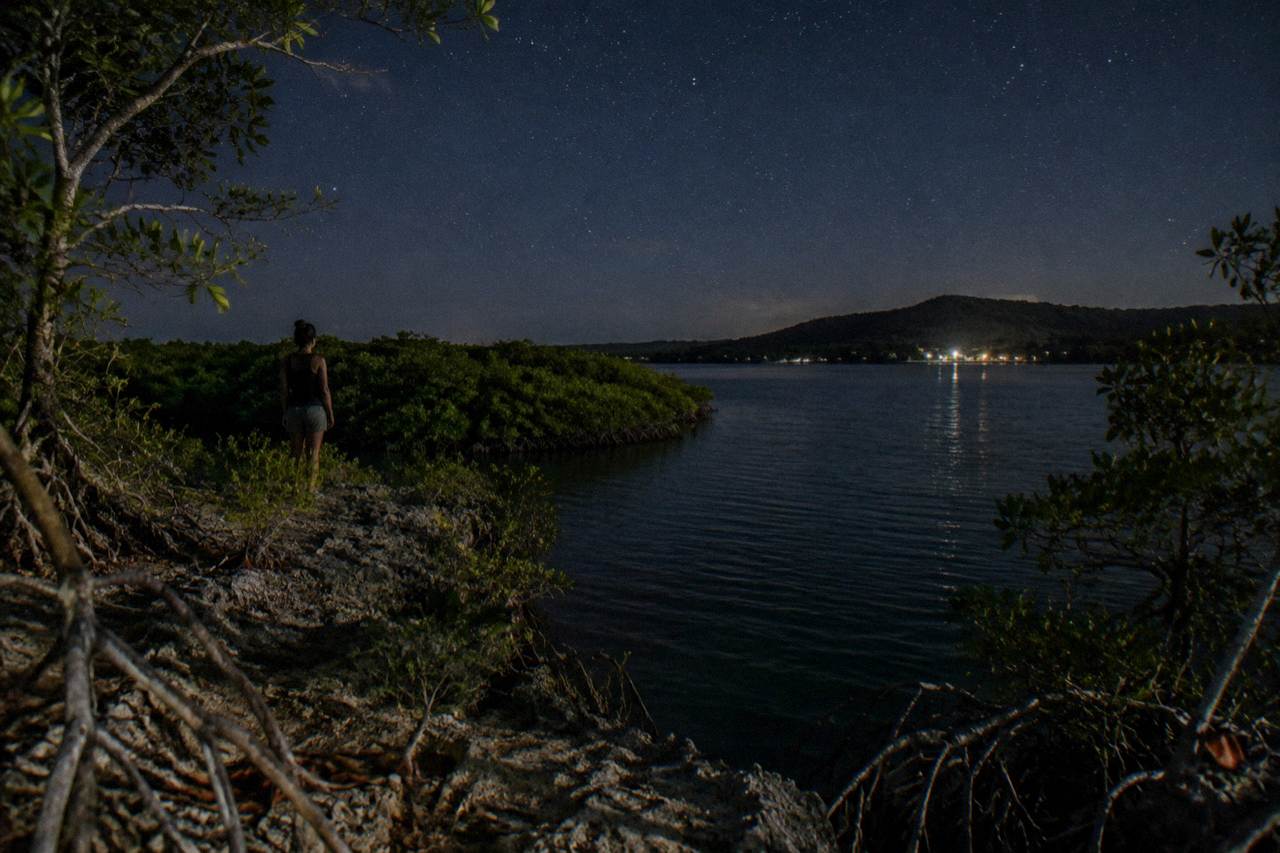
Laguna Grande sits inside the Cabezas de San Juan Natural Reserve near Fajardo, about 1 to 1.25 hours by car from San Juan, which makes it the bioluminescent bay most travelers can actually fit into a trip built around the capital. That convenience is the whole argument for it, and it is a good one. But convenience is not the only measure of a bio bay, and this page weighs it fairly against the two alternatives, Mosquito Bay on Vieques and La Parguera in Lajas, without pretending the glow is something it is not.
Is Laguna Grande Worth It?
Yes, for most travelers Laguna Grande is worth it, with honest expectations. It is a kayak-only lagoon reached through a narrow mangrove channel, its tours run from $65 to $89 per person, and six licensed outfitters depart from the same Kayak Village area in Las Croabas. The organisms are present year-round, but visible intensity varies with moonlight, rain and water conditions, and no operator can promise a specific glow.
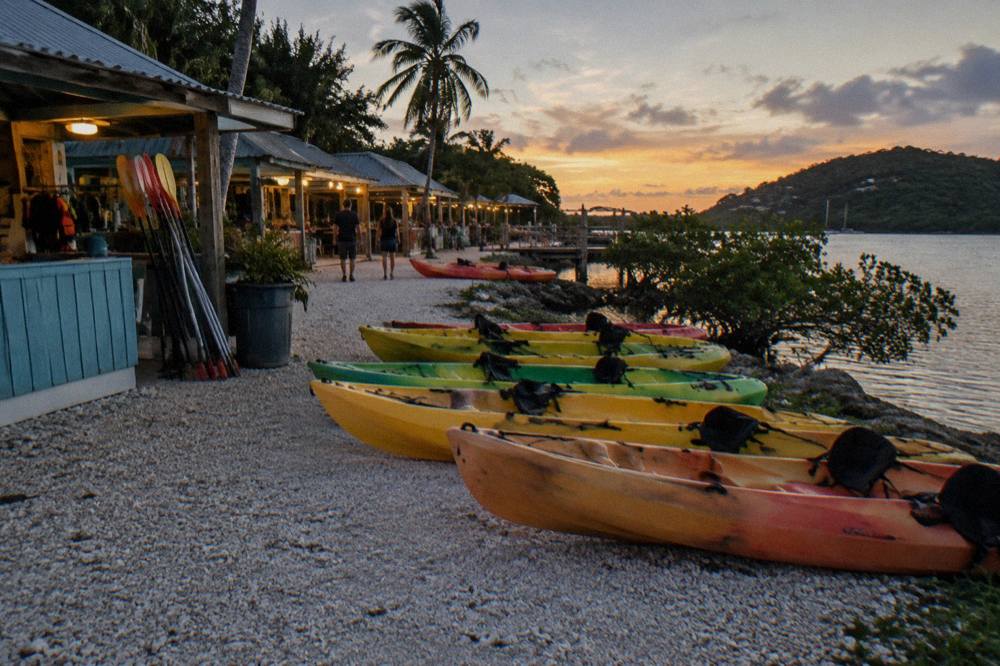
The case for Laguna Grande is practical. You can spend the day in Old San Juan, drive east in the late afternoon, paddle for two hours after dark and be back at your hotel the same night. No ferry, no flight, no overnight on an island. Six operators work the Las Croabas departure area: Kayaking Puerto Rico, Yokahu Kayak Trips, Pure Adventure Corp., Island Kayaking Adventure, Peniel Access Eco Tours and Puerto Rico Bio Bay Tours LLC. All six listings on this site carry free cancellation up to 24 hours before, and none offers pickup, so a rental car or a transfer is part of the plan. If you'd rather sleep near the bay than drive back the same night, our guide to basing yourself in Fajardo for the Laguna Grande tour walks through how to plan the whole evening.
The case against it, or at least the honest caveat, is that Laguna Grande is not the brightest bay in Puerto Rico. Mosquito Bay on Vieques holds the Guinness World Record for the brightest bioluminescent bay, with up to 700,000 dinoflagellates per gallon, recognised in 2006. If raw glow is your single criterion and you can spare the ferry and a night on Vieques, that is the stronger choice, and the Mosquito Bay Vieques tour guide covers it in full. If your criterion is a reliable, affordable, single-evening experience from San Juan, Laguna Grande wins on logistics alone.
There is also a science case for Laguna Grande that first-page results rarely mention. A 2024 study of the lagoon found that dinoflagellate densities fluctuate widely through the year, with generally low values in late winter and higher values in late summer, and that hurricanes effectively rake and refresh the lagoon in ways that set up later reproduction. In plain terms, the bay you paddle in August is not the same bay you paddle in February, and neither is broken. The organisms are always there; the concentration moves with the season.
How Does Laguna Grande Compare With Mosquito Bay And La Parguera?
Laguna Grande is the middle choice of Puerto Rico's three bioluminescent bays: easier to reach than Mosquito Bay, more restricted than La Parguera. It is kayak-only with no swimming, it is the only bay reachable from San Juan in about an hour, and its tours run about $65 to $89 per person, which is below both Vieques boat options and most San Juan day trips.
Puerto Rico holds three of the roughly eleven permanent bioluminescent systems in the world, seven of them in the Caribbean, which is why the island draws bio bay travelers at all. Each of the three plays a different role. Laguna Grande is the accessible evening. Mosquito Bay is the destination trip: the record-holder, co-managed as a natural reserve by the Vieques Conservation and Historical Trust and the DRNA, reachable only by ferry from Ceiba or a flight, and usually worth an overnight. La Parguera is the swimmer's bay: the only one of the three where swimming in the glowing water is generally permitted on most nights, and the only one where motorboats may navigate at night, per Discover Puerto Rico's guidance on protecting the bays.
| Bay | Location | Formats | Swimming | Getting there |
|---|---|---|---|---|
| Laguna Grande | Fajardo (Las Croabas) | Guided kayak only | Not permitted | About 1 to 1.25 hours by car from San Juan |
| Mosquito Bay | Vieques (Esperanza) | Kayak, clear kayak, canoe, pontoon and electric boat | Not permitted | Ferry from Ceiba or flight, overnight recommended |
| La Parguera | Lajas | Boat, with swimming stops | Generally permitted on most nights | Drive west, about two hours per one listing's drive time |
The swimming rule matters more than many visitors expect. Laguna Grande is technically a lagoon reached through a narrow mangrove channel inside the Cabezas de San Juan reserve, and swimming is prohibited there, as it is at Mosquito Bay, to protect the fragile dinoflagellates. If getting into the glowing water is the experience you are picturing, Laguna Grande will not deliver it. The guide to swimming in the bio bays covers exactly which bay allows what.
One more distinction: the water in Mosquito Bay stays about 13.5 to 14.5 days before flushing out, which is why it can hold such dense concentrations; faster-flushing bays cannot match it. Laguna Grande's exchange dynamics are different, and that is the honest physical reason the record sits on Vieques rather than in Fajardo. It does not make Laguna Grande a lesser experience; it makes it a different one, priced accordingly.
How Much Does A Laguna Grande Tour Cost?
Laguna Grande is the cheapest bio bay to tour in Puerto Rico. Self-drive kayak listings run from $65 to $89 per person for about two hours on the water, and the cheapest listing on the entire site is the Caribbean Breeze La Parguera day trip from San Juan at from $54.99. Adding San Juan transport roughly doubles the Fajardo price, to from $110 to $125 per person.
The six Las Croabas operators price closely together, which tells you the market is competitive and none has a monopoly premium. The from prices below are per person, as listed, and all six include free cancellation up to 24 hours before.
| Operator | Listing | From price | Duration | Rating and reviews |
|---|---|---|---|---|
| Kayaking Puerto Rico | Bio Bay Kayak Tour in Fajardo | $89 | About 2 hours | 4.7 from 2,176 reviews |
| Yokahu Kayak Trips | Puerto Rico Bio Bay Kayak Adventure Tour | $67 | About 2 hours | 4.6 from 1,821 reviews |
| Pure Adventure Corp. | Bio Bay Kayak Tour in Fajardo | $69.13 | About 2 hours | 4.6 from 1,649 reviews |
| Island Kayaking Adventure | Night Kayaking Adventure | $89 | About 1 hour 30 minutes | 4.3 from 529 reviews |
| Peniel Access Eco Tours | Laguna Grande Night Kayaking | $65 | About 2 hours | 4.4 from 310 reviews |
| Puerto Rico Bio Bay Tours LLC | Bioluminescent Lagoon or Full Moon Kayak | $85 | About 3 hours | 4.6 from 274 reviews |
The spread between the cheapest and priciest listing is $24, so the decision is less about money and more about format, group size and duration. The Pure Adventure outing is the largest-format listing at up to 30 travellers per guided group; Peniel caps its groups at 12 and is marked wheelchair accessible with a 101 kayak lesson on the listing. The Pure Adventure listing also states a 240 lbs per person weight limit with on-site weighing. Other listings set their own caps and minimum ages, so check the live booking page for yours. For more on that, the article on the weight limit for the bio bay kayak is the dedicated answer.
If you would rather not drive at night, three San Juan transfer listings paddle the same lagoon: Puerto Rico Access Eco Tours from $125, Peniel from $125 and Bespoke Lifestyle Management from $110, all with hotel pickup included and about 4 to 5 hours door to door. That is the real cost of skipping the rental car.
Can You Swim At Laguna Grande?
No. Swimming is not permitted at Laguna Grande, and it is not a rule operators can bend. The DRNA restriction protects the dinoflagellates, and every listing at this bay is a kayak outing. Travelers who want to get in the water need La Parguera, the only one of the three bays where swimming in the glow is generally permitted on most nights.
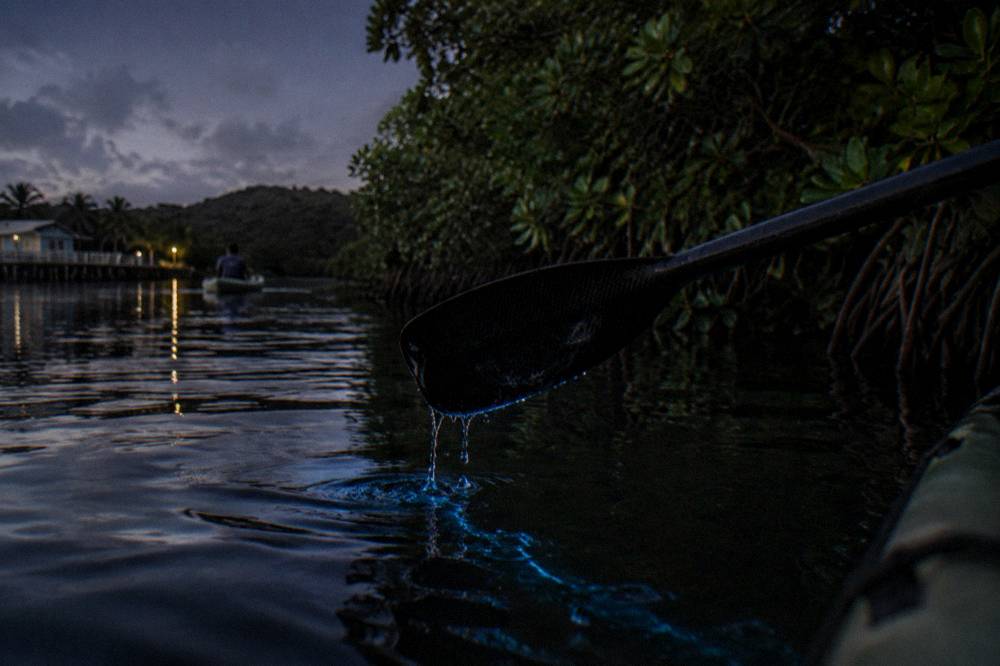
This comes up constantly because photos and videos of people swimming in glowing water circulate widely, and almost all of them were shot in La Parguera or outside Puerto Rico. At Laguna Grande the experience is the paddle itself: the channel, the dark water, and the blue flash when your paddle strokes and the wake disturb the organisms. That is not a consolation prize; it is the designed experience, and the kayak format is what keeps the bay viable.
The same conservation logic drives the gear rules. Official guidance asks visitors to use eco-friendly insect repellent, in cream or balm form rather than spray, applied at least 30 minutes before the tour, and to avoid flashlights, phone screens and unnecessary light once on the water. One La Parguera boat tour listing goes further and names insect repellent and flashlights as not allowed on its tour. Loud noise and touching or removing anything from the water are also out. These rules protect the thing you came to see, per the official tourism guidance.
For the fullest version of what to bring and wear, the what to wear to the bio bay guide keeps it general by design, because operators supply different things and the listing is the final word on inclusions.
When Should You Go To Laguna Grande?
Go as close to a new moon as your trip allows, and prefer the warmer months if your dates are flexible. Darker nights give better viewing, and nights around a full moon make the glow harder to see. A 2024 study found Laguna Grande densities generally higher in late summer and lower in late winter, though the organisms are present year-round and intensity varies.
Moon phase is the single biggest controllable variable. Book a night when the moon is small or absent and you give the glow its best stage. The dedicated moon phase guide does the calendar work for you, and the best time to visit guide adds the seasonal layer.
Rain is the other variable. Heavy rainfall can temporarily reduce dinoflagellate concentrations and cloud the water, lowering visible intensity, which is why operators cancel or reschedule in bad weather rather than paddle a compromised bay. The rain and cancellation guide explains what happens to your booking when a storm rolls through; the short version is that every listing on this site carries free cancellation up to 24 hours before, and weather moves are handled by the operator.
Here is the counterintuitive option most visitors never consider: the full moon itself. Puerto Rico Bio Bay Tours LLC sells a dedicated full moon kayak tour from Las Croabas, about 3 hours, from $85 per person, carrying a 4.6 rating from 274 reviews. The listing frames it as a mangrove-channel paddle under moonlight rather than a peak-glow night, and the listing states no transport is provided, so a rental car is recommended. If your dates land on a bright moon and you cannot shift them, reframing the night as a moonlit channel paddle is the honest way to enjoy it, and this is the only Fajardo listing on this site sold on that basis.
What Is The Paddle Actually Like?
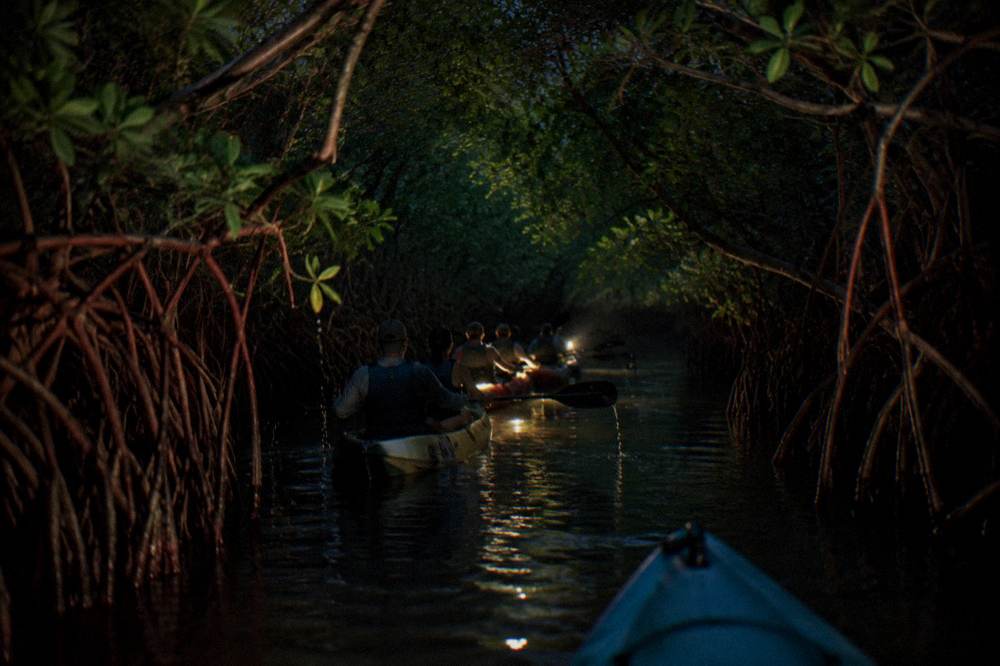
The outing is about two hours of guided tandem kayaking through a narrow mangrove channel to the lagoon and back, in groups of up to 30 on the largest listings or 12 on the smallest. Expect dark water, guide narration, a blue flash on every paddle stroke, and no swimming, no motorboats and no bright lights. Intensity on any given night is not promised by anyone honest.
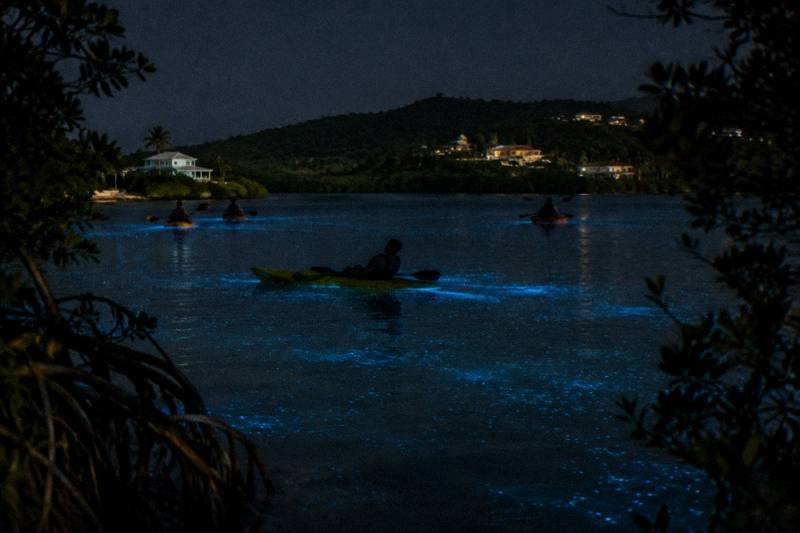
The channel is the underrated part. You paddle in through mangroves with almost no light except the guides', which is disorienting for a few minutes and then quietly spectacular. Once the lagoon opens up, the glow appears where water moves: around paddles, along the hull, in the wake. The organisms glow blue when the water is agitated, so still water looks black and disturbed water lights up. That dynamic, rather than a continuous neon lagoon, is what bioluminescence actually is, and knowing that before you book is the difference between a good night and a disappointed one.
Operators differ in texture more than in route. The Yokahu outing asks for check-in 30 minutes early at the green tent beside the water. The Island Kayaking Adventure listing mentions that guides may use a tarp to block moonlight on bright nights, a practical trick worth knowing about. Kayaking Puerto Rico, the featured tour on this site, lists light snacks, refreshments and eco-friendly insect repellent among the inclusions, from $89 per person, 4.7 from 2,176 reviews. Its operator's live listing carries the details, and you can Check availability beside the full tour page.
For a smaller group on the same water, the Peniel Access Eco Tours outing caps at 12 travellers, from $65 per person, 4.4 from 310 reviews, the lowest from price among the Fajardo listings. Whether a smaller group is worth it depends on how much you value hearing the guide; on a 30-kayak night, you are mostly in earshot of your neighbors.
Who Should Skip Laguna Grande?
Skip Laguna Grande if raw maximum glow is your one criterion, if you want to swim in the water, or if you have two or more nights free. Mosquito Bay holds the brightness record and rewards the overnight; La Parguera allows swimming on most nights. Everyone else, especially short-stay visitors based in San Juan, should book Fajardo and enjoy it.
Be fair about the glow question. Laguna Grande is not a lesser bay; it is a different system with different physics and a different price of admission. Three of the roughly eleven permanent bioluminescent systems on Earth are in Puerto Rico, and being able to paddle one of them 75 minutes from your San Juan hotel, for from $65, on a night you choose around the moon, is a genuinely good deal. The disappointment scenarios are predictable and avoidable: booking a full-moon week expecting peak glow, expecting to swim, or expecting a neon lake rather than agitation-triggered light.
If you have the time budget, the strongest plan is not either-or. Paddle Laguna Grande on a San Juan evening, then build a Vieques overnight into the trip for Mosquito Bay, ideally with the El Yunque and bio bay day trip guide if you want to stack the rainforest in as well. The combo listings from Bespoke Lifestyle Management and Island Journeys, from $179.65 and $184 respectively, both run 12 hours and both carry a 4.7 rating. Both are flagged likely to sell out on their listings, which is worth knowing if that plan appeals.
The verdict, plainly: for the traveler with one free evening and a car, Laguna Grande is worth it without hesitation. For the traveler with a flexible calendar and a hunger for the brightest possible night, the ferry to Vieques earns its extra cost. And as Bioluminescent Bay Tours Puerto Rico lays out in the homepage comparison, the right answer is trip-dependent, not bay-dependent.
Common Questions About Laguna Grande
Is Laguna Grande Worth It?
For most travelers, yes. It is the only bio bay reachable from San Juan in an evening, tours run from $65 to $89 per person, and six operators depart from Las Croabas. The glow varies with moon and weather and cannot be promised, but the organisms are present year-round.
Can you swim in Laguna Grande?
No. Swimming is not permitted at Laguna Grande, to protect the dinoflagellates. La Parguera is the only one of Puerto Rico's three bays where swimming in the glowing water is generally permitted on most nights.
Is Laguna Grande or Mosquito Bay brighter?
Mosquito Bay on Vieques holds the Guinness World Record for the brightest bioluminescent bay, up to 700,000 dinoflagellates per gallon. Laguna Grande is not the record holder, and its densities fluctuate seasonally, with a 2024 study finding generally higher values in late summer.
How do I get to Laguna Grande from San Juan?
Fajardo is roughly 1 to 1.25 hours by car from San Juan, and no Las Croabas listing offers pickup. Either rent a car or book one of the San Juan transfer listings, from $110 to $125 per person with hotel pickup, running about 4 to 5 hours door to door.
Can you kayak Laguna Grande on a full moon?
One operator, Puerto Rico Bio Bay Tours LLC, sells a dedicated full moon kayak tour of the mangrove channel, about 3 hours from $85 per person. It is framed as a moonlight paddle rather than a peak-glow night. The DRNA full-moon closure rule applies to Mosquito Bay tours, not Fajardo.
What is the cheapest Laguna Grande tour?
The Peniel Access Eco Tours listing is the lowest at from $65 per person for about 2 hours, 4.4 from 310 reviews. The Yokahu outing follows at from $67. All Fajardo listings include free cancellation up to 24 hours before.