Mosquito Bay Vieques Bioluminescent Tour
Mosquito Bay on Vieques holds the Guinness World Record as the brightest bioluminescent bay on Earth, and every tour that visits it starts from the island itself. Here is what each format costs, how the evening runs, and what the restoration work means for the glow you are paying to see.
Short answer
Mosquito Bay tours run from Esperanza on Vieques in kayak, clear kayak, clear canoe, pontoon boat and electric catamaran formats, from $57 to $112 per person for tours starting on the island, or from $230 for the one San Juan day trip that includes the ferry. Swimming is not permitted anywhere in the bay. Tours do not run the night before, of, or after a full moon.
What Makes Mosquito Bay The Brightest Bio Bay In The World?
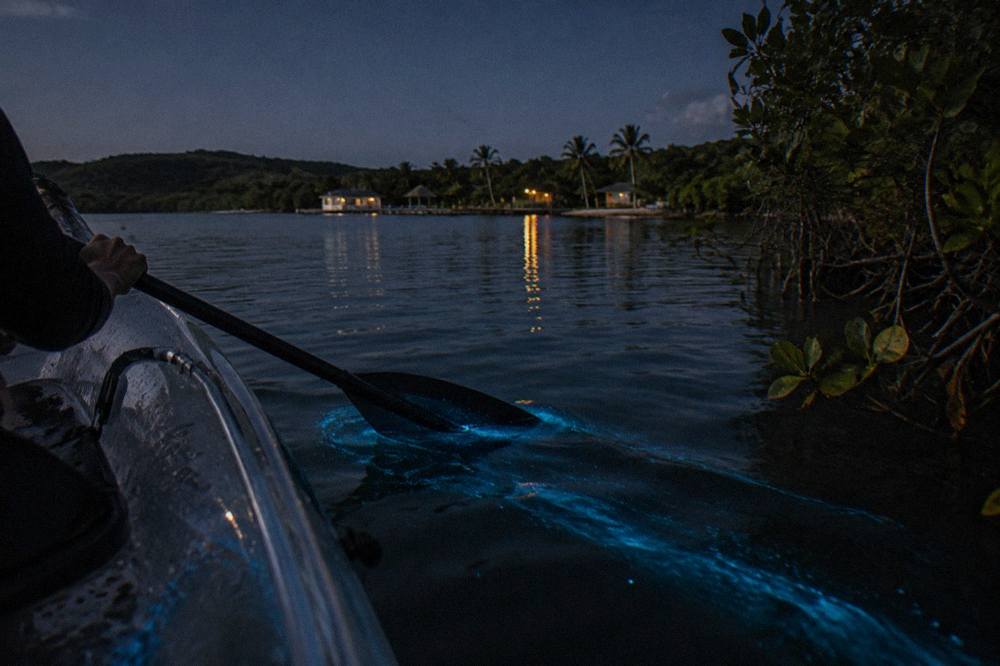
Mosquito Bay on the island of Vieques holds the Guinness World Record for the brightest bioluminescent bay on Earth, recognised in 2006, with densities of the dinoflagellate Pyrodinium bahamense recorded at up to 700,000 organisms per gallon of water, and the glow, which is blue and appears when the water is disturbed, is present in the bay year-round, though visible intensity varies with moonlight, rain and water conditions.
The bay is protected as the Vieques Bioluminescent Bay Natural Reserve, co-managed by the Puerto Rico Department of Natural and Environmental Resources and the Vieques Conservation and Historical Trust. That protection is not decorative. It decides what a Mosquito Bay tour may look like: kayaks, clear kayaks, clear canoes, a pontoon boat and an electric catamaran, and nothing with a gas motor after dark.
The organism behind the show is Pyrodinium bahamense, a single-celled dinoflagellate that flashes blue when the water around it is agitated, which is why every paddle stroke, hull wake and hand trail lights up. A June 2026 site visit measured 304,000 organisms per gallon, well below the record peak but still extraordinary. The reason Mosquito Bay holds such concentrations when other bays cannot is simple physics: water in the bay takes about 13.5 to 14.5 days to exchange, long enough for the population to reproduce faster than the tide can flush it out.
Puerto Rico holds three of the roughly eleven permanent bioluminescent systems known in the world, seven of them in the Caribbean, and Vieques carries the strongest of the three. If you are still deciding between the bays, the site's broader comparison in best bioluminescent bay in Puerto Rico weighs all three side by side.
Which Mosquito Bay Tour Format Should You Book?
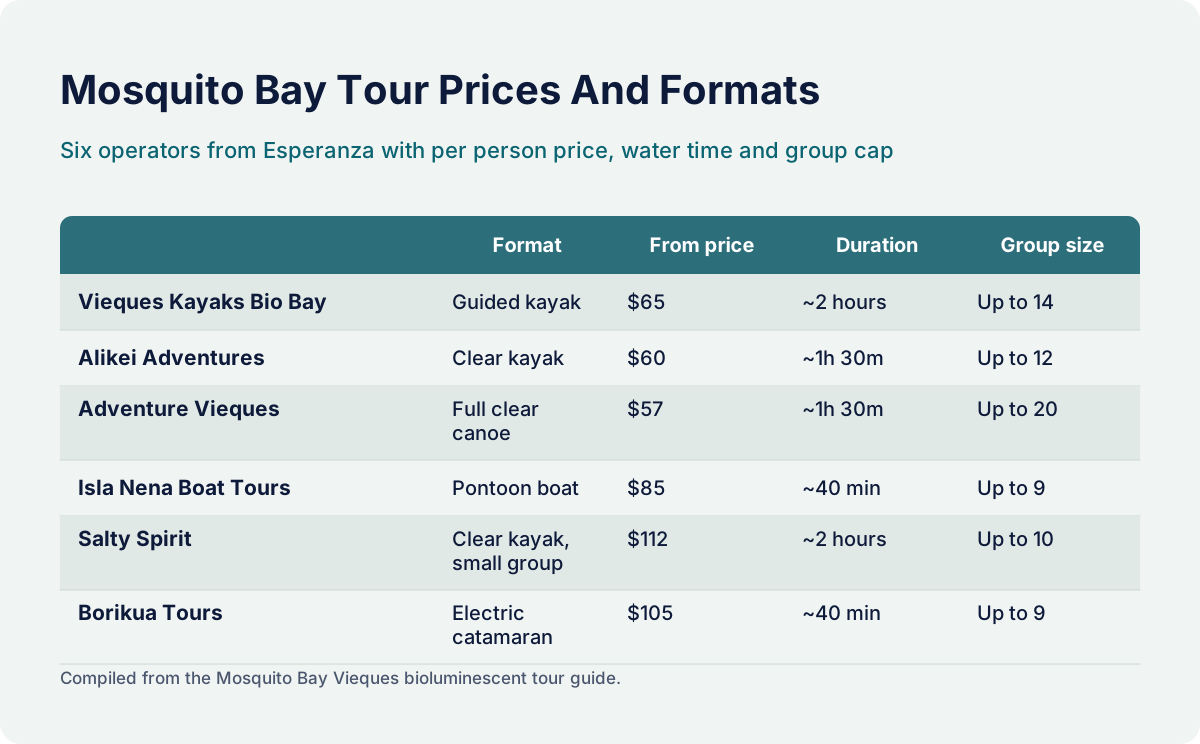
Six operators run Mosquito Bay tours from Esperanza, in five formats: conventional kayak from $65, clear kayak from $60 to $112, full clear canoe from $57, a pontoon boat from $85 and an electric catamaran from $105, all per person, all with free cancellation up to 24 hours before, and the right pick depends almost entirely on whether you want to paddle, see through the hull, or stay dry.
The Vieques Kayaks Bio Bay trip is the anchor listing: about 2 hours, from $65 per person, a 4.5 rating from 1,242 reviews, groups capped at 14, and round trip transport from the meeting point on Calle Flamboyan to the bay entrance is included. It carries a "likely to sell out" flag on the live listing, which is worth taking seriously in high season.
| Tour | Format | From price | Rating | Duration | Group size |
|---|---|---|---|---|---|
| Vieques Kayaks Bio Bay | Guided kayak | $65 | 4.5, 1,242 reviews | ~2 hours | Up to 14 |
| Alikei Adventures | Clear kayak | $60 | 4.8, 491 reviews | ~1h 30m | Up to 12 |
| Adventure Vieques | Full clear canoe | $57 | 4.4, 309 reviews | ~1h 30m | Up to 20 |
| Isla Nena Boat Tours | Pontoon boat | $85 | 4.4, 262 reviews | ~40 min | Up to 9 |
| Salty Spirit | Clear kayak, small group | $112 | 4.7, 108 reviews | ~2 hours | Up to 10 |
| Borikua Tours | Electric catamaran | $105 | 4.5, 54 reviews | ~40 min | Up to 9 |
Two formats deserve a closer word. The Alikei Adventures clear kayak trip, from $60 per person with a 4.8 rating from 491 reviews, meets at Gustitos al Grill across from the Sun Bay entrance, 25 minutes before departure, and includes the van ride to the bay. The Isla Nena pontoon is the other end of the spectrum: a 24 foot pontoon boat, about 40 minutes on the water, up to 9 travellers, no paddling at all, with van pickup at the front of the Sun Bay beach entrance. It is the natural pick for travellers who cannot or do not want to kayak, and it carries the same "likely to sell out" flag.
The Salty Spirit full clear kayak trip is the premium paddle: from $112, a 4.7 rating from 108 reviews, capped at 10 participants, with round trip rides from the meeting spot to the bay on the inclusion list. For a full picture of the see-through format across all three bays, see clear kayak bioluminescent bay tours.
How Does A Mosquito Bay Tour Evening Actually Work?
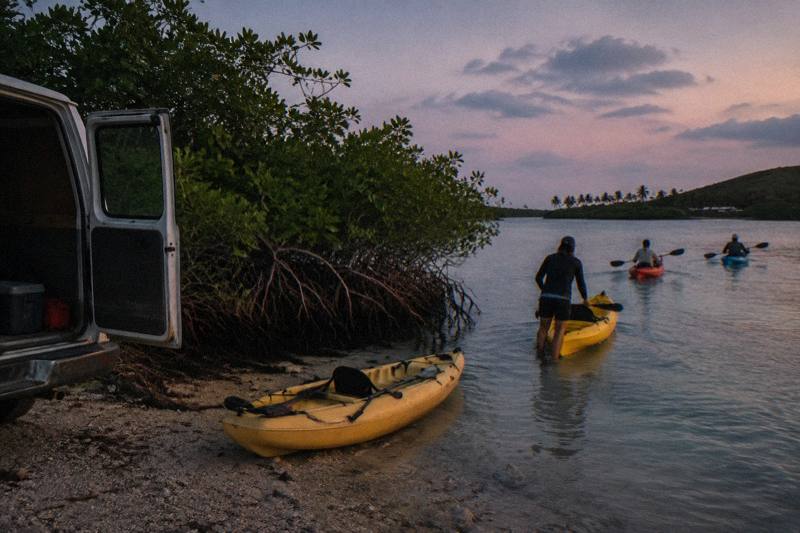
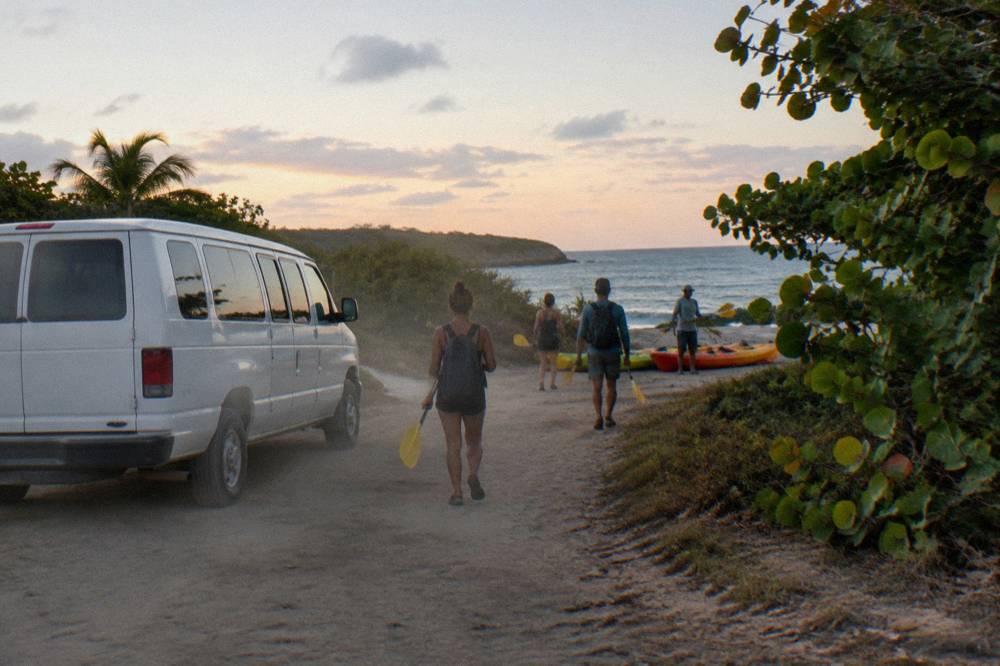
Almost every Mosquito Bay tour meets in or near Esperanza in the late afternoon or evening, checks in 25 to 30 minutes ahead of the start, drives the group by van to the protected bay entrance, and spends 40 minutes to 2 hours on the water before returning you to the meeting point, with the total evening running roughly 2 to 3 hours door to door from your Vieques accommodation.
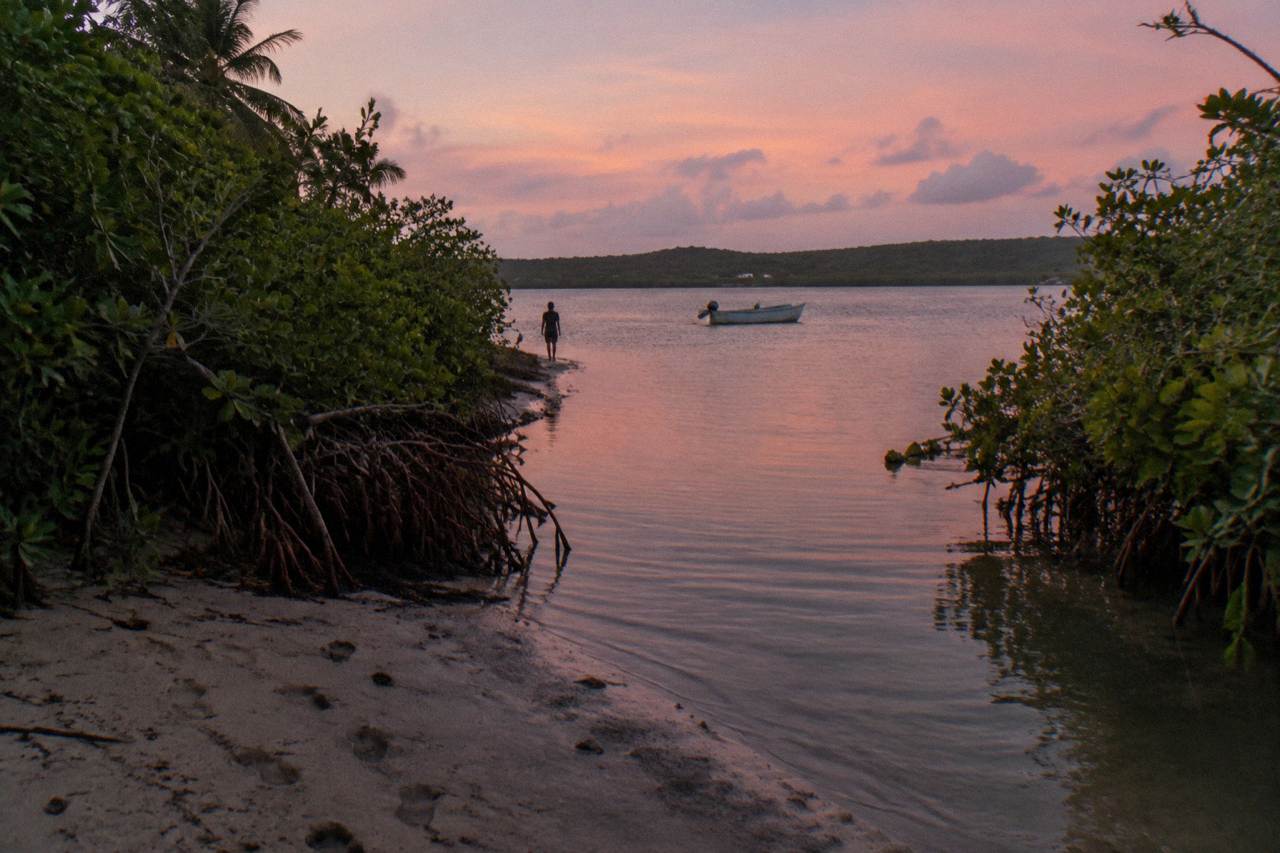
The pattern repeats across operators because the reserve's access dictates it. Mosquito Bay sits behind a shallow, mangrove-fringed entrance on the south shore of Vieques, reached by road from Esperanza; no tour departs directly onto the bay from a dock in town. So the van transfer is part of the product, not an add-on. The Vieques Kayaks trip lists round trip transport from the meeting point to the bay entrance on its inclusions; Alikei Adventures lists the van ride; Salty Spirit lists round trip rides; Isla Nena collects its group at the front of the Sun Bay beach entrance.
On the water, guides lead the group through the channel and out onto the bay, keep the convoy together, and paddle to spots where the water is disturbed by wakes and strokes. Phone screens, camera flashes and bright artificial lights are discouraged or restricted because they destroy the night vision the glow depends on; standard phones and cameras struggle to capture what the eye sees regardless. If photography is your goal, read the site's guide on how to photograph the bioluminescent bay before you pack.
One scheduling fact matters more than any other: DRNA-licensed operators may not run Mosquito Bay tours on the night before, the night of, or the night after a full moon, three nights per lunar cycle when moonlight washes out the glow. This is a legal restriction on the bay, not an operator policy, and it means popular dates cluster tightly in the dark windows between. The site's moon phase guide for bio bay visits covers how to read the calendar.
| Step | What happens | Notes |
|---|---|---|
| Meet | Esperanza area meeting point | Times vary by operator; Alikei asks 25 min early, Yokahu-style check-ins run 30 min |
| Transfer | Van to the bay entrance | Included on the listings that state it; confirm on the live listing |
| Paddle or ride | 40 min to 2 hours on the bay | Format depends on the tour booked |
| Return | Van back to the meeting point | Total evening about 2 to 3 hours |
Can You Swim In Mosquito Bay?
No. Swimming is not permitted in Mosquito Bay, and the rule is enforced by the reserve to protect the dinoflagellates, the same ban in place at Laguna Grande: every tour format on the bay is a paddle or a ride, never a swim.
The ban has a history. The bay has gone dark twice, once in 2014 and again after Hurricane Maria, when the visible organisms disappeared for about seven months, and the 2014 blackout is what led to the swimming prohibition. That is the trade the reserve makes: a strictly hands-off bay in exchange for a bloom dense enough to hold a world record.
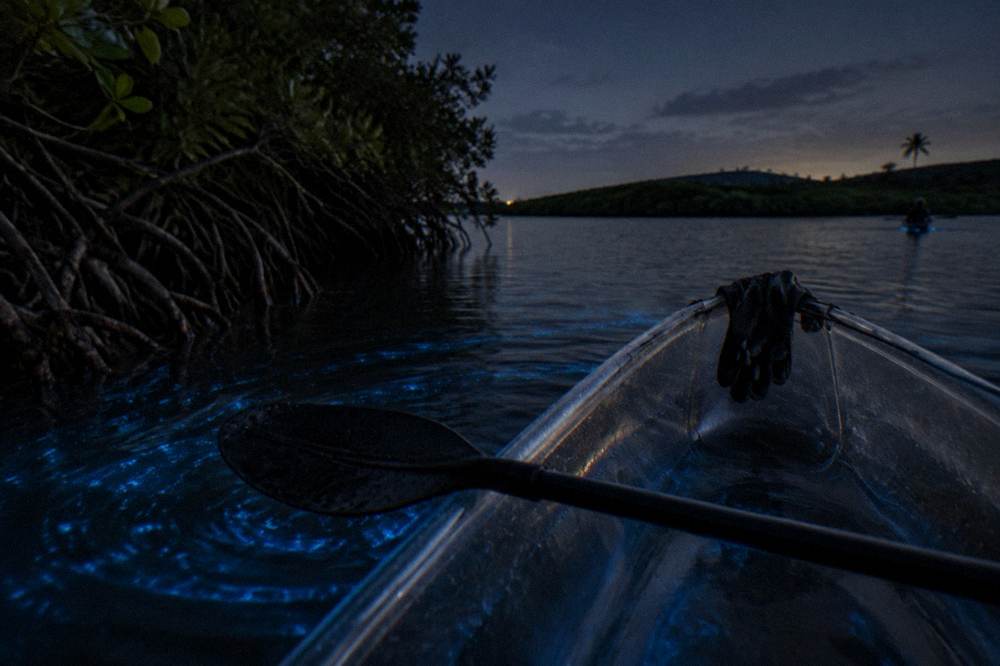
If swimming in glowing water is the experience you want, it exists in Puerto Rico, but only at La Parguera, the one bay of the three where swimming is generally permitted on most nights and where motorboats run; the La Parguera bioluminescent bay tour guide covers those boat and swim outings. On Vieques, hands stay on the paddle.
Practical conduct on the bay follows the same logic. Use eco-friendly insect repellent, in cream or balm rather than spray, applied at least 30 minutes before the tour; keep noise down; and do not touch or remove anything from the water. The official guidance from Discover Puerto Rico on protecting the bays sets out all of it.
How Do You Get To Mosquito Bay From San Juan?
With one exception, every Mosquito Bay tour on this site requires you to already be on Vieques: the six island listings meet in Esperanza and include neither ferry nor flight, while the single San Juan departure, the I VENTURES ferry day trip from $230 per person, is the only one that builds the Ceiba to Vieques ferry into the day.
Getting to Vieques yourself means the passenger ferry from Ceiba or a short flight, and because tours run at night with the last ferry leaving well before they end, an overnight on the island is the standard plan. The Borikua catamaran listing states the last ferry from Vieques departs at 7:30 pm and requires at least one night on the island; treat that as the shape of the problem for every evening tour. Never rely on a printed sailing time: check the official Puerto Rico Ferry itinerary for your dates. The site's fuller Vieques ferry to Mosquito Bay guide walks through the crossing.
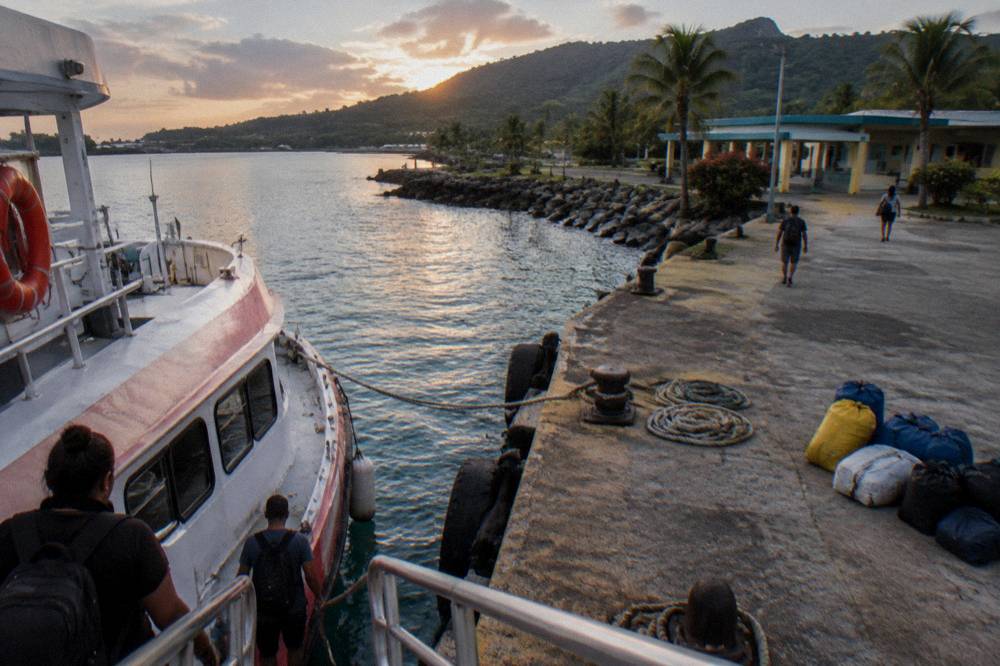
For travellers who cannot add an overnight, the I VENTURES day trip is the workaround: from $230 per person, about 11 hours, a 4.6 rating from 226 reviews, small groups up to 12, hotel-area shuttle pickup starting at the Hyatt Place San Juan, clear-bottom kayaks on the bay, light snacks and water included rather than lunch, and the ferry crossing built in. It is the only product on this roster that solves the geography for you.
Everyone else books a night or two in Esperanza and joins an island departure. Alikei Adventures meets at Gustitos al Grill across from the Sun Bay entrance; Adventure Vieques collects its clear-canoe groups at its red and white van before the El Blok area; the boats gather at the Sun Bay beach entrance.
What Happened To The Mangroves After Hurricane Maria?
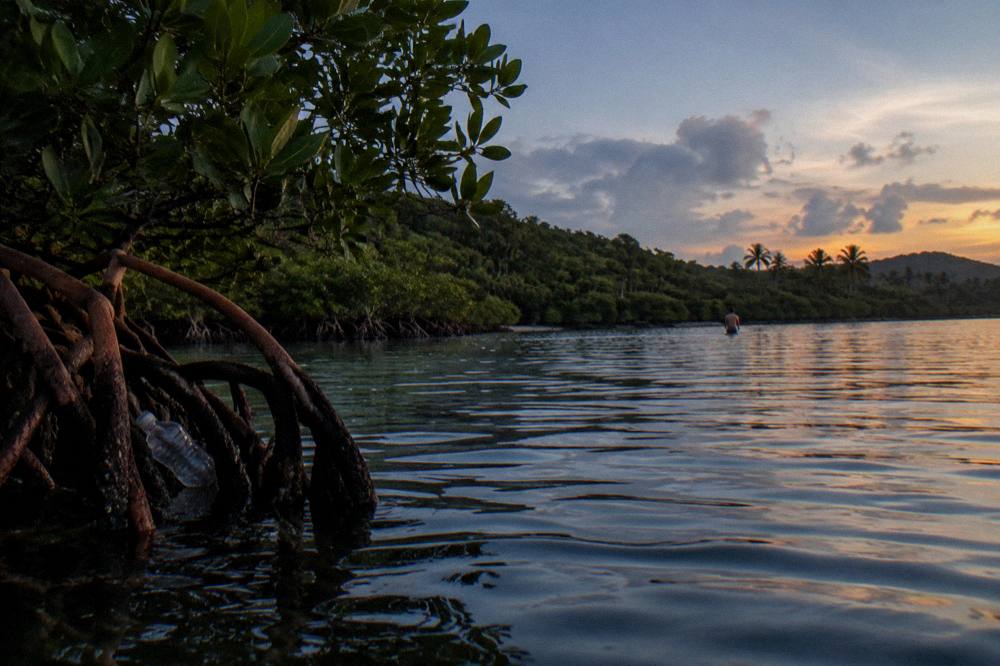
Hurricane Maria's storm surge caused near-total mortality of the mangroves at the mouth of Puerto Mosquito, removing the protective narrowing that keeps the bloom from washing out to sea, and natural recovery was estimated at 15 to 30 years, which is why a NOAA-funded restoration of roughly $2.96 million has been replanting the entrance since December 2024 with an 84 percent mangrove survival rate.
This is the real story behind today's glow, and almost no first-page travel article tells it. The bay's brightness is not a happy accident of chemistry alone; it depends on the meandering, mangrove-guarded entrance that slows water exchange to those 13.5 to 14.5 days. When Maria stripped the mouth bare, the mechanism that concentrates Pyrodinium was physically damaged, and the visible organisms vanished for about seven months.
The restoration partnership, begun in December 2024 with the Vieques Conservation and Historical Trust and DRNA under a NOAA grant of about $2.96 million, has established a nursery of close to 4,000 plants and 4,000 biodegradable living shoreline bags, restoring mangroves, seagrass and coral across the reserve. NOAA reported an 84 percent planting success in September 2026. The Trust's own Mosquito Bay restoration page documents the programme, and NOAA's coastal restoration write-up carries the grant figures.
For a visitor, the practical takeaway is patience and respect. The bay you are paddling across is an active restoration site whose brightness was nearly lost within living memory. Every rule that feels restrictive, the no-swimming law, the light discipline, the moon closures, exists to keep that recovery going.
Why Is The Bay Called Mosquito Bay And What Does The Navy Era Mean?
The bay's name and its access both trace to Vieques' decades as a US Navy training ground: the Navy controlled the island's eastern lands for roughly half a century before handing them over, which froze development around Puerto Mosquito and left the surrounding lands undeveloped enough to become a wildlife refuge and natural reserve once they transferred to civilian management.
The name itself is the mundane part, and yes, the mosquito question gets asked constantly; the site's piece on whether Mosquito Bay has a lot of mosquitoes answers it directly. The consequence of the Navy era is what matters for a tour. Because the land around the bay sat inside restricted training acreage for so long, it never acquired the houses, marinas and street lighting that a comparable mainland lagoon would have, and the dark shoreline that the bloom needs survived intact.
When the Navy left, the lands around the bay passed into the Vieques Bioluminescent Bay Natural Reserve, and the DRNA licensing regime for tour operators followed. Today that regime is why the formats are what they are: licensed kayaks, clear kayaks and canoes, an electric catamaran and a pontoon, no gas motorboats at night, no swimming, and three dark nights off per lunar cycle. What reads on a booking page as a list of restrictions is the management plan of a reserve that holds a world record.
The Borikua electric catamaran, from $105 per person with a 4.5 rating from 54 reviews, is the format that most directly expresses the rules: a 24 foot electric vessel, silent on the water, up to 9 participants, with a shared van transfer from Esperanza. Forty minutes on the bay, no paddle, no engine noise.
What Does A Mosquito Bay Tour Cost Compared To The Other Bays?
Mosquito Bay tours that start on Vieques run from $57 to $112 per person across the six island listings, which sits just above La Parguera's boat outings ($65 to $80) and overlaps Laguna Grande's kayak trips ($65 to $89), while the one San Juan day trip with the ferry costs from $230 per person, so the tour itself is rarely the expensive part; getting to and staying on Vieques is.
That comparison is worth internalising before you book. A common planning mistake is comparing a $65 Vieques kayak against an $89 Fajardo kayak and concluding Vieques is the cheaper night out, while ignoring the ferry, the flight or the hotel room that the Vieques option requires. For a full pricing breakdown across every listing on this roster, the bioluminescent bay tour prices guide tabulates all 24 products by bay and format.
| Bay | Formats | Price range on island | Notes |
|---|---|---|---|
| Mosquito Bay, Vieques | Kayak, clear kayak, clear canoe, pontoon, electric catamaran | $57 to $112 | No swimming; moon closures; overnight usually needed |
| Laguna Grande, Fajardo | Kayak only | $65 to $89 | No swimming; about 1 to 1.25 hours from San Juan by car |
| La Parguera, Lajas | Motorboat and swim | $65 to $80 | Only bay with swimming and night motorboats |
| Mosquito Bay from San Juan | Clear-bottom kayak day trip with ferry | from $230 | Only San Juan departure that includes the ferry |
Every listing in this comparison carries free cancellation up to 24 hours before for a full refund, as stated on the live listing, which matters on Vieques more than anywhere: if weather closes the bay or the ferry misbehaves, you are not trapped in the booking.
Choosing between Vieques and the other bays usually comes down to trip shape rather than money. Fajardo is the one you can do from a San Juan hotel without an overnight; La Parguera is the one where you get in the water; Vieques is the one with the record and the boat-free silence. The site's full Fajardo versus Vieques versus La Parguera comparison works through the trade-offs, and Bioluminescent Bay Tours Puerto Rico keeps a complete roster of every bookable format across all three.
Common Questions About Mosquito Bay Tours
Can you swim in Mosquito Bay Vieques?
No. Swimming is not permitted in Mosquito Bay, a rule enforced to protect the fragile dinoflagellates. La Parguera is the only one of Puerto Rico's three bioluminescent bays where swimming in the glowing water is generally permitted, on most nights.
How much does a Mosquito Bay tour cost?
Island departures from Esperanza run from $57 per person for the full clear canoe trip to $112 for the small-group clear kayak trip, with the conventional kayak from $65, the pontoon from $85 and the electric catamaran from $105. The one San Juan day trip that includes the ferry costs from $230 per person.
Do Mosquito Bay tours run on full moon nights?
No. DRNA-licensed operators may not run Mosquito Bay tours on the night before, the night of, or the night after a full moon, three nights per lunar cycle when moonlight washes out the glow.
Can you do Mosquito Bay as a day trip from San Juan?
Only through the one listing that builds in the Ceiba to Vieques ferry: the I VENTURES clear-bottom kayak day trip, 11 hours in all, price on the live booking page, with light snacks and water included and lunch left to you. Every other Mosquito Bay tour requires you to already be on Vieques, and evening tours effectively require an overnight.
Is the glow guaranteed at Mosquito Bay?
No tour can promise glow. The organisms are present year-round, but visible intensity varies with moonlight, rain and water conditions, and heavy rainfall can temporarily reduce concentrations and cloud the water. The bay went dark for about seven months after Hurricane Maria and recovered.
Do you have to kayak to see Mosquito Bay?
No. Besides kayaks and clear kayaks, the bay is visited by a full clear canoe trip, a 24 foot pontoon boat with up to 9 travellers, and a 24 foot electric catamaran, so travellers who cannot paddle have real options.