Can You Swim In The Bioluminescent Bays?
Swimming in glowing water sounds like the whole point of the trip, but two of Puerto Rico's three bioluminescent bays ban it outright. Here is exactly where you can get in the water, where you cannot, and why.
Short answer
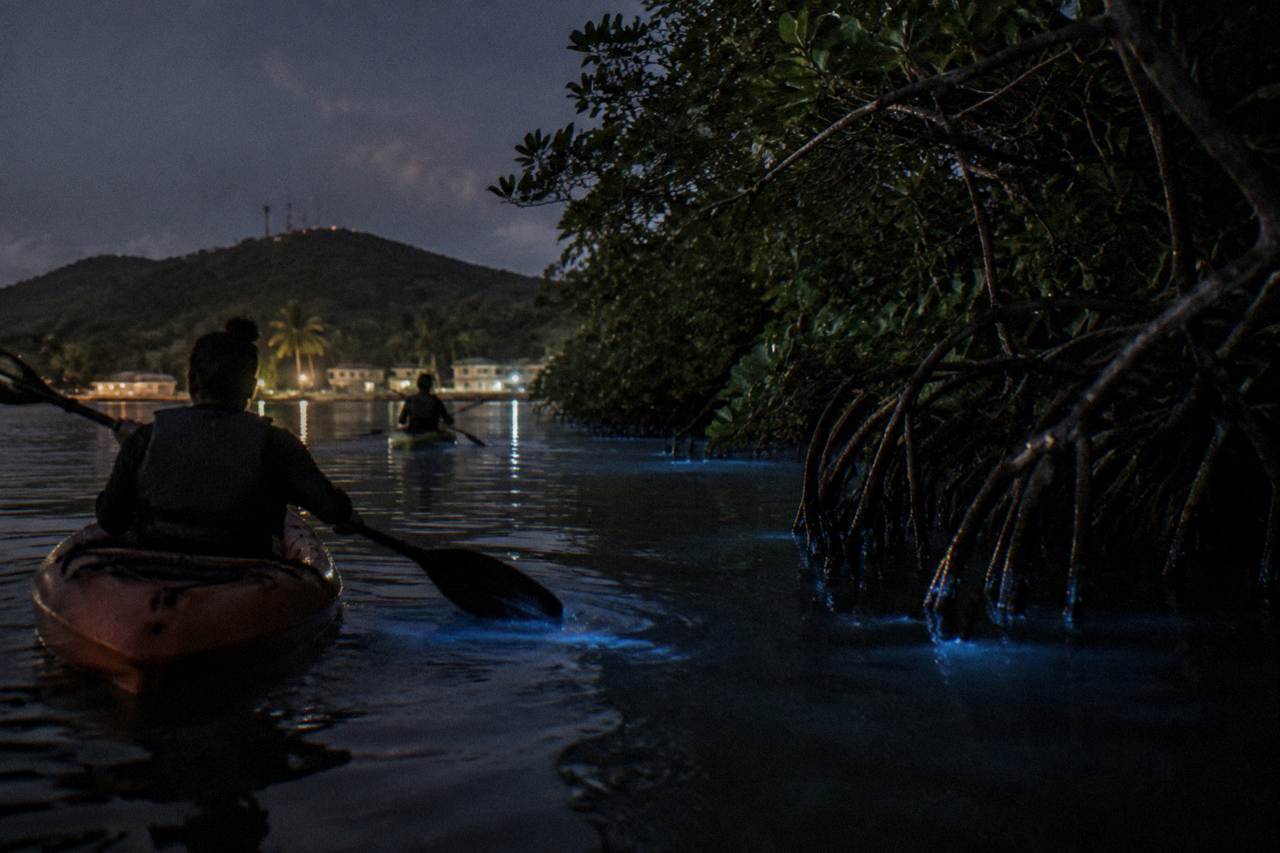
No, you cannot swim at Mosquito Bay in Vieques or Laguna Grande in Fajardo; swimming is prohibited at both to protect the dinoflagellates. La Parguera in Lajas is the only one of the three where swimming is generally permitted on most nights, subject to conditions and operator rules. Several La Parguera tours include a swim, from about $54.99 per person.
Can You Swim In The Bioluminescent Bays?
The honest answer is that it depends entirely on which bay you visit. Puerto Rico has three bioluminescent bays, and the swimming rules split them cleanly: Mosquito Bay in Vieques and Laguna Grande in Fajardo prohibit swimming to protect the organisms that create the glow, while La Parguera in Lajas is the only one of the three where getting in the water is generally permitted, on most nights, under operator rules. This page lays out the full picture, because the difference between the bays is the single most misunderstood part of planning a bio bay trip, and a visitor who books the wrong bay expecting a swim goes home disappointed through no fault of the operator.
The glow comes from a dinoflagellate called Pyrodinium bahamense, a microscopic organism that flashes blue when the water around it is disturbed. A paddle, a hull, a hand, anything that agitates the water triggers the light. That same fragility is why two of the three bays are swim-free zones, and why the rules are enforced rather than suggested. If you want the deeper science, our guide on what makes the bays glow covers it.
| Bay | Location | Swimming | Night formats | Notes |
|---|---|---|---|---|
| Laguna Grande | Fajardo (Las Croabas) | Prohibited | Kayak and clear kayak only | Lagoon inside the Cabezas de San Juan Natural Reserve |
| Mosquito Bay | Vieques (Esperanza departures) | Prohibited | Kayak, clear kayak, clear canoe, pontoon boat, electric catamaran | Guinness record holder; tours pause three nights per lunar cycle |
| La Parguera | Lajas | Generally permitted on most nights | Motorboat tours, swimming | Only bay with motorboats at night; operator rules apply |
Can You Swim In A Bioluminescent Bay In Puerto Rico?
No at Mosquito Bay and Laguna Grande, where swimming is prohibited to protect the dinoflagellates, and generally yes at La Parguera, the only one of the three bays where swimming is permitted on most nights. It is not guaranteed every night, and operators set their own safety rules, including required flotation and no touching of the organisms. Plan around the bay, not around hope.
That three-way split is confirmed by Discover Puerto Rico, the island's official tourism body, which states plainly that swimming is not permitted at Mosquito Bay or Laguna Grande, and that La Parguera is the exception. The distinction is not a matter of operator preference or insurance caution. It reflects the ecology of each bay and, at Mosquito Bay, a specific regulatory response to a crisis that nearly killed the glow entirely.
For most visitors this reframes the whole decision. If swimming in the glow is the dream, the dream has exactly one address in Puerto Rico: La Parguera. If you are staying in San Juan without a car, that still works, because several day trips with transport run there, including the Caribbean Breeze boat and swimming excursion from San Juan, from $54.99 per person, which puts swimming right in the tour name. Everyone booked on a Fajardo or Vieques tour should go expecting a paddle or a boat ride, not a dip.
Why Is Swimming Banned At Mosquito Bay And Laguna Grande?
Swimming is banned at both bays because the dinoflagellates that produce the glow are vulnerable to pollution, and bodies carry it directly into the water. Swimming is not permitted at these bays, a rule that protects the fragile dinoflagellates. At Mosquito Bay the ban also followed a blackout in the bay, when the glow dimmed severely and regulators acted to protect a fragile recovery.
The science is straightforward. Laguna Grande sits inside the Cabezas de San Juan Natural Reserve, and its status as a lagoon reached through a narrow mangrove channel means water moves slowly in and out. Anything dissolved in that water stays. The conservation guidance is explicit that the dinoflagellate population is fragile and needs protection, which is why the official responsible-visitor guidance asks even kayakers to apply repellent as a balm rather than a spray, at least 30 minutes before the tour, and to keep screens, flashlights and unnecessary light out of the channel.
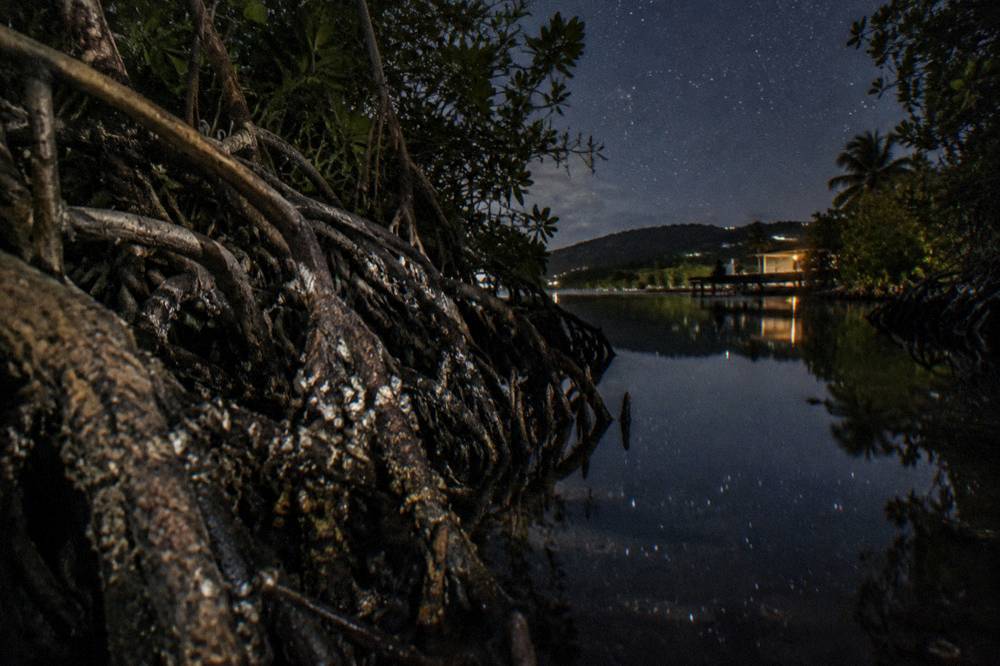
Mosquito Bay has the harder story. The bay holds the Guinness World Record for the brightest bioluminescent bay, with populations of Pyrodinium bahamense measured up to 700,000 organisms per gallon, recognised in 2006. It has also gone dark twice: once in 2014 and again after Hurricane Maria, when the visible organisms disappeared for about seven months. The 2014 blackout is the event that led directly to the swimming ban. The reason the bay blooms so densely at all is hydrology: water in Mosquito Bay stays in the bay about 13.5 to 14.5 days before flushing out, long enough for the population to reproduce, and a bay that concentrates its organisms that tightly cannot afford to have them stressed or washed about by swimmers.
There is also a recovery under way worth knowing about, because it explains why the rules are strict and staying strict. Hurricane Maria's surge caused near-total mortality of the mangroves at the mouth of Puerto Mosquito, the trees whose protective meandering shape holds the bloom in place. The Vieques Conservation and Historical Trust has run a mangrove nursery and reforestation project ever since, and since December 2024 a NOAA-funded restoration of about $2.96 million has planted mangroves, seagrass and coral in the reserve, with an 84 percent planting success rate. Swimming bans are part of the same protective logic.
Why Is La Parguera The Only Bay Where You Can Swim?
La Parguera's ecology and its management differ from the other two bays: it is the only one of the three where swimming is generally permitted on most nights, and the only one where motorboat navigation is allowed at night. Permission is not a guarantee. Conditions and individual operator policies decide on any given night, including required flotation and no touching of organisms.
La Parguera is a different kind of body of water, more open than the lagoon at Fajardo and more connected to the sea than the tightly held bay at Vieques, and its visitor economy has historically run on boats rather than paddles. The official tourism profile states that it is the only bio bay where swimming is generally permitted, and the same source confirms motorboats run there at night, a format banned at the other two. Kayaking purists sometimes hold that against La Parguera, but for a visitor who wants to be in the water rather than on it, that openness is precisely the point.
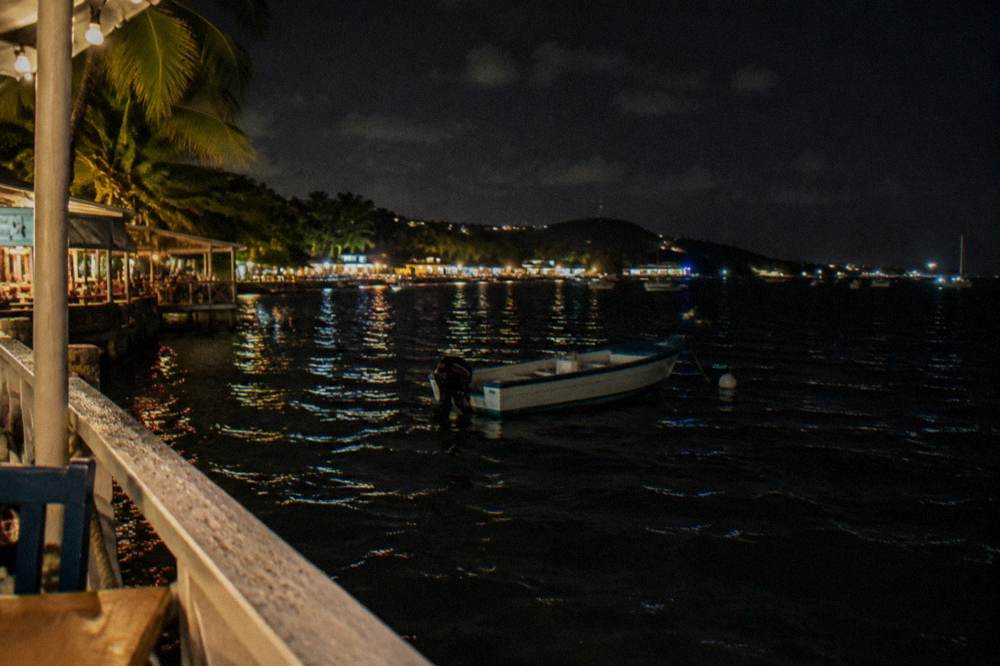
Two honest caveats belong next to that permission. First, "on most nights" is the operative phrase: sargassum, weather and water conditions can change the plan, and the operator on the night makes the final call. In July 2026, sargassum covered roughly 80 cuerdas of La Parguera bay and the Department of Natural and Environmental Resources activated its removal protocol, a reminder that this is a living bay, not a theme park. Second, operator rules are real rules: flotation is typically required, and touching or disturbing the organisms is not allowed. The glow is best left to happen around you, not because of you.
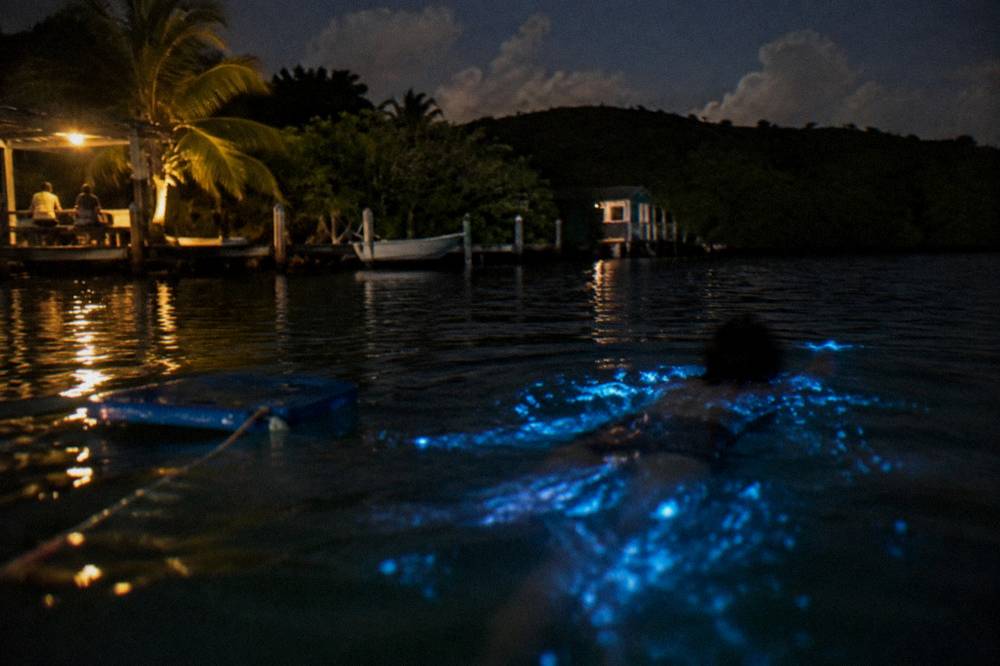
The trade-off is worth naming plainly. La Parguera's glow is generally considered less intense than Mosquito Bay's record-holding concentration, and most expert commentary describes it as the fainter of the three experiences. What you trade in brightness you gain in access: a swim in the water, a boat ride instead of a paddle if you prefer, and the only bay of the three where the tour can end with you floating in light.
Which Tours Actually Include A Swim?
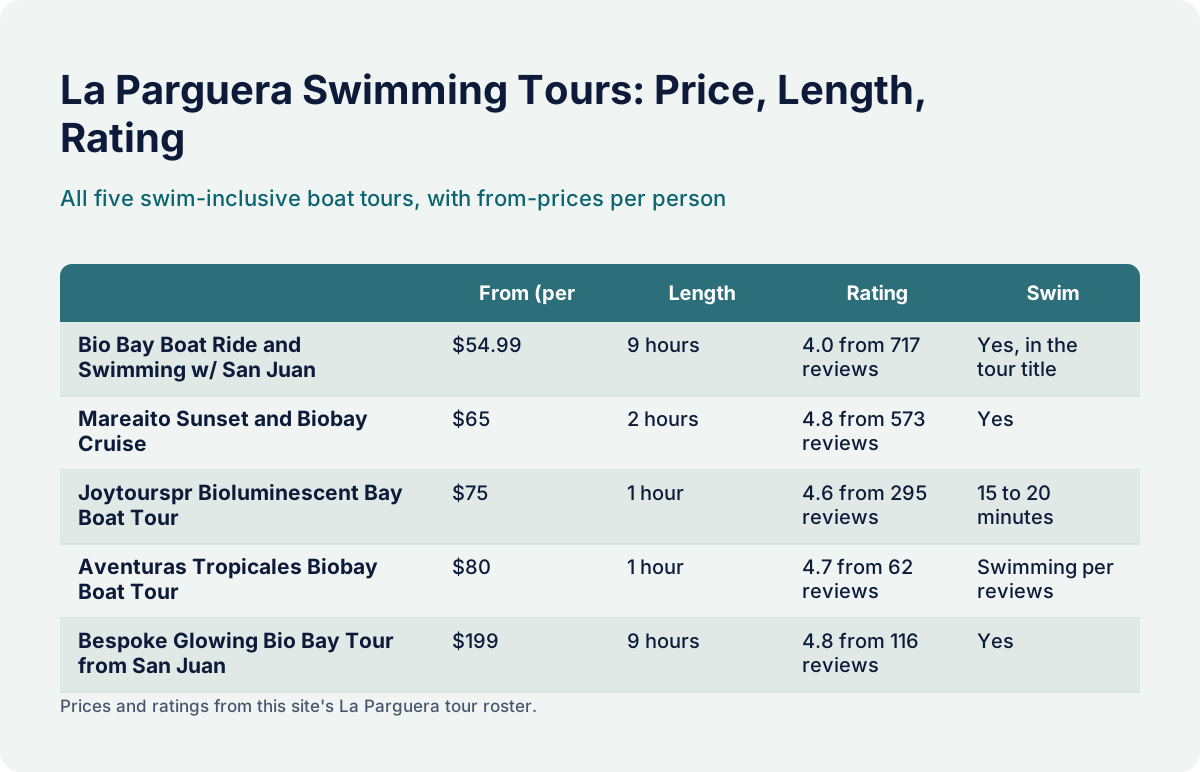
The swimming tours are all at La Parguera. On this site's roster they are the Caribbean Breeze boat ride with swimming from San Juan, the Mareaito sunset and biobay cruise, the Joytourspr boat tour, whose listing notes 15 to 20 minutes in the water and it is not mandatory, and the Aventuras Tropicales boat tour, where reviews describe swimming. San Juan day trips with transport cover the rest.
Every listing that touches the water is a boat and swim outing from La Parguera or from San Juan with transport to La Parguera. Here is the full swimming-capable set, with prices and ratings exactly as the listings carry them:
| Tour | Operator | Format | From (per person) | Rating | Swim |
|---|---|---|---|---|---|
| La Parguera Bio Bay Boat Ride and Swimming w/ San Juan Transport | Caribbean Breeze Adventures | Boat and swim, 9 hours, pickup in San Juan | $54.99 | 4.0 from 717 reviews | Yes, in the tour title |
| La Parguera: Sunset and Biobay or Late Night Biobay Cruise | Mareaito Charters LLC | Boat and swim, 2 hours, from La Parguera | $65 | 4.8 from 573 reviews | Yes |
| La Parguera: Bioluminescent Bay Boat Tour | Joytourspr | Boat and swim, 1 hour, from La Parguera | $75 | 4.6 from 295 reviews | 15 to 20 minutes, not mandatory |
| Bioluminescent Bay Boat Tour in La Parguera | Aventuras Tropicales LLC | Boat and swim, 1 hour, from La Parguera | $80 | 4.7 from 62 reviews | Reviews describe swimming |
| From San Juan: La Parguera Glowing Bio Bay Boat Tour | Bespoke Lifestyle Management | Boat and swim, 9 hours, hotel pickup | $199 | 4.8 from 116 reviews | Yes |
A few practical notes on the entries. The Caribbean Breeze trip is the cheapest swimming option on the roster and one of only a few with an urgency note, flagged as likely to sell out; it is also the longest commitment at about 9 hours door to door, including a drive of about two hours each way. The Mareaito cruise adds a sunset swim at the Caracoles sandbar before the bay itself and carries the highest rating of the La Parguera local departures, 4.8 from 573 reviews. Joytourspr runs the shortest outing at about an hour and caps groups at six, and its listing is refreshingly specific: the swim lasts 15 to 20 minutes and nobody has to get in.
For travellers based in San Juan without a rental car, the transport-inclusive day trips solve the geography problem. The Bespoke Lifestyle La Parguera trip pairs hotel pickup with an appetizer stop in La Parguera before the boat and the swim, from $199 per person. The Borikua Bio Bay Magic and Rum Tasting tour, from $250 per person with a meal included, adds a rum tasting and a sandbar stop to the same bay, a fuller 9-hour day for visitors who want the swim inside a bigger itinerary rather than as a standalone night. The original Caribbean Breeze trip covers the same water at less than a third of that price if the swim itself is the only priority.
What Rules Apply When You Do Swim At La Parguera?
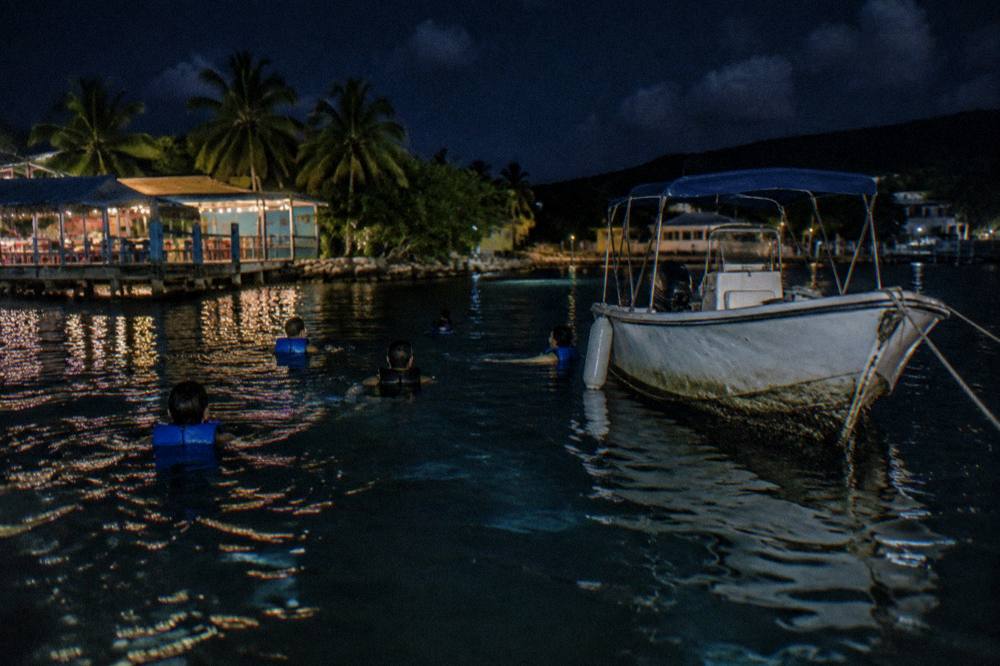
Expect required flotation, no touching or removing of organisms, and a guide's word to be final. Bring eco-friendly repellent as a balm rather than a spray and apply it at least 30 minutes before the tour. Keep noise down, keep lights off, and treat the swim as a float rather than a lap. These rules come from the official responsible-visitor guidance and from operator listings.
The official guidance for all three bays asks visitors to avoid flashlights, phone screens and unnecessary light, since they destroy the night vision the experience depends on, and to avoid touching or removing anything from the water. Those requests apply doubly when you are in the water. Diving under, splashing hard and grabbing at the glow all stress exactly the organisms that make the night worth the drive, and shielding those dinoflagellates is why the other two bays prohibit swimming altogether.
There is one reassurance worth stating, because the word algae worries some readers. Research on Mosquito Bay's Pyrodinium bahamense populations found an extremely low average saxitoxin quota per cell, and Puerto Rico's bay populations are generally assumed non-toxic, with no reported toxicity issues; saxitoxin concerns in the wider literature relate to eating contaminated shellfish elsewhere, not skin contact in these bays. For a fuller discussion, see our piece on whether bioluminescent algae is harmful to humans. The swimming rules exist to protect the bay from you, not the other way around.
What If You Booked Fajardo Or Vieques By Mistake?
You still get a full glow experience, just from the deck of a kayak or boat rather than in the water. Laguna Grande runs kayak and clear kayak tours, Mosquito Bay adds clear canoes, an electric catamaran and a pontoon boat, and none of them include or permit a swim. Rerouting to La Parguera is the only fix if the swim itself is non-negotiable.
Neither of the swim-free bays is a consolation prize. Fajardo is the easiest logistics play from San Juan, about 1 to 1.25 hours by car, with six kayak operators departing Las Croabas. Vieques offers the brightest water of all, reached from Esperanza through a wider spread of formats. Here is how the no-swim options stack up:
| Bay | Operator example | Format | From (per person) | Rating |
|---|---|---|---|---|
| Laguna Grande | Kayaking Puerto Rico | Guided tandem kayak, about 2 hours | $89 | 4.7 from 2,176 reviews |
| Laguna Grande | Yokahu Kayak Trips | Guided kayak, about 2 hours | $67 | 4.6 from 1,821 reviews |
| Laguna Grande | Peniel Access Eco Tours | Guided kayak, up to 12 travellers | $65 | 4.4 from 310 reviews |
| Mosquito Bay | Vieques Kayaks Bio Bay | Guided kayak, about 2 hours | $65 | 4.5 from 1,242 reviews |
| Mosquito Bay | Alikei Adventures | Clear kayak, about 1 hour 30 minutes | $60 | 4.8 from 491 reviews |
| Mosquito Bay | Isla Nena Bio Bay Boat Tours | Pontoon boat, about 40 minutes | $85 | 4.4 from 262 reviews |
The Fajardo operators are the volume players: the Yokahu kayak trip from $67 per person with a 4.6 rating from 1,821 reviews, and the featured Kayaking Puerto Rico outing from $89 with a 4.7 from 2,176 reviews. A tarp trick even shows up on one listing there: Island Kayaking Adventure notes guides may block moonlight on bright nights. Over on Vieques, the Alikei clear kayak trip, 4.8 from 491 reviews, and the Isla Nena pontoon, a 40-minute boat option for anyone who cannot or does not want to paddle, give the island its range. Our Fajardo vs Vieques vs La Parguera comparison breaks the trade-offs down bay by bay.
One scheduling rule matters more than any other at Vieques, and it interacts directly with the swim question. DRNA-licensed operators may not run Mosquito Bay tours the night before, the night of, and the night after a full moon, a legal prohibition rather than an operator preference, so a Vieques glow trip is impossible on three nights of every lunar cycle. Our moon phase guide for the bio bays covers the calendar logic, and one Fajardo operator even sells the full moon differently, running a dedicated full moon kayak version of its Laguna Grande tour.
Do You Have To Get In The Water At La Parguera?
No. Every La Parguera swim tour treats the swim as optional, and the Joytourspr listing says so explicitly, with 15 to 20 minutes in the water described as not mandatory. Staying on the boat is a normal choice, and a pontoon or cruise format lets you watch the glow from the deck while others float in it.
Mixed groups solve the swim question this way all the time: one partner swims, one holds the dry bag and the phones, and both get the same bay. The boat formats make that easy. The Isla Nena pontoon at Vieques and the Borikua electric catamaran are deck-watching experiences by design, and at La Parguera the Mareaito cruise mixes a sunset sandbar stop with the bay, so the night has a rhythm beyond a single plunge. Travellers who want the water but not a kayak should also read our guide on whether you have to kayak to see the bio bay, since the answer is no at La Parguera and effectively yes at Fajardo.
The clothing question follows from the swim question, and the general advice stays general: wear something you can get wet at La Parguera and something that dries fast under a kayak at the other two bays. Operators' supply lists vary, so check the listing for what is provided rather than assuming. Our what to wear guide has the full packing logic, including the repellent-as-balm rule and why a towel belongs in the car either way.
The Honest Summary On Swimming And Glow
If swimming in the glow is the goal, book La Parguera, accept that the glow there is generally the faintest of the three, and go guided with an operator who follows the flotation and no-touch rules. If the brightest possible glow is the goal, book Vieques and stay dry. Both are legitimate trips; only one of them is a swim.
No operator on earth can promise glow intensity on a given night, because bioluminescence is wild: the organisms are present year-round at all three bays, but visible intensity varies with moonlight, rain, season and water conditions, and a dim night is always possible. Heavy rainfall can temporarily reduce concentrations and cloud the water. What you can control is the bay, the format and the operator, and the table above is the complete swimming-capable set on this site's roster. The featured Caribbean Breeze day trip, which Bioluminescent Bay Tours Puerto Rico highlights for this question, is the cheapest route from San Juan into the water at $54.99, with free cancellation up to 24 hours before, while the Mareaito cruise from $65 is the highest-rated way to swim from La Parguera itself.
One last planning note for anyone connecting the two experiences: the Borikua Tours rum tasting day is the only listing on the roster with a meal included. The I Ventures Vieques ferry trip stops at light snacks and water, lunch excluded. Only the La Parguera tours let you swim. Choose the bay first, the tour second, and the swimming question answers itself.
Common Questions About Swimming In The Bioluminescent Bays
Can you swim in the bioluminescent bay in Puerto Rico?
Only at La Parguera. Swimming is not permitted at Mosquito Bay in Vieques or Laguna Grande in Fajardo, to protect the dinoflagellates. La Parguera generally permits swimming on most nights, subject to conditions and operator rules.
Why is swimming banned at Mosquito Bay?
The bay went nearly dark in a 2014 blackout, and the swimming ban was introduced as part of protecting its recovery. Hurricane Maria later caused a second blackout of about seven months, reinforcing how fragile the bloom is.
Which tours include swimming in the glow?
At La Parguera: the Caribbean Breeze boat ride with swimming from San Juan (from $54.99), the Mareaito sunset and biobay cruise (from $65), the Joytourspr boat tour (from $75, swim of 15 to 20 minutes, not mandatory), and the Aventuras Tropicales boat tour (from $80). San Juan day trips to La Parguera also swim.
Is the swim guaranteed on a La Parguera tour?
No. Swimming is permitted on most nights but not guaranteed, and operators set their own safety rules, including required flotation and no touching of organisms. Sargassum and weather can change conditions on any given night.
Can you swim at the Fajardo bio bay?
No. Laguna Grande is strictly kayak-only within the Cabezas de San Juan Natural Reserve, and swimming is prohibited to protect the dinoflagellates.
Is the glowing water safe to touch?
Research on Puerto Rico's bay populations found extremely low toxin levels, and no toxicity issues have been reported here. The rules against touching organisms exist to protect the bay, not the swimmer.