Is Mosquito Bay Worth It?
An honest verdict on Mosquito Bay in Vieques: the Guinness record, the ferry and overnight effort, the moon rule, what tours cost, and whether the glow payoff is worth the trip.
Is Mosquito Bay Worth It?
Mosquito Bay, on the island of Vieques off Puerto Rico's east coast, is the bay every bioluminescence article points to when it uses the word "brightest." It earned that word honestly: Guinness World Records recognised it in 2006 as the brightest bioluminescent bay in the world, with dinoflagellate counts that have reached up to 700,000 organisms per gallon of water. The catch is geography. The bay sits on an island you reach by ferry from Ceiba or by small flight, the tours run after dark, and DRNA rules close the bay to tours for three nights around every full moon. So the question is not whether Mosquito Bay is remarkable. It is whether the logistics, the cost and the risk of a dim night justify choosing it over Laguna Grande in Fajardo, which you can reach by car in roughly an hour to an hour and a quarter from San Juan. If the bay's name has you thinking about bugs, the guide to insects and repellent rules at Mosquito Bay covers what to pack and which products the bay's regulations actually allow.
Is Mosquito Bay Worth It?
Yes, for most travellers who can give it two days, Mosquito Bay is worth it: it is the record-setting bay, the Guinness-recognised brightest in the world, and the only one of Puerto Rico's three with a scientific case for being exceptional. But it demands a ferry or a flight, an overnight on Vieques in practice, and a date away from the full moon, and swimming is not permitted.
That is the short version. The longer version weighs three things honestly: what the bay actually is, what it takes to get there, and what can dampen a night on the water. All three matter, because the travellers who regret Mosquito Bay are almost never the ones who saw a weak glow. They are the ones who underestimated the journey or booked a date the moon ruined.
The comparison is fair to make up front. Puerto Rico has three bioluminescent bays: Laguna Grande in Fajardo, La Parguera in Lajas, and Mosquito Bay in Vieques. Mosquito Bay is the only one requiring an island crossing, and that crossing is the single biggest factor in the worth-it equation. If you want the full side-by-side, our guide comparing the three bays breaks down cost, format and logistics bay by bay. The short form: Fajardo is the convenient one, La Parguera is the only one where swimming is generally permitted, and Mosquito Bay is the one with the record.
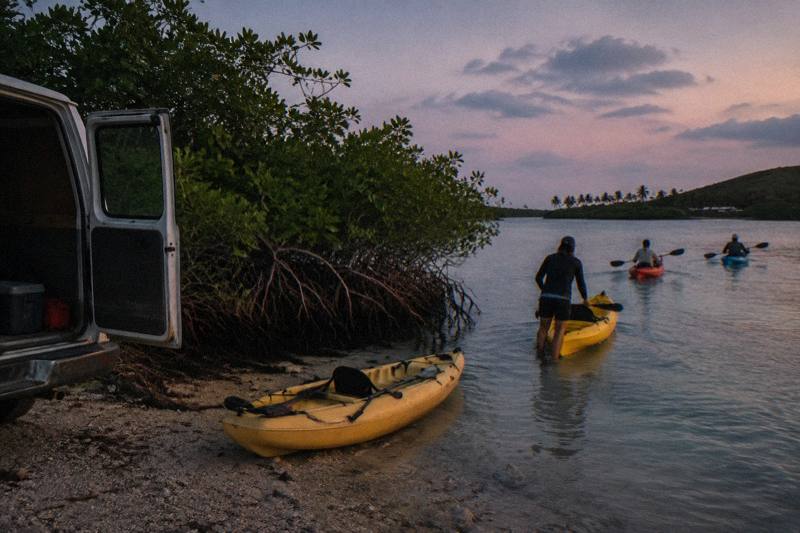
Six operators run bookable Mosquito Bay tours from Esperanza on Vieques, ranging from $57 to $112 per person at the from-prices on this site's roster. The Vieques Kayaks Bio Bay kayak trip from $65, the Alikei Adventures clear kayak tour from $60, and the Isla Nena pontoon boat outing from $85 are the three most travellers compare first, and they cover the format spectrum: traditional kayak, clear kayak and boat.
The question of worth also depends on what science says about why this bay, specifically, glows the way it does, and that part of the story is genuinely encouraging. It is covered next, because it is the strongest argument in favour of the trip.
Why Is Mosquito Bay The Brightest Bay In The World?
Mosquito Bay earned the Guinness World Record because its water is unusually stagnant and rich: water stays in the bay about 13.5 to 14.5 days, letting the dinoflagellate Pyrodinium bahamense accumulate to densities no faster-flushing bay can match, with recorded peaks of 700,000 organisms per gallon. Guinness recognised the record in 2006.
That residence time is the detail most first-page explanations skip. A bay flushes when tides and channels exchange its water with the sea. Mosquito Bay's narrow, mangrove-guarded entrance slows that exchange to about two weeks per turnover, which is why the same organism that exists elsewhere in the Caribbean concentrates here to record levels. It is an engineering problem solved by geography, and it is also why the mangroves matter so much to the bay's future.
The mangroves took a serious hit. Hurricane Maria's storm surge caused almost total mortality of the mangroves at the mouth of Puerto Mosquito, the very trees that shield the bloom from washing out, and natural recovery of that forest can take 15 to 30 years. The Vieques Conservation and Historical Trust, which co-manages the reserve with the DRNA, responded with a mangrove nursery and replanting program, and that effort received a major boost: a nearly $2.96 million NOAA-funded restoration of mangroves, seagrass and coral in the Vieques Bioluminescent Bay Natural Reserve began in December 2024, with a nursery of close to 4,000 plants and 4,000 biodegradable living shoreline bags, and an 84 percent mangrove planting success rate reported by NOAA in September 2026. The NOAA project page and the Trust's bay program both describe the work in detail.
How bright is it right now? In June 2026, biologists measuring the bay during a site visit counted about 304,000 organisms per gallon, well below the record peak of 700,000 but still an extraordinary concentration. The bay has gone dark before: it suffered blackouts in 2014 and for about seven months after Hurricane Maria, when visible organisms disappeared entirely. The 2014 blackout is what led to the current ban on swimming. Those events are the reason the protections around this bay are strict, and they are a reminder that the glow is a living population, not a light switch.
None of this guarantees a spectacular night for you personally. The organisms are present year-round, but visible intensity varies with moonlight, rain, season and water conditions. What the science guarantees is the ceiling: no other bay in Puerto Rico, and by the record, no other bay anywhere, can concentrate this organism the way this one does.
What Does Getting To Mosquito Bay Involve?
Getting there means reaching Vieques first, by ferry from Ceiba or by a short flight, then joining a tour that departs from Esperanza on the island. Because tours run at night and the last ferry back leaves Vieques at 7:30 pm according to one operator listing, an overnight on the island is effectively required. DRNA-licensed operators may not run tours the night before, the night of and the night after a full moon.
The ferry point deserves precision. The official Puerto Rico Ferry itinerary is the source for sailing times and fares, and this article deliberately prints neither, because schedules shift and the official PDF is the reliable reference. What is fixed: tours end late, and the Borikua Tours electric catamaran listing states plainly that the last ferry from Vieques leaves at 7:30 pm and that the trip requires at least one night on the island. If a booking page implies you can day-trip back to the main island after a night tour, treat that claim with suspicion.
The moon rule is the second scheduling trap, and it is not an operator preference: DRNA-licensed operators for Mosquito Bay are legally restricted from running tours on the three nights around each full moon, because moonlight washes out the glow. Book a Vieques date blind and you have roughly a ten percent chance of landing in a closed window, and a much larger chance of landing near it with a washed-out view. Our moon phase planning guide covers how to pick a dark window across all three bays.
Here is what the island's tour options actually look like, at the from-prices and ratings verified on this site's roster:
| Tour | Operator | Format | From price | Rating | Duration |
|---|---|---|---|---|---|
| Bioluminescent Bay Kayak Trip from Vieques | Vieques Kayaks Bio Bay | Guided kayak, up to 14 | $65 | 4.5 from 1,242 reviews | about 2 hours |
| Vieques island Biobay Kayaking Tour | Alikei Adventures | Clear kayak, up to 12 | $60 | 4.8 from 491 reviews | about 1 hour 30 minutes |
| Bio Bay Tour Vieques, Full Clear Canoes | Adventure Vieques | Clear canoes, up to 20 | $57 | 4.4 from 309 reviews | about 1 hour 30 minutes |
| Bioluminescent Boat Tour in Mosquito Bay | Isla Nena Bio Bay Boat Tours | Pontoon boat, up to 9 | $85 | 4.4 from 262 reviews | about 40 minutes |
| Vieques: Bioluminescent Bay Full Clear Kayaking | Salty Spirit | Clear kayak, up to 10 | $112 | 4.7 from 108 reviews | about 2 hours |
| Vieques: Bioluminescent Bay Boat Tour | Borikua Tours | Electric catamaran, up to 9 | $105 | 4.5 from 54 reviews | about 40 minutes |
Two things jump out of that table. First, Mosquito Bay is not the expensive option; at $57 to $112 per person it brackets the Fajardo range, and the island premium you pay is travel time, not ticket price. Second, the formats genuinely differ: a clear kayak or full clear canoe puts translucent hull between you and the water, while the pontoon and electric catamaran tours suit travellers who do not want to paddle at all, a decision point our do you have to kayak explainer covers in full.
Among the kayak formats, the Alikei Adventures clear kayak tour stands out for its rating: 4.8 from 491 reviews, the highest review-weighted score on the island, from $60 per person, with the van ride from the meeting point near Sun Bay to the bay entrance included. The listing carries a "likely to sell out" flag, which is common on Vieques because operator capacity is small by regulation.
Can You Swim In Mosquito Bay?
No. Swimming is not permitted at Mosquito Bay, a DRNA-enforced rule put in place to protect the dinoflagellates, and the 2014 blackout is the event that hardened the policy. Kayaks, clear kayaks, canoes and electric or pontoon boats are the only formats on the water. Travellers who want to swim in glowing water need La Parguera, the only one of Puerto Rico's three bays where swimming is generally permitted on most nights.
The reasoning is ecological, not bureaucratic caution. Swimming is not permitted to protect the dinoflagellates, a population that concentrates in this bay precisely because the water is left alone. The same logic applies at Laguna Grande in Fajardo, which is strictly kayak-only within its reserve. Swimmers sometimes bristle at the rule until they hear the blackout history: this bay has gone visibly dark twice in living memory, and the second time lasted about seven months. The full index of guides sits on Bioluminescent Bay Tours Puerto Rico.
La Parguera's swimming permission comes with its own caveats worth stating once, plainly: it applies on most nights, not every night, and individual operators set their own safety rules, typically requiring flotation and no touching of organisms. Our dedicated swimming guide sorts the three bays by what is allowed where. For Mosquito Bay, the honest framing is this: you are a visitor to a natural phenomenon under active restoration, and the format restrictions are the price of the phenomenon still existing.
That restoration framing is not decoration. The NOAA-funded work begun in December 2024 targets exactly the ecosystem functions that keep the bay bright: mangroves at the entrance that slow flushing, seagrass and coral that maintain water quality. When you paddle past a shoreline of young red mangroves, some of what you are looking at was planted by hand within the last two years, with an 84 percent survival rate so far.
What Is The Best Mosquito Bay Tour For Your Money?
The best-value kayak format is the Vieques Kayaks Bio Bay trip, from $65 per person, 4.5 from 1,242 reviews, about 2 hours with round trip transport from Esperanza to the bay entrance included. The best-rated small-group option is the Alikei Adventures clear kayak at 4.8 from 491 reviews from $60. Non-paddlers should look at the Isla Nena pontoon boat, from $85 for about 40 minutes, or the Borikua electric catamaran at $105.
That recommendation comes from comparing the six listings on verified numbers, not from riding along on any of them, and the differences are real. Group size ranges from up to 20 on the Adventure Vieques clear canoes down to 9 on the boat formats, and that spread shapes the experience more than price does. A 12-person clear kayak group and a 9-person pontoon feel like different products even on the same water.
The Vieques Kayaks Bio Bay kayak trip is the format most first-time visitors choose, and the reasons are practical: the longest track record of reviews on the island at 1,242, a mid-range price, and transport from the meeting point on Calle Flamboyan to the bay entrance built in, which matters because the launch point is not walkable from Esperanza. Check availability on the operator's live listing before locking your ferry dates, because this tour carries a "likely to sell out" flag and the island's total nightly capacity is small.
For travellers who would rather not paddle, the boat formats are legitimate here in a way they are not at the other two bays: Mosquito Bay permits electric and pontoon vessels rather than gas motorboats, per the roster's listing facts, and the formats are worded exactly that way on the listings. The Isla Nena pontoon runs about 40 minutes on a 24 foot boat for up to 9 travellers, from $85, rated 4.4 from 262 reviews, with van pickup at the Sun Bay beach entrance. It also carries a "likely to sell out" flag, which fits a 9-seat boat.
A reasonable question is whether 40 minutes on the water is enough. It is, for the boat formats, because unlike the kayak tours there is no paddle lesson or channel transit on your own effort; the vessel takes you onto the bay, and the listed time is time on the glow itself. What 40 minutes does not give you is the slow adaptation of your eyes during a long paddle, which some travellers describe as half the experience. That trade is personal, and the pricing gap between the formats, $85 boat versus $57 clear canoe, is small enough that format preference should decide, not price.
What Could Ruin A Mosquito Bay Night?
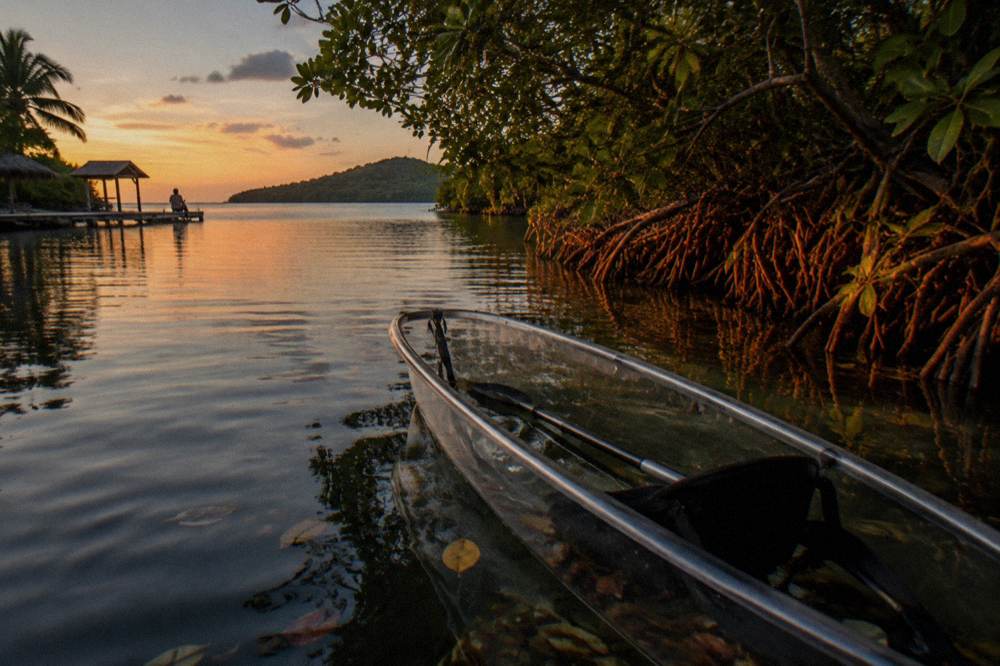
Three things realistically dampen a night: moonlight, weather, and logistics. The moon problem is scheduled, so you can eliminate it by booking away from the full moon. Heavy rain can temporarily cut concentrations and cloud the water. And the ferry is the fixed friction: a missed sailing, or a booking that ignores the required overnight, sinks the plan regardless of the biology. The organisms are present year-round; intensity is never promised.
The moon is the most predictable and the most preventable. The three-night DRNA closure around each full moon removes the worst dates outright, but the nights just outside that window can still be bright enough to wash out the view, so the darkest windows sit near the new moon. Travellers who cannot shift dates should weigh honestly whether a moonlit Vieques night is worth the crossing, or whether the homepage comparison and trip picker can steer them toward a better-timed option at another bay.
Rain and water conditions are the second factor. Heavy rainfall can temporarily reduce dinoflagellate concentrations and cloud the water, lowering the visible glow, and a 2024 study of Laguna Grande found the same pattern of wide fluctuation by season at that lagoon: generally lower densities in late winter, higher in late summer. No bay operator can promise a bright night, and any that does is overpromising. What you can do is pick a dark window, go with a licensed operator who knows the bay, and treat anything above a faint blue shimmer as the variable it is.
The third factor is regional and current: sargassum. In July 2026, DRNA activated its removal protocol for La Parguera after about 80 cuerdas of that bay were covered, part of a record projected influx of roughly 55 million tons to Puerto Rico for the year. Mosquito Bay was not the subject of that removal action, but the episode is a fair reminder that seawater conditions shift month by month and that the DRNA monitors all three bays, including water-quality segments for both Bahía Mosquito and the La Parguera bay in its 2026 Integrated Report. Checking with your operator a day or two before the tour about water conditions is reasonable and normal.
One more honest note: phones and cameras mostly fail here. Phone screens and artificial light are discouraged on tours because they wreck night vision, and standard cameras struggle to capture a glow that the dark-adapted eye sees easily. Travellers who arrive expecting a camera-ready spectacle sometimes under-rate the actual experience because they spent it looking at a screen. Go to look, not to shoot, and if photography matters to you, our bioluminescence photography guide sets realistic expectations.
So Is Mosquito Bay Worth It? The Verdict
For travellers with two days and a flexible calendar, yes, without much doubt: the record-setting density, the restoration story and the small-group formats make Mosquito Bay the most distinctive bioluminescence experience in Puerto Rico. For travellers with a single evening or fixed full-moon-adjacent dates, no: Laguna Grande from Fajardo delivers a similar-format night for less travel and more scheduling freedom.
Break it down as a decision. If your trip already includes Vieques, or you are happy to add an island night, the bay is the reason to do it: nowhere else in Puerto Rico combines the Guinness-recognised concentration, a legally protected no-swimming, small-capacity ecosystem, and six competing operators keeping prices between $57 and $112. The June 2026 count of 304,000 organisms per gallon, taken during an ordinary week, is the kind of number that keeps the record credible rather than historical. If the bay is the main thing pulling you toward Vieques rather than Culebra, our guide to choosing between Vieques and Culebra covers how the two islands compare beyond the glowing water.
Here is the decision in table form, using the figures this article has already verified:
| Your situation | Verdict | Why |
|---|---|---|
| Two or more days, flexible dates | Go to Mosquito Bay | Record-setting bay, tours from $57, six operators, small groups |
| One evening only, staying in San Juan | Choose Fajardo instead | Laguna Grande is roughly 1 to 1.25 hours by car, kayak tours from $65, no ferry |
| Dates near a full moon | Pick another week or another bay | DRNA closes Mosquito Bay tours for three nights around each full moon |
| You want to swim in the glow | Go to La Parguera | The only bay where swimming is generally permitted, on most nights |
| You want Vieques handled end to end | I VENTURES ferry day trip | From $230, about 11 hours, includes the Ceiba ferry and a clear-bottom kayak tour |
If your calendar is tight, the calculus flips. The ferry, the overnight and the moon window together consume flexibility, and a one-evening traveller who books Fajardo instead gets a kayak tour on a lagoon reached through a mangrove channel, from prices starting at $65 on this site's roster, an hour and a bit from San Juan by car. That is not a compromise choice; it is a good bay with its own character. Our Fajardo bay guide covers it in depth.
There is also a middle case worth naming: travellers already staying in San Juan who want Vieques handled end to end. One listing on the roster, the I VENTURES ferry day trip, includes the Ceiba to Vieques ferry plus a clear-bottom kayak outing on Mosquito Bay, from $230 for about 11 hours, rated 4.6 from 226 reviews. It is the only San Juan departure that includes the ferry, and it trades the overnight for a long day, which suits some itineraries and exhausts others.
The final word on honesty: a dim night is possible at any of the three bays, and the pages that pretend otherwise are selling, not informing. What Mosquito Bay offers is the best odds and the highest ceiling in Puerto Rico, protected by rules that exist because the bay has been nearly lost twice. Book a dark window, stay the night in Esperanza, pick the format that fits your group, and the odds are about as good as this phenomenon gets.
Common Questions About Mosquito Bay
Is Mosquito Bay Worth It?
Yes, if you can spare two days and book away from the full moon. It is the Guinness-recognised brightest bioluminescent bay in the world, with tours from $57 per person and six licensed operators. It is not worth the crossing if you have only one evening or cannot avoid moonlit dates; Fajardo is the better fit then.
Do I need to stay overnight on Vieques to see Mosquito Bay?
In practice, yes. Tours run after dark and one operator listing states the last ferry from Vieques leaves at 7:30 pm, so an overnight on the island is effectively required. One San Juan day trip includes the Ceiba ferry and a clear-bottom kayak tour, but it is an 11 hour day.
Why are there no tours around the full moon?
DRNA-licensed operators may not run Mosquito Bay tours the night before, the night of, or the night after a full moon, a legal restriction, not an operator preference. Moonlight washes out the glow. The darkest, best viewing windows sit near the new moon.
Can you swim in Mosquito Bay?
No. Swimming is not permitted at Mosquito Bay or Laguna Grande to protect the dinoflagellates; the 2014 blackout hardened the policy. La Parguera is the only one of the three bays where swimming in the glowing water is generally permitted, on most nights, under operator safety rules.
How much does a Mosquito Bay tour cost?
From $57 to $112 per person across the six listings on this site's roster: clear canoes from $57, clear kayaks from $60 and $112, a traditional kayak trip from $65, a pontoon boat from $85 and an electric catamaran from $105.
What is the brightest bioluminescent bay in the world?
Mosquito Bay in Vieques holds the Guinness World Record for the brightest bioluminescent bay, recognised in 2006, with recorded peaks of up to 700,000 dinoflagellates per gallon. A June 2026 measurement counted about 304,000 per gallon.