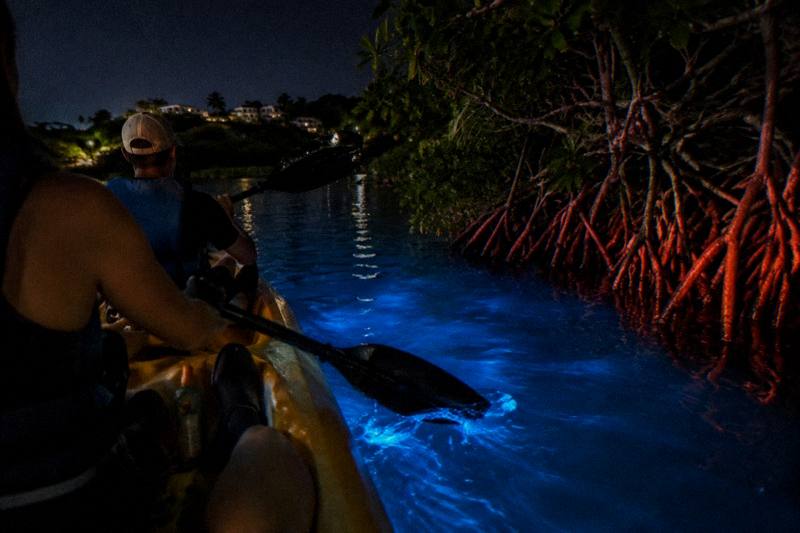
What To Wear To The Bioluminescent Bay
A bio bay tour is a short, wet, buggy night out on warm tropical water. Here is what to wear, what to pack in a dry bag, and what to leave at the hotel.
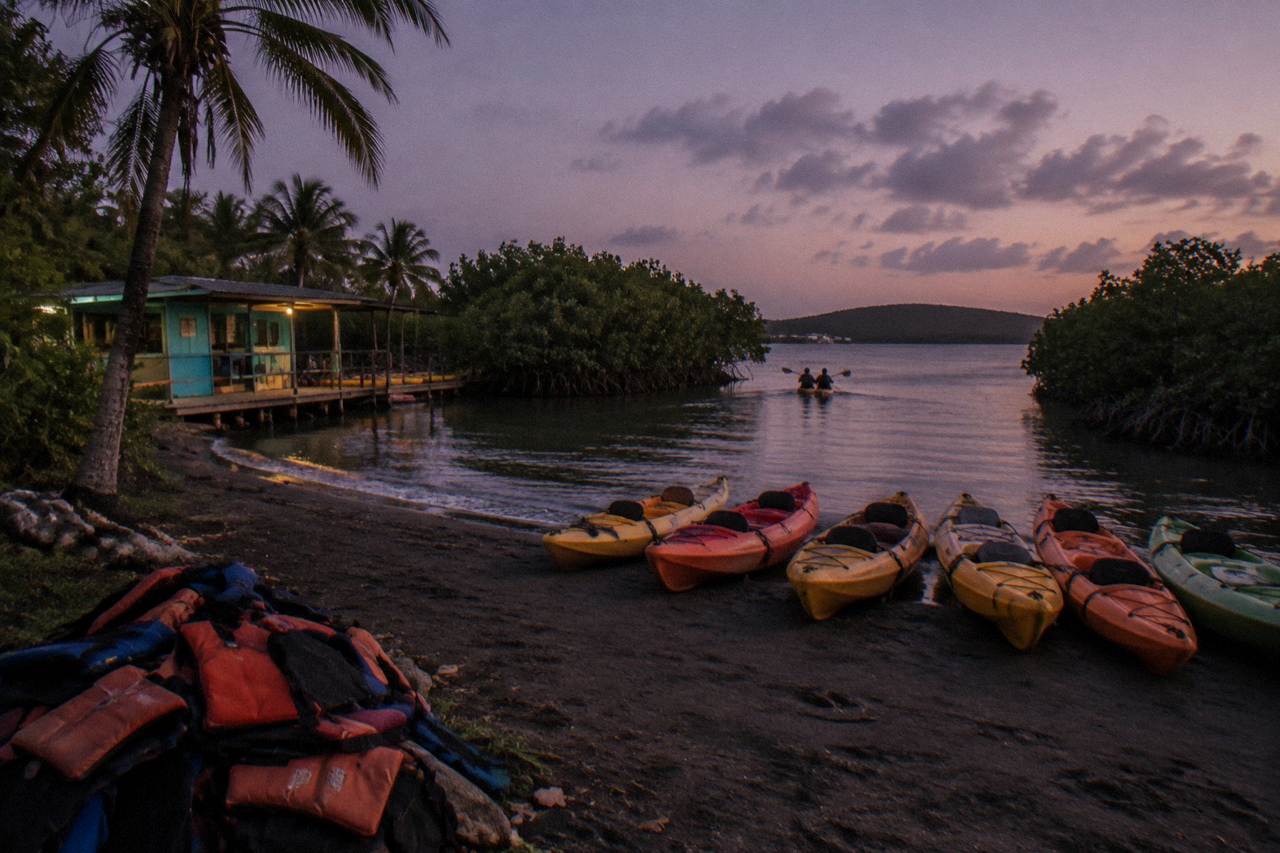
Short answer
Wear quick-dry shorts and a synthetic or merino top, water shoes or old sneakers, and bring a light rain layer. Apply eco-friendly insect repellent as a cream or balm at least 30 minutes before the tour. Leave flashlights and phone screens off. Prices on this site run from $54.99 to $250 per person depending on bay and format.
Bio bay tours happen at night, in the tropics, on water that splashes. Between the heat, the insects, the wet seat of a kayak and the strict lighting rules that protect the dinoflagellates, what you wear matters more than on almost any other evening activity in Puerto Rico. This guide walks through clothing, footwear, bug protection, what stays dry and what the listings on this site actually say operators provide, so nothing here is guesswork.
The short version: dress in quick-dry synthetics, wear shoes that can get wet and sandy, put repellent on before you leave the car, and leave every source of bright light behind. The responsible-visitor guidance from Discover Puerto Rico asks visitors to use eco-friendly repellent as creams or balms rather than sprays, applied at least 30 minutes before the tour, and to avoid flashlights, phone screens and any unnecessary light. That one paragraph shapes most of the packing list below.
What Should You Wear Bioluminescent Kayaking?
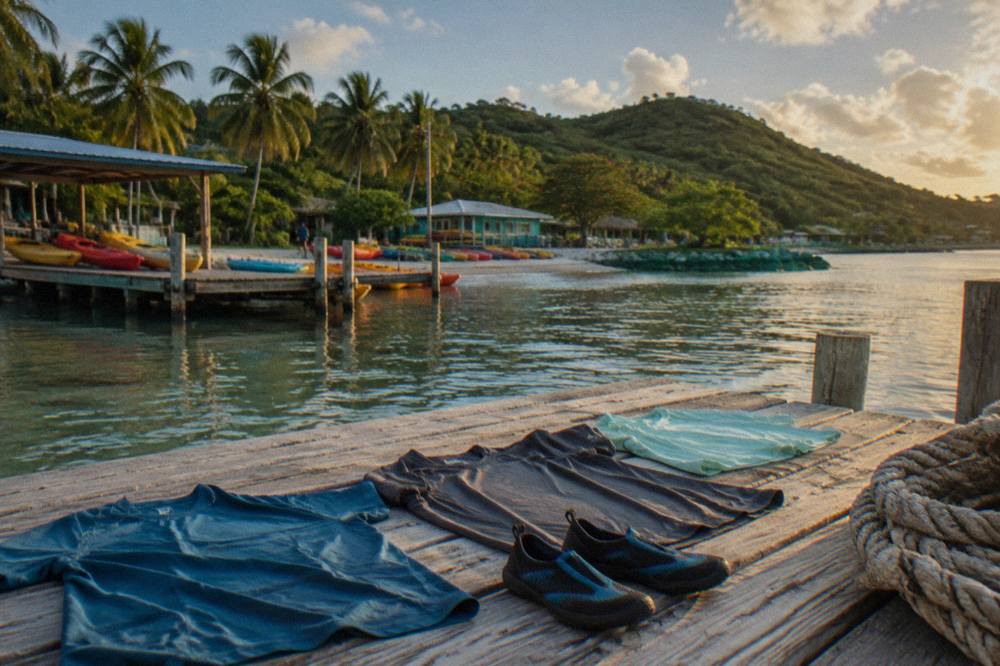
Dress for a warm, wet, active hour or two on tropical water: quick-dry shorts or leggings, a synthetic or merino T-shirt or rash guard, underwear you do not mind getting damp, and water shoes or old sneakers. Cotton stays wet and cold after dark, denim is worse, and anything you would mourn if it met salt water and mangrove mud should stay at the hotel. Expect splash, not immersion.
Think in layers you can shed. Evening air in Puerto Rico is warm most of the year, but the wind on a boat or the breeze through a mangrove channel can feel cool once your shirt is damp. A thin synthetic long-sleeve top does double duty: it adds warmth and it covers forearms from insects. Skip heavy rain jackets unless the forecast shows showers; a light packable shell is enough for a passing squall and stuffs into a dry bag the rest of the night.
Colors matter less than fabric. Some guides suggest dark clothing because it preserves everyone's night vision better than reflective white, and that logic is sound even where no listing requires it. A black or dark-colored synthetic shirt is a small courtesy to the rest of the group. Board shorts, athletic leggings, swim shorts under a shirt, a surf rash guard: all of it works. What fails is street clothing, heavy jeans, long cotton dresses and anything with lots of metal hardware that clanks and reflects.
For families planning ahead, the same rules scale down to kids with almost no changes, and the bioluminescent bay with kids guide covers the age and comfort questions that clothing cannot solve.
Which Shoes Work For A Bio Bay Tour?
Water shoes, strapped sandals with a heel strap, or old sneakers you are willing to sacrifice are the three good answers. Flip-flops float away, slide off kayak foot pegs and offer zero protection on broken-shell and mangrove-root shorelines. Barefoot is possible on boat tours but risky on dark docks. Whatever you wear will get wet, sandy and muddy, so the only bad choice is a pair you want to keep clean.
The terrain is the deciding factor. At Las Croabas in Fajardo, you launch from the Kayak Village kiosks and walk a short stretch to the water's edge, often over sand and uneven ground in the dark. In Esperanza on Vieques, several operators gather at a street meeting point and then run a van to the bay entrance, so you are walking pavement, gravel and sand in one evening. La Parguera docks are just that, docks, with cleats, ropes and gaps.
A word on what listings actually say: footwear rules differ. One San Juan kayak tour requires shoes in the boat, and the El Yunque combos call for hiking shoes or grippy sneakers plus water shoes for the bay. Other listings print no footwear rule. Weight limits vary by tour as well. Where a listing is silent, "check the listing" is the honest answer, but closed, drainable, secure footwear is never the wrong call at any of the three bays.
| Bay and departure point | Ground you cross | Best footwear | Footwear to avoid |
|---|---|---|---|
| Laguna Grande, Las Croabas (Kayak Village kiosks) | Sand, uneven shoreline, dark launch area | Water shoes, old sneakers | Flip-flops, thin-soled slides |
| Mosquito Bay, Esperanza meeting points | Pavement, then van ride, then gravel and sand at the bay entrance | Strapped sandals, water shoes | Street loafers, barefoot |
| La Parguera docks | Dock boards, cleats, ropes, gaps | Any secure closed shoe | Smooth-soled dress shoes |
| Boat-only formats (pontoon, electric catamaran) | Dock to vessel, minimal walking | Sandals with a heel strap | None, comfort is the only bar |
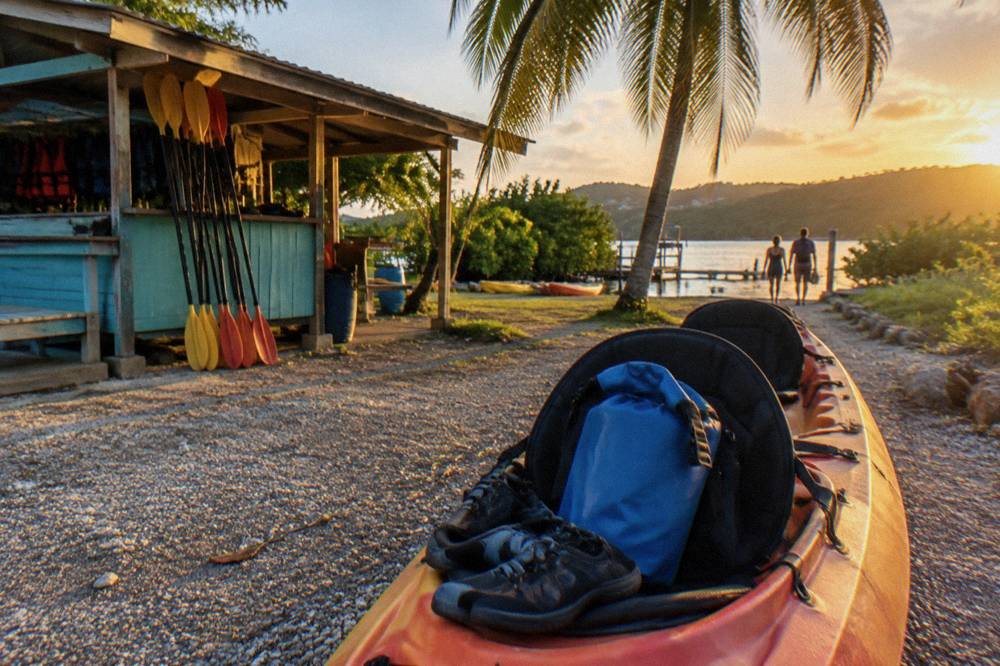
If you want to compare what the evening actually looks like at each launch point before choosing shoes, the Fajardo vs Vieques vs La Parguera comparison breaks down the three departure experiences side by side.
Those three cover the main formats this article's advice applies to. The featured Fajardo kayak trip from Kayaking Puerto Rico runs about 2 hours from $89 per person, 4.7 from 2,176 reviews, and its inclusion list names light snacks, refreshments and eco-friendly insect repellent. The Vieques Kayaks trip at Mosquito Bay runs about 2 hours from $65 per person, 4.5 from 1,242 reviews, and carries a "Likely to sell out" badge. The Mareaito sunset cruise at La Parguera, 2 hours from $65 per person and 4.8 from 573 reviews, is the boat-and-swim option where a towel and a dry change of clothes matter most.
How Do You Deal With Mosquitoes And Sand Flies?
Apply an eco-friendly repellent as a cream or balm, not an aerosol spray, at least 30 minutes before the tour starts, and reapply nothing on the water. The 30-minute head start helps keep repellent out of the water, and creams and balms are preferred over sprays. Long sleeves and pants made of thin synthetic fabric add a physical layer no chemical can match.
This is the one piece of gear with an official recommendation behind it. Discover Puerto Rico's protection guidance for all three bays asks visitors to use eco-friendly insect repellent, creams or balms rather than sprays, applied at least 30 minutes before the tour. The reason is the dinoflagellates themselves: the glow depends on their fragile population, so swimming stays off limits at Laguna Grande and Mosquito Bay, and the Fajardo lagoon in particular sits inside a protected natural reserve governed by strict conservation rules.
The insects are real. Mangrove channels are prime mosquito habitat at dusk, and sand flies can find ankles on any dark shoreline. The Fajardo operators know it; the featured Kayaking Puerto Rico listing puts eco-friendly insect repellent on its inclusion list, so on that trip you have a backup if yours wears off. On most other listings repellent is not named as included, so bring your own and put it on before check-in, not during the safety talk.
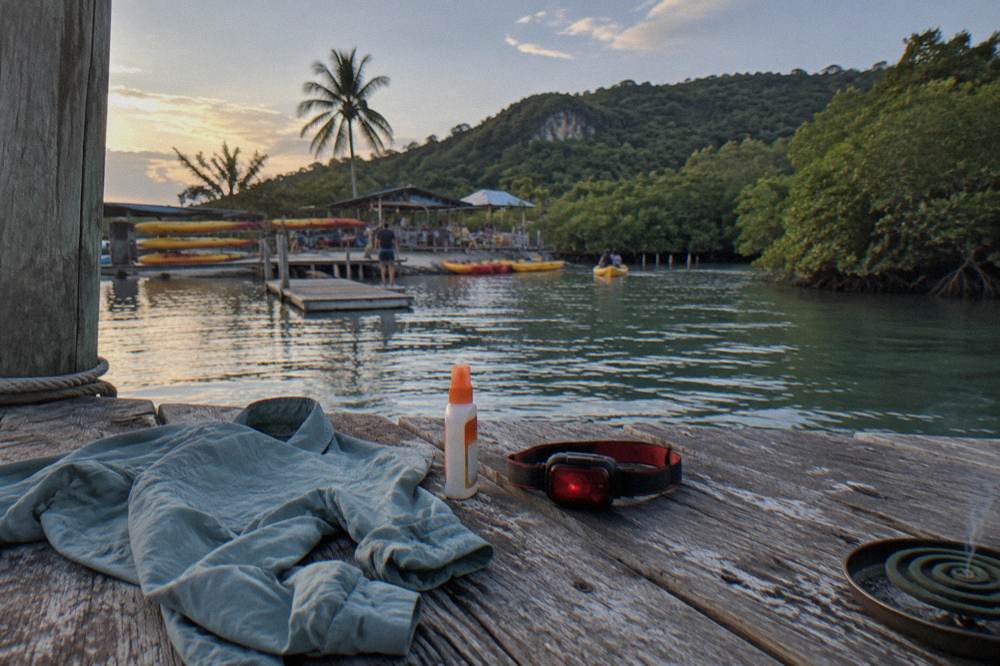
One caution: this site's verified research found no support for the internet claim that DEET specifically kills the glow. The verified guidance is about form (cream over spray) and timing (30 minutes before), not about a banned molecule. Follow the official advice and skip the forum folklore. For the broader question of whether the insects ruin the experience, the does Mosquito Bay have a lot of mosquitoes article goes deeper than clothing advice can.
What Should Stay Dry, And Where Do You Put It?
A small dry bag or a zip-lock bag inside a secured pocket holds the essentials: car key, ID, a little cash and any medication. Everything else, wallets, spare phones, towels for kayak tours, cameras without night capability, stays locked in the car or at the hotel. Your paddle-side seat will get wet on a kayak, and spray reaches boat decks too, so the default assumption is that anything loose will end up damp.
Towels deserve their own sentence. On a kayak tour at Laguna Grande or Mosquito Bay, where swimming is not permitted, a towel is mostly dead weight that then gets wet. On a La Parguera boat tour, where swimming in the glowing water is generally permitted on most nights subject to operator rules, a towel and a dry shirt for the ride back are genuinely useful. The Mareaito Charters sunset cruise even builds in a sunset swim at the Caracoles sandbar before the bay, so you will be wet before the glow even starts.
Phones are the awkward item. You want it for the ride home, but screens are discouraged on the water because they wreck night vision for everyone around you, and standard phone cameras cannot capture the glow anyway. The photograph the bioluminescent bay guide explains why the pictures you have seen online took specialist gear and long exposures. The practical move is a zip-lock bag, airplane mode, pocket zipped, screen dark.
What Do Operators Actually Provide?
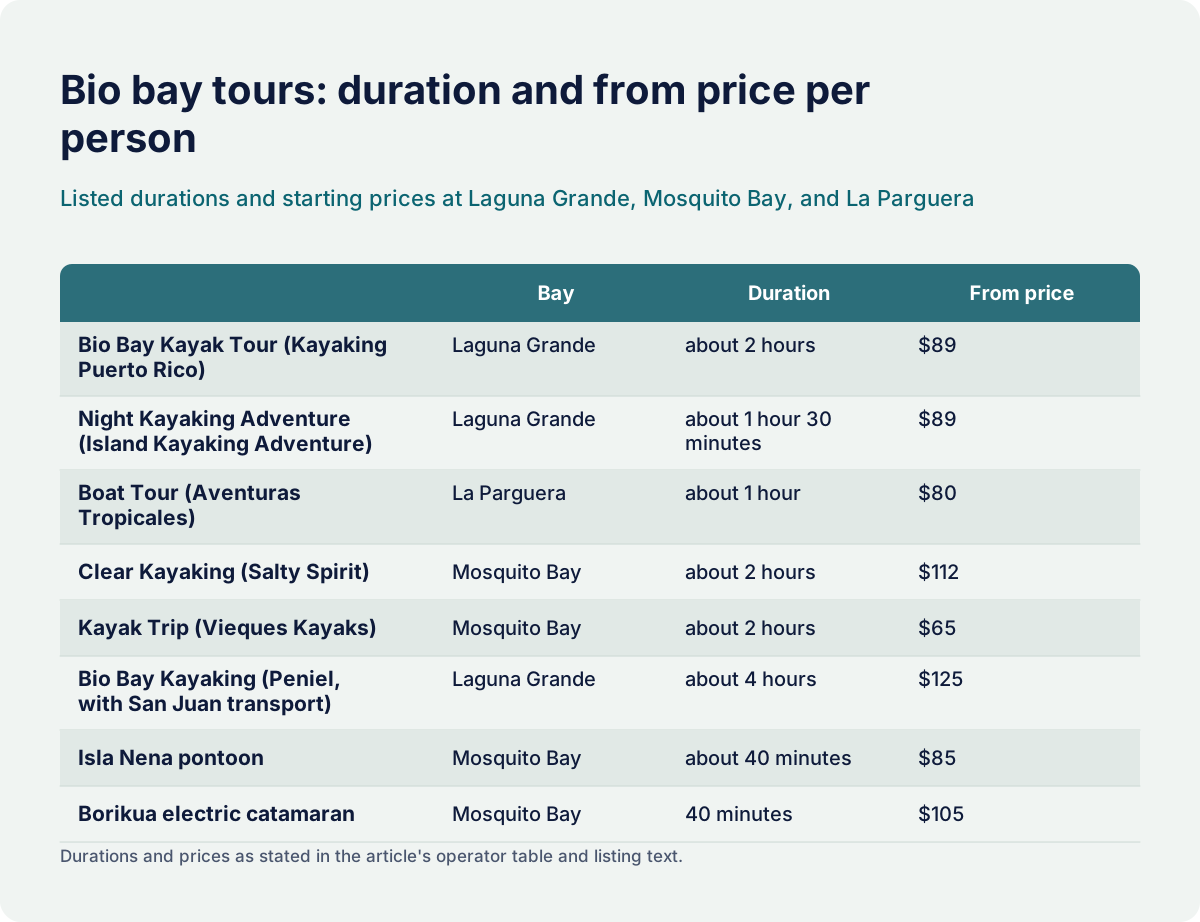
Only what their listings say, and this site prints that verbatim: the featured Fajardo kayak trip lists light snacks, refreshments and eco-friendly insect repellent; Island Kayaking Adventure lists snacks; Aventuras Tropicales at La Parguera lists lifejackets, snacks and bottled water; Salty Spirit and the Vieques Kayaks trip list transport to the bay entrance. For anything not named, assume you provide it yourself or check the listing before you go.
That is the honest version, because travel articles routinely invent operator supplies this site's research cannot confirm. Nobody on the roster is listed as providing water shoes, towels, ponchos or dry bags, so plan as if you bring those yourself. The table below is the complete, verified picture of what the listings on this site actually name as included.
| Tour (operator) | Bay | Duration | From price | Stated inclusions relevant to gear |
|---|---|---|---|---|
| Bio Bay Kayak Tour (Kayaking Puerto Rico) | Laguna Grande | about 2 hours | $89 | Light snacks, refreshments, eco-friendly insect repellent |
| Night Kayaking Adventure (Island Kayaking Adventure) | Laguna Grande | about 1 hour 30 minutes | $89 | Snacks |
| Boat Tour (Aventuras Tropicales) | La Parguera | about 1 hour | $80 | Lifejackets, snacks, bottled water |
| Clear Kayaking (Salty Spirit) | Mosquito Bay | about 2 hours | $112 | Round trip rides to the bay |
| Kayak Trip (Vieques Kayaks) | Mosquito Bay | about 2 hours | $65 | Round trip transport to the bay entrance |
| Bio Bay Kayaking (Peniel, with San Juan transport) | Laguna Grande | about 4 hours | $125 | Round trip transportation from San Juan |
Two formats sit at the dry end of the spectrum and change what you wear. The Isla Nena pontoon at Mosquito Bay, about 40 minutes from $85 per person, 4.4 from 262 reviews, keeps you out of the water entirely, and the Borikua electric catamaran, 40 minutes from $105 per person, 4.5 from 54 reviews, does the same with an electric drive.
For travellers who would rather not paddle at all, the do you have to kayak to see the bioluminescent bay article lays out every non-paddle format, and the electric boat bio bay guide goes deeper on the Vieques options.
Does Rain Change What You Wear?
Yes, modestly. A passing shower means a light packable rain shell over your quick-dry layers, and genuinely wet weather can mean a cancelled tour, so your rain plan is really a reschedule plan. Heavy rain clouds the water and can temporarily cut dinoflagellate concentrations, which lowers visible glow. Tours run in light rain and stop for lightning, and every listing on this site allows free cancellation up to 24 hours before.
A warm tropical rain is a comfort question, not a safety one, and a synthetic shirt dries in minutes afterward. What rain actually threatens is the visibility of the glow itself, because fresh water dilutes and clouds the lagoon. The deeper look at operator cancellation practice and weather calls is in the rain, weather and cancellations guide, which pairs well with this packing list.
Moonlight is the other variable your wardrobe cannot fix but your calendar can. Bright nights make the glow harder to see; darker nights around a new moon are better, and at Mosquito Bay licensed operators may not run tours the night before, of and after a full moon at all. The moon phase guide covers scheduling in full, and one Fajardo listing even leans into it: Puerto Rico Bio Bay Tours sells the bright nights as a dedicated full moon kayak tour, 3 hours from $85 per person, 4.6 from 274 reviews.
Is There Anything You Should Not Bring At All?
Flashlights, bright phone screens, spray-on repellent and drones top the do-not-bring list. Bright artificial light destroys the night vision the whole group needs and interferes with the display you came for, which is why conservation guidance discourages or restricts it at all three bays. Add glass bottles, anything you cannot afford to lose, and expectation of a good photo: standard cameras cannot capture the glow.
The lighting rule deserves respect because it is the one rule every bay shares. If you need a light to find your shoes at the kiosk, use it before the group leaves shore, then kill it. Some listings mention operator tarps or red-light practice on bright nights, but this site states only what the roster confirms: the Island Kayaking Adventure listing notes guides may use a tarp to block moonlight on bright nights. Your job is simply to arrive dark-adapted and keep your screen pocketed.
Swimming rules also shape the kit list. Swimming is not permitted at Mosquito Bay or Laguna Grande, so no swimwear change is needed there; La Parguera is the only bay where swimming in the glowing water is generally permitted on most nights, per Discover Puerto Rico's La Parguera profile, and operators set their own flotation rules. The can you swim in the bio bay guide covers the full policy picture.
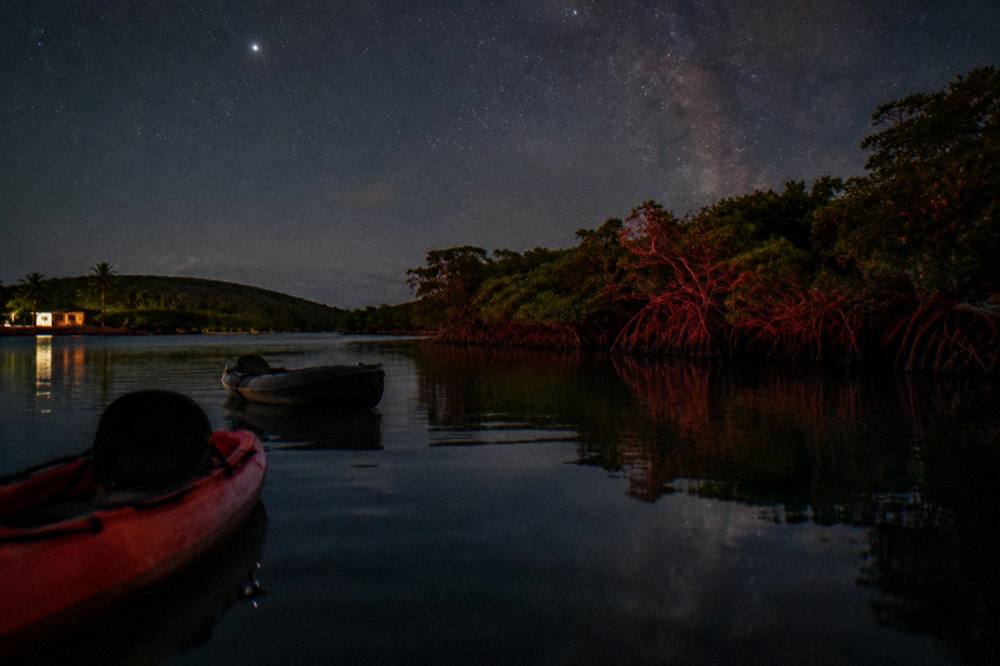
How Do The Three Bays Change The Packing List?
Only at the edges. Fajardo and Vieques kayak formats call for full quick-dry clothing and water shoes; La Parguera boat tours add a towel, swimwear and a dry shirt for the ride back because swimming is generally permitted there. Vieques adds a van leg between meeting point and bay, so street-comfortable shoes matter more. San Juan pickup tours add up to 12-hour days that need sun gear for the daylight half.
The long San Juan day trips are the easiest to under-pack. The El Yunque and bio bay combos from Bespoke Lifestyle Management and Island Journeys each run about 12 hours, from $179.65 and from $184 per person respectively, rainforest in the daytime and kayak after dark. That is a two-outfit day: sun shirt, hat and trail shoes until sunset, then the quick-dry kit and repellent for the night leg. The El Yunque and bio bay day trip guide plans the whole day.
A compact way to see the differences:
| Kit item | Fajardo kayak | Vieques kayak or boat | La Parguera boat | San Juan day trip |
|---|---|---|---|---|
| Quick-dry clothing | Yes | Yes | Yes | Yes, plus daytime sun kit |
| Water shoes | Strongly advised | Strongly advised | Advised | Trail shoes for El Yunque options |
| Towel | Optional | Optional | Yes, swim likely | Optional |
| Repellent, cream, 30 min early | Yes | Yes | Yes | Yes |
| Dry bag for keys | Yes | Yes | Yes | Yes |
| Light rain shell | Yes | Yes | Yes | Yes |
| Spare dry shirt | No | Optional | Yes | Yes, for the drive back |
Among the Vieques options, the Alikei Adventures clear kayak tour, 1 hour 30 minutes from $60 per person with a 4.8 rating from 491 reviews, is the one where sitting dry matters least: the clear hull is the point, and you will be close to the water.
Back in Fajardo, the Yokahu Kayak Trips outing, about 2 hours from $67 per person, 4.6 from 1,821 reviews, asks guests to check in 30 minutes early at the green tent beside the water, which is exactly the window to finish your repellent routine. See the Yokahu kayak trip on this site, or Check availability if the calendar is already filling up.
Whatever you book, the same three lines close the clothing question. Synthetics over cotton, shoes that grip wet surfaces, and a pocketed, dark, repellent-treated plan that assumes splashes. The glow itself is wild and varies with moon, rain and water conditions, but your half of the evening, what you wear and carry, is entirely within your control. More on choosing among the bays lives in the best bioluminescent bay comparison, and the planning basics start on Bioluminescent Bay Tours Puerto Rico.
Common Questions About What To Wear To The Bioluminescent Bay
Do you get wet on a bioluminescent bay tour?
On a kayak tour, yes, at least a little: paddles drip, seats get splashy and your lower half usually ends up damp. On the pontoon and electric catamaran formats at Mosquito Bay you stay dry unless it rains. At La Parguera, swimming in the glowing water is generally permitted on most nights, so plan to get fully wet there.
Can I wear flip-flops on a bio bay tour?
You can, but you will regret it. Flip-flops slide off kayak foot pegs, offer no protection on dark, uneven shorelines and are easy to lose in soft sand. Water shoes, strapped sandals or old sneakers are the reliable choices at all three bays.
What kind of insect repellent should I bring?
An eco-friendly repellent in cream or balm form, applied at least 30 minutes before the tour starts. Spray repellents are discouraged near the bays, where rules protect the fragile dinoflagellates behind the glow. One Fajardo listing includes eco-friendly repellent, but bring your own regardless.
Should I bring a towel?
Only for La Parguera boat tours, where swimming is generally permitted and you will want a dry shirt for the ride back. At Laguna Grande and Mosquito Bay, swimming is not permitted, so a towel is mostly something wet to carry home.
Can I bring a flashlight or use my phone on the water?
No. Bright artificial light ruins the group's night vision and interferes with the display, so conservation guidance at all three bays discourages or restricts flashlights and phone screens. Put the phone in a zip-lock bag, switch it to airplane mode and keep it pocketed.
Do operators provide water shoes or towels?
No listing on this site names water shoes, towels, ponchos or dry bags as provided. Some listings include snacks, refreshments or insect repellent, and the table in this guide lists exactly which. For anything not named, bring it yourself or check the listing.